
Psychology and tennis have always belonged together for Gabriele Leibbrand
03/31/2026JMU alumna Gabriele Leibbrand reports on how she has integrated counselling, competitive sport and civic engagement into a coherent whole in her life.
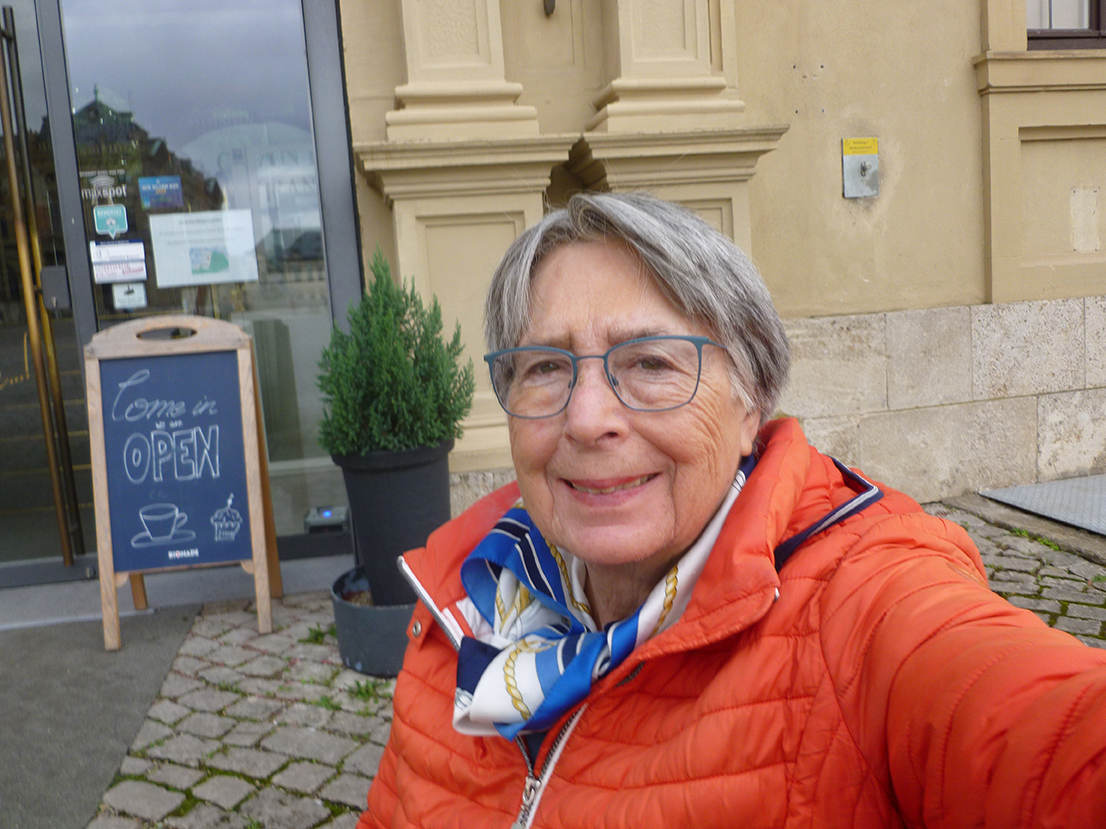
What do graduates of Julius-Maximilians-Universität Würzburg (JMU) do for a living? In order to introduce students to different perspectives, Michaela Thiel and her team from the central alumni network "Uni Würzburg Community" regularly interview selected alumni.
Today Gabriele Leibbrand answers. She studied Psychology at JMU; today she runs a tennis school and is active as a mentor for civic engagement.
Mrs Leibbrand, how did you get from psychology to tennis?
Over the years, I have always followed two or more tracks. Despite various career paths, psychology has always remained important to me - as has tennis, which I have been active in since my youth. After studying and starting a family, I worked in educational counselling. Later, family changes led to my husband and I setting up a tennis school and working in both competitive and popular sports. At the same time, I continued my training in sports psychology and gave lectures, including at the Technical University of Munich. I also contributed my knowledge to the German Tennis Federation and the German Olympic Sports Confederation. Since my husband's death in 2010, I have continued to work in tennis and on sports and socio-political issues.
What do you particularly love about your job?
It's the variety. I offer programmes for people of all ages, all backgrounds and all sporting levels. I'm also active in sport myself almost every day and the numerous contacts I have with people mean that I always feel in touch with the times.
What does your work as a mentor for civic engagement look like?
I completed the "Mentor for civic engagement" training programme run by the city of Reutlingen. Civic engagement always means getting involved in the concerns and issues of civil society. I myself have transferred social and sports policy issues to tennis, such as migration, inclusion and mixed leadership. This is important to me because, on the one hand, I can pass something on to others and, on the other, I am in contact and in communication with areas of life that go far beyond sport and are mutually enriching.
What advice would you give young people with regard to psychology as a career?
I would advise young graduates to get a good overview of the various fields of psychology. They should find out in practice which of the possibilities they feel a great affinity for. And they should remember that psychological knowledge can also have an enriching effect in other professional fields.
What is your favourite memory of your time at university?
When I got my very first exam back. The lecturer handed it to me with the comment that he hadn't expected me to pass the exam with a "good". From then on, I no longer had any doubts that I would successfully complete the degree programme. What still amazes me to this day: the lecturer gave me the booklet "Hinter dem Perlenvorhang. Poems after the Chinese" by Manfred Hausmann. Much later, I wrote poetic texts myself, and I am still interested in the Chinese language today.
Thank you very much for the interview!
Are you not yet a member of the alumni network "Uni Würzburg Community" or Alumni & Friends e.V.? Then you are cordially invited to register! You can do so on the Community website. There you will also find the interviews with JMU alumni and alumnae published so far.