
Full view by starlight
05/26/2026How insects orientate themselves at night is the topic of a lecture at the Environmental Station of the City of Würzburg. The event will take place on Tuesday, 9 June 2026.
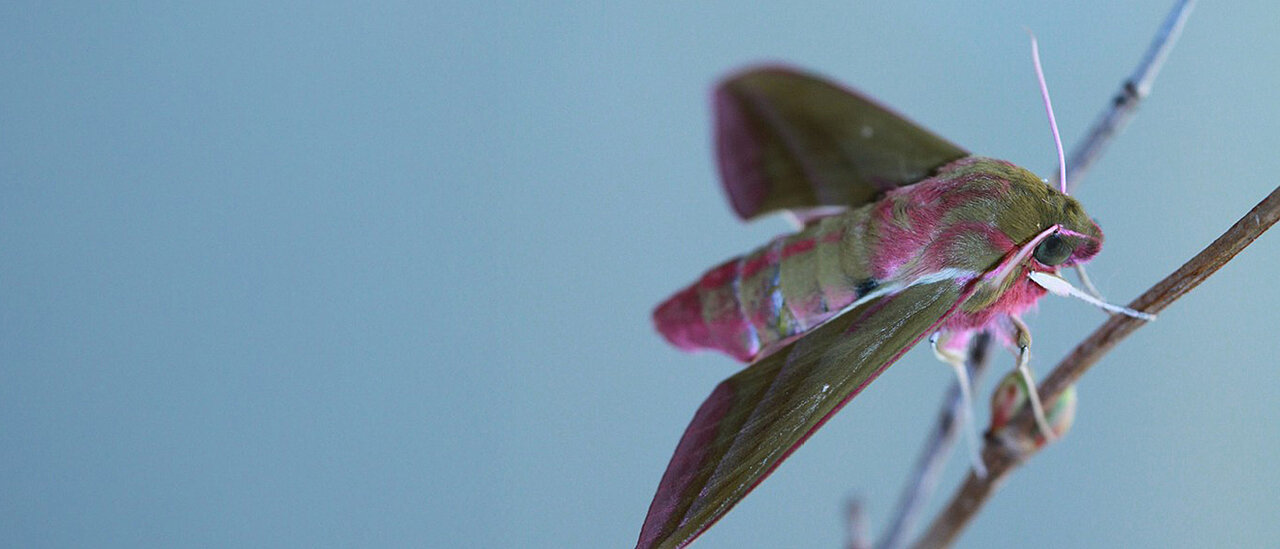
Human vision quickly reaches its limits at night. Many nocturnal insects, on the other hand, buzz through the undergrowth in search of food, mates or on the way back to their nest, even in starlight. They use a range of sensory modalities, for example their sense of smell, their sense of touch and also their hearing, if they have any.
Surprisingly, some insects rely on their vision even when their eyesight is weak and the light intensity is very low. Others can even see colours in starlight and some dung beetles use the polarisation pattern of the moon, which is completely invisible to humans.
Professor Anna Stöckl, a biologist who teaches in Constance, will explore these fascinating phenomena in her lecture. Afterwards, she will be in conversation with Würzburg zoologist Dr Dieter Mahsberg - and the audience will be very welcome to join in!
The event will take place on Tuesday, 9 June 2026, at 6 p.m. in the Environmental Station of the City of Würzburg (Nigglweg 5, 97082 Würzburg). It is a cooperation between the Schelling Forum, the Environmental Station of the City of Würzburg and the Naturwissenschaftlicher Verein Würzburg. The lecture will be held in German.
Lecturer
Professor Anna Stöckl has been Junior Professor of Neuroethology at the University of Konstanz since 2023. Her research group investigates the neuronal processing of visual information using the example of insects. Her research focuses on vision under changing light conditions, the control of insect flight, and the identification and interaction of pollinating insects and flowers. She is an alumna of the Young Academy of the Bavarian Academy of Sciences and Humanities, Emmy Noether research group leader and Research Fellow of the Zukunftskolleg at the University of Konstanz.
Moderation
Dr Dieter Mahsberg taught at the Chair of Zoology III - Animal Ecology and Tropical Biology at the University of Würzburg from 1979 to 2017, conducting research in particular on tropical arthropods in Africa. He has been involved in non-university associations and organisations for many years, including as 1st Chairman of the Naturwissenschaftlicher Verein Würzburg e.V. (Würzburg Natural Science Association). In 2019, he was awarded the "Bene Merenti" medal in silver by the University of Würzburg.
Registration
Registration is required to attend the event. Interested parties can register here. Questions about the event can be sent to schelling-forum@badw.de