
Focus on the crises in rural areas
05/05/2026Strict government austerity policies are having a negative impact on structurally weak villages and small towns. A new anthology is dedicated to this problem from various perspectives.

Anyone who grew up in rural areas is probably familiar with the situation: shops are closing, schools are in need of renovation and roads are littered with potholes. The financial situation in municipalities is often strained, making the problems difficult to solve. A strict government austerity policy is putting additional pressure on the finances of village communities and small towns.
What challenges do rural municipalities face? What are the consequences of strict austerity policies for rural areas? How can these forms be recorded and analysed?
The new anthology "Krisen ländlicher Räume" is dedicated to these and other questions. It was edited by Dr Andreas Kallert, research associate at the Chair of Human Geography at Julius-Maximilians-Universität Würzburg (JMU), and Dr Simon Dudek, economic geographer at the Catholic University (KU) Eichstätt-Ingolstadt.
A new understanding of government austerity policy
In the early days of the Federal Republic, the financial situation for local government was more relaxed than it is today. Until the 1970s, the economic miracle combined with high taxes ensured rising revenues. This was to change: "In the 1970s, municipal real property and business taxes were reassessed as location factors," says Kallert. Public finances came under additional pressure due to the abolition of the business capital tax in 1998 and the major tax reform in 2001.
The editors plead with researchers: "Strict government austerity policies should not simply be seen as a short-term reaction to global financial and economic crises. Unfortunately, it is an entrenched social norm that needs to be analysed as such." The authors fear that right-wing extremist and populist parties in particular could instrumentalise the pressure to cut municipal budgets for political purposes.
The Nordhalben Declaration
The anthology was created as part of a workshop held by the two editors at the conference "Municipal finances in the multiple crisis" in the Upper Franconian market town of Nordhalben in March 2025. As a result of the conference, researchers from the KU Eichstätt-Ingolstadt launched the Nordhalben Declaration. This is intended to draw the attention of politicians at state and federal level to the difficult financial situation of structurally weak villages and small towns.
Individuals and organisations can support the Nordhalben Declaration by signing it.
Lecture on 6 July
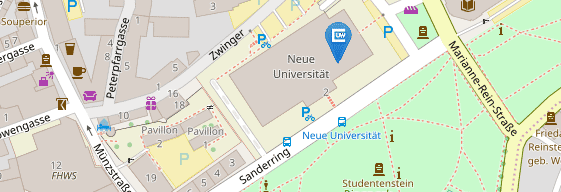
Dr Andreas Kallert will present the book on 6 July 2026 at 8 pm in Lecture Hall 166 of the New University on Sanderring. The event is part of a series of lectures organised by the Geographical Society of Würzburg. Admission is free for members of the society. For students it is two euros and regularly three euros.
Publication
Kallert, Andreas /Dudek, Simon (ed.) (2026): Krisen ländlicher Räume: Ursachen und Folgen von Austeritätspolitik in Kommunen. transcript Verlag (Reihe: Kritische Landforschung), PDF-ISBN: 978-3-8394-0292-4, Print-ISBN: 978-3-8376-7727, 340 pages. Language: German
The PDF is available free of charge as open access.
The print edition is expected to be published on 27 May 2026 and costs 45 euros.
Contact
Dr Andreas Kallert, Chair of Human Geography, Institute of Geography and Geology, T +49 931 31 83037, andreas.kallert@uni-wuerzburg.de