
Experiments for EVERYONE
06/16/2026Pupils from a special needs school in Würzburg visited the ‘Natural Disasters’ teaching and learning laboratory run by the Department of Didactics of Geography. This gave the students an opportunity to familiarise themselves with inclusive teaching methods.

Biology, chemistry and geography, mathematics, computer science and physics: the University of Würzburg offers so-called teaching and learning laboratories – known as LLLs for short – in all these subjects. Here, school pupils conduct experiments under the supervision of trainee teachers in the laboratories of the M!ND Centre; both sides benefit from this initiative.
There has now been a first in the LLL for Didactics of Geography: “This school year, we have managed to enable pupils from the Friedensreich Hundertwasser School, a special educational needs centre in Würzburg, to take part,” says Johanna Brünker, who initiated the collaboration with Thomas Amend. Pupils in Years 5 and 6 visited the Teaching and Learning Lab in both the winter and summer semesters to explore the topic of ‘natural disasters’.
The concept of the Teaching and Learning Lab
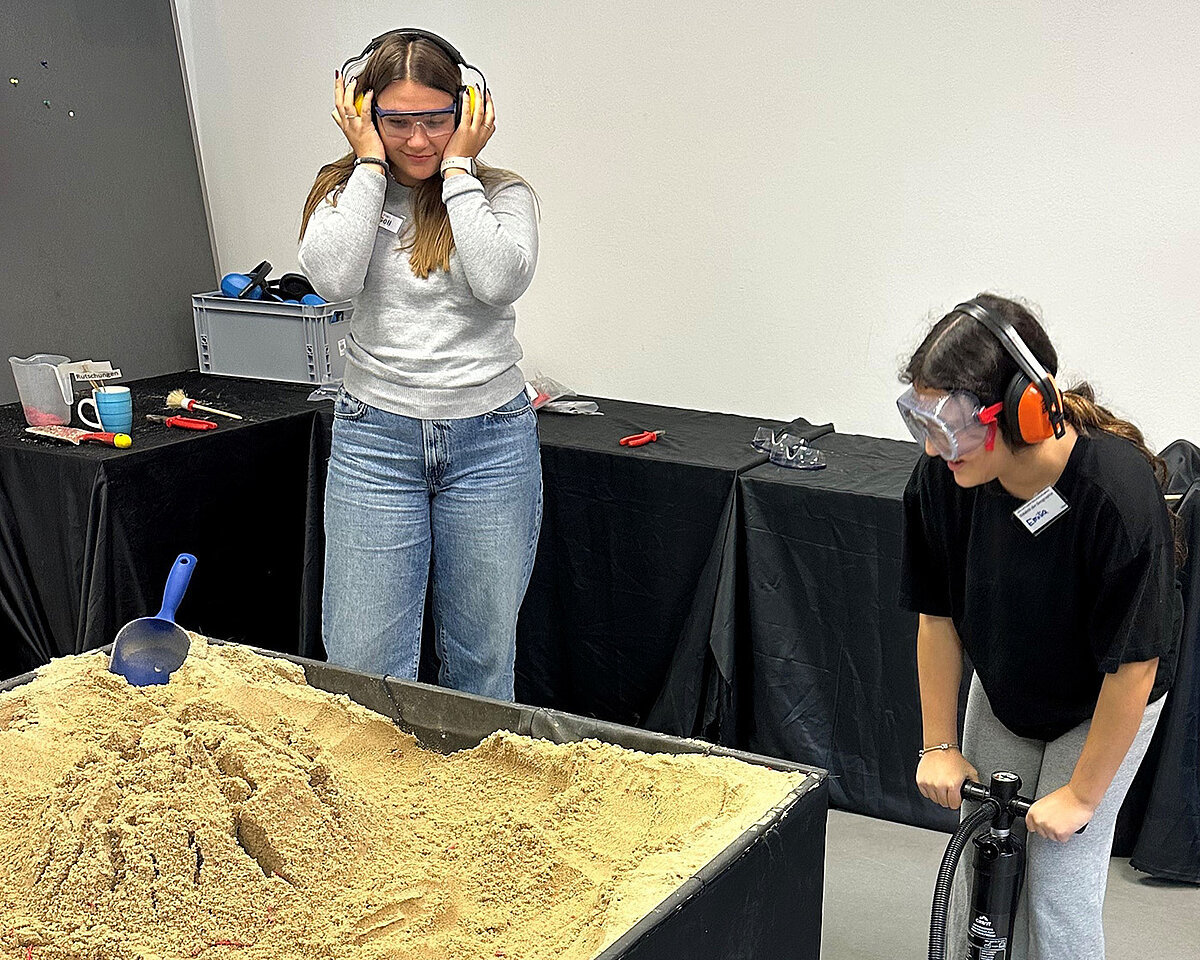
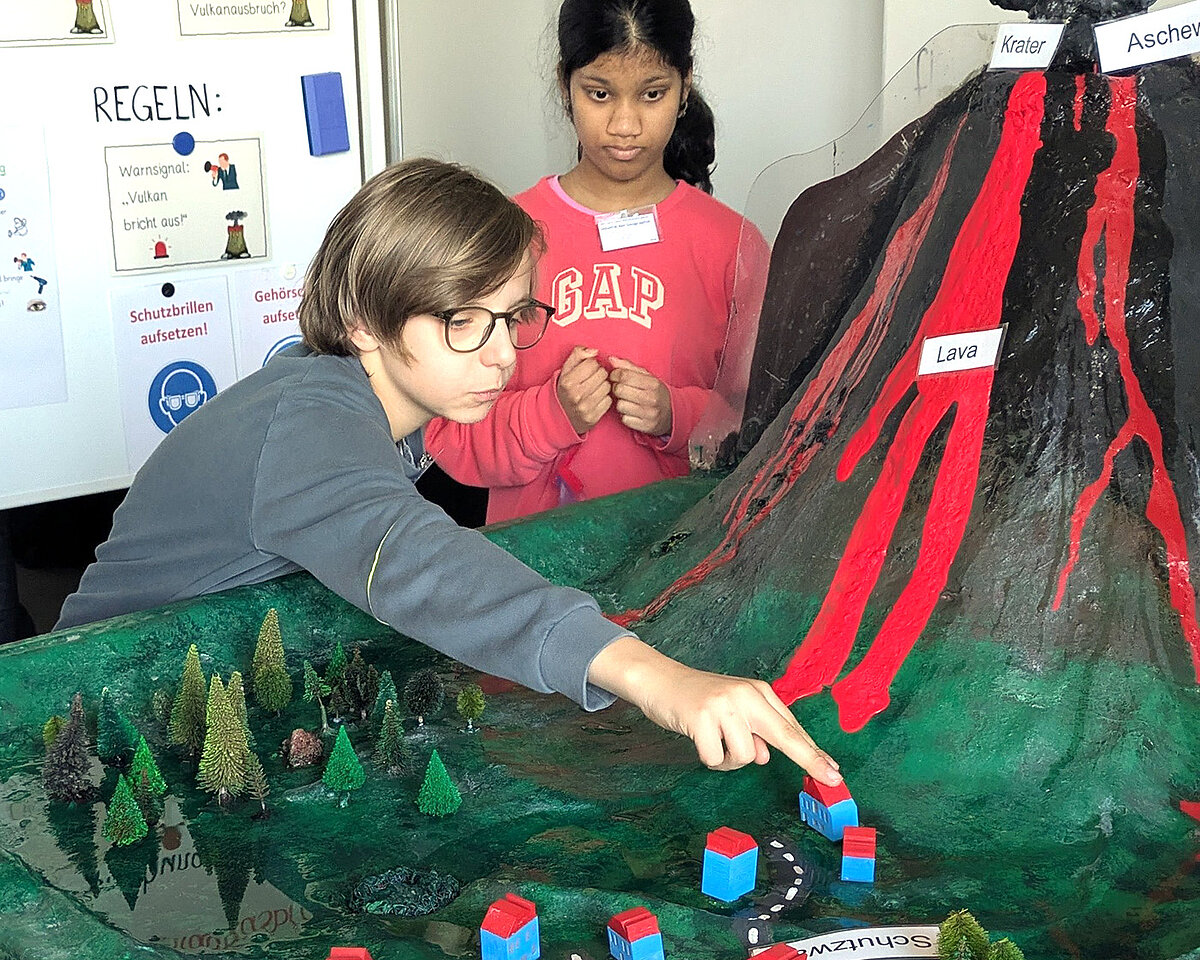
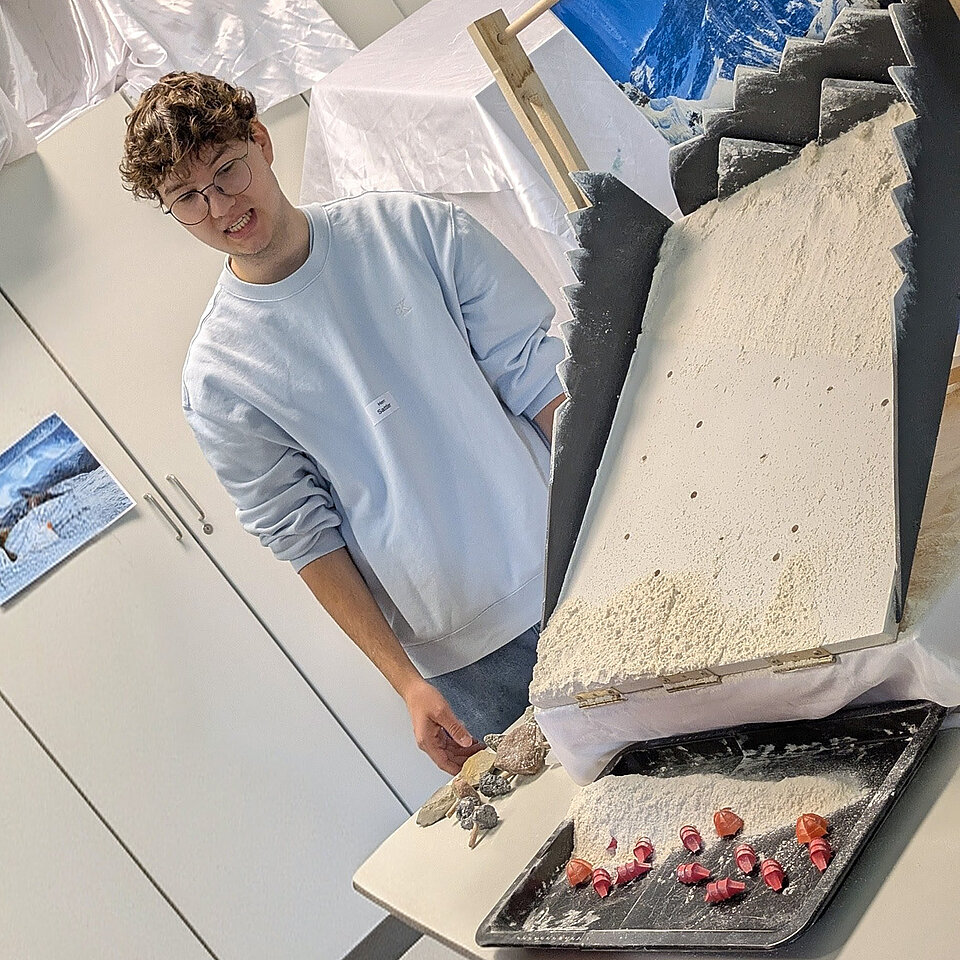
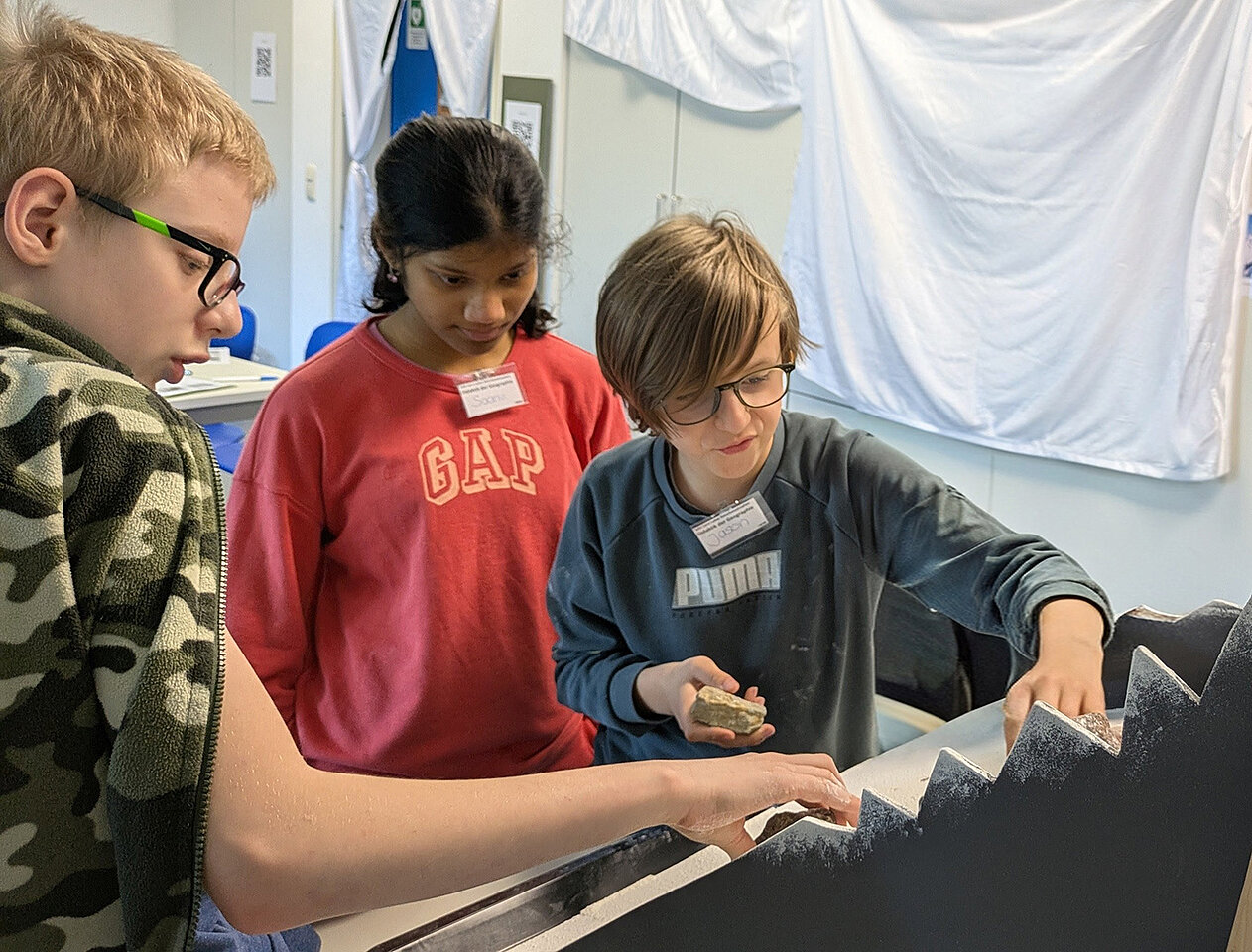
The Natural Disasters Laboratory offers vivid models and experiments in six themed rooms on disasters such as avalanches, earthquakes, floods, volcanic eruptions, landslides and storm surges. “The pupils visited these stations one after the other and learnt to work scientifically in the process,” explains Thomas Amend. This means they formulated hypotheses, carried out experiments and tested their results.
In the teaching and learning laboratory, pupils are actively involved in all experiments. For example, when they implement or modify measures to protect against avalanches or flooding and then check which locations are safe and which are not “The hands-on approach and trying out different options motivates the pupils to get involved and thus have positive learning experiences,” Brünker and Amend are certain.
The students responsible for setting up and conducting the experiments also benefit from the experiences gained in the lab: “Through repeated runs, they gain confidence in handling the models and gradually improve their teaching skills,” says Johanna Brünker. Asking questions, providing targeted prompts, actively involving pupils, and intervening to redirect their attention when they lose focus are just a few examples of these skills.
Experiencing inclusion in a practical setting
When school classes from a special needs centre visit the teaching and learning laboratories, students face a particular challenge. After all, they cannot rely on the fact that the experimental setups, which are designed for pupils from mainstream schools, will also be suitable for these classes. How will the pupils behave? Are further adaptations necessary? These are the key questions that students are confronted with.
It soon became clear, however, that these concerns were unfounded: “In the debriefing session at the end of the day, the students were surprised at how straightforward the day with the special needs pupils had been,” says Thomas Amend. In this way, reservations and uncertainties regarding schoolchildren with special educational needs were dispelled, whilst at the same time there was scope for specific questions about their particular learning difficulties. One student, for example, observed: “At first, the group of pupils stood in front of the model as if spellbound.” However, their initial reserve quickly turned to enthusiasm as soon as the pupils were allowed to get involved and were shown that they were capable of doing things. Comments such as “That’s so cool!”, “Can I have a go?” or even “I want to take the model home with me” showed just how motivated they were.
New experiences for the teachers too
During the preparation, implementation and reflection phases, Johanna Brünker from the BAS!S project was on hand to support the students with her expertise in special educational needs. The project’s mission is to prepare future teachers for issues relating to inclusion and special educational needs. At the same time, it serves as a central point of contact for lecturers on all matters concerning inclusion.
In fact, the students found the practical learning and reflection to be particularly effective. “Inclusion was not experienced as an abstract subject, but as something relevant to everyday teaching and a skill that can be learnt,” said Johanna Brünker. Visits to the teaching and learning laboratory also offered new experiences for the accompanying teachers. They were able to observe their pupils in a new setting and see how easily they engaged with the learning situation whilst learning actively and intensively.
Inclusion benefits teaching in all types of schools
“The collaboration between the school, the BAS!S project and the Department of Didactics of Geography enables positive, shared (learning) experiences for pupils, students, teachers and lecturers,” conclude Thomas Amend and Johanna Brünker.
The support centre’s involvement, which began in the winter semester of 2025/26, is particularly enriching for trainee teachers, whether through practical advice on classroom language, the adaptation of worksheets or, more generally, information on pupils’ support needs, says Thomas Amend, who began designing teaching and learning laboratories in geography didactics as early as 2010. Inclusion can thus be experienced as “beneficial and helpful” for teaching in all types of schools.
Contact
Thomas Amend, Didactics of Geography, thomas.amend@uni-wuerzburg.de
Johanna Brünker, Basic Skills for Inclusion Project, johanna.bruenker@uni-wuerzburg.de
More information on the Teaching and Learning Laboratories at the University of Würzburg
Additional images