
Exhibition: The endangered world of field herbs
04/21/2026Students have come up with stories about field herbs - from the perspective of the plants. The results can be seen from Wednesday 29 April in the Philosophy Building and on the Internet.
They have accompanied human agriculture for thousands of years: Thistle, corn cocklebur, camomile, field cumin, shepherd's purse, cornflower and many others. Not always loved, but often forcibly tolerated, field herbs also served as medicinal plants or indicators of soil fertility.
The rationalisation and mechanisation of agriculture in Germany has brought about far-reaching changes, especially since the 1970s: The biodiversity of wild herbs in fields and meadows declined, and knowledge about these plants and the living environment associated with them disappeared.
Exercise in multispecies storytelling
What was lost with the field herbs? That was the question asked by students at the Autumn Workshop 2025 run by the Chair of European Ethnology/Empirical Cultural Studies at the University of Würzburg and the Faculty of Design at Würzburg-Schweinfurt University of Applied Sciences (THWS).
To communicate their findings, the students practised multispecies storytelling. They tried out storytelling from a plant perspective and thought critically about the tendency towards humanised storytelling.
The workshop resulted in very different formats and stories:
- the cornflower reports angrily about its political appropriation in the Radio Blühfunk podcast,
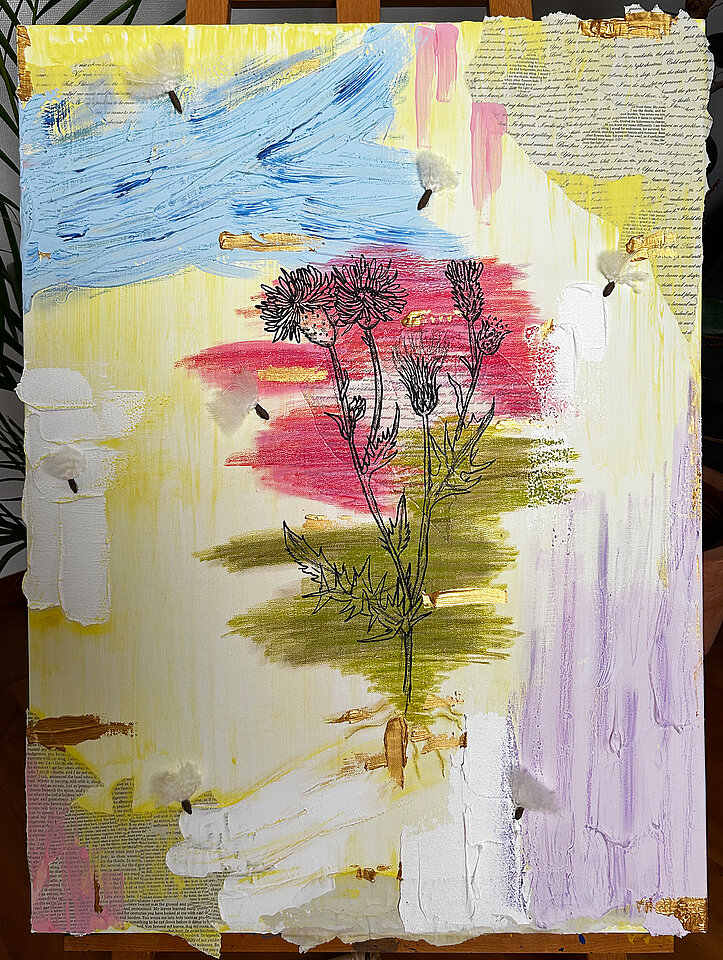
- the field thistle complains about its lack of appreciation by humans,
- the disappearing corn cockle is part of a triptych,
- the lady's smock acts in a historical collage with extinct insects,
- there is an advertising campaign for the common shepherd's purse and other forgotten field herbs,
- the field forget-me-not becomes active as a heroine in a lyric of love and despair in the style of Wilhelm Müller's poem The Beautiful Miller's Wife,
- the knight Sporn and the healer Kamille have to stand up to the pesticide dragon in a modern fairy tale.
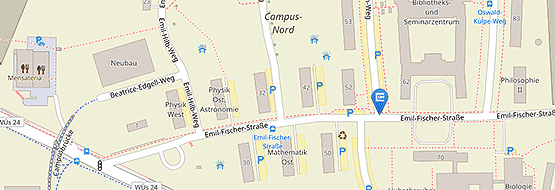
Anyone interested in these stories should visit the students' exhibition. It will open on Wednesday, 29 April 2026, at 2 p.m. in Building 3 in the Philosophy Building. It can be visited there free of charge until mid-May 2026.
The exhibition can be found online here
Opening hours: Monday to Friday 8:00 to 20:00.
On the internet: the series "Anthropocene narratives"
Professor Michaela Fenske ensured that the students' work was embedded in cultural environmental research during the workshop. Dr Beatrice Barrois taught the basics of design, and Professor Markus Riederer coached the students in botanical expertise.
The exhibited stories are part of the "Telling the Anthropocene" series, which has been running since the winter semester 2023/24. It is regularly expanded to include new stories.
The series is organised under the direction of Michaela Fenske in cooperation with her team of professors as well as researchers and students from other departments at the university and the THWS.
Weblink to the series