
The secret of the German word "gebäht"
09/15/2026In the course ‘Erlesenes Franken’, members of the public learn to decipher Old German manuscripts alongside students. Anyone outside the university who is interested can register by 1 October.
The Schmidt family have a plan for the weekend: on Saturday, they finally want to start clearing out the loft. They’ll start with the boxes still containing their grandparents’ belongings. Among them are old letters, yellowed exercise books and Grandma’s handwritten recipe book. But deciphering it is a laborious, if not impossible, task. It’s written in a script that hardly anyone recognises nowadays.
Kurrent and Sütterlin: these were the cursive scripts taught to children in the 19th and early 20th centuries in German schools. Anyone wishing to learn to read them can attend the ‘Erlesenes Franken’ course at the University of Würzburg: Professor Michaela Fenske and her team from the Chair of European Ethnology have been running it since 2020; it is open to all members of the public. The focus is on cookery books, letters and other historical documents relating to everyday life in Franconia.
The course has a distinctive feature: members of the public learn to decipher the old texts alongside students. For the young people, the course forms part of their training, preparing them for work in museums and archives or other professional fields.
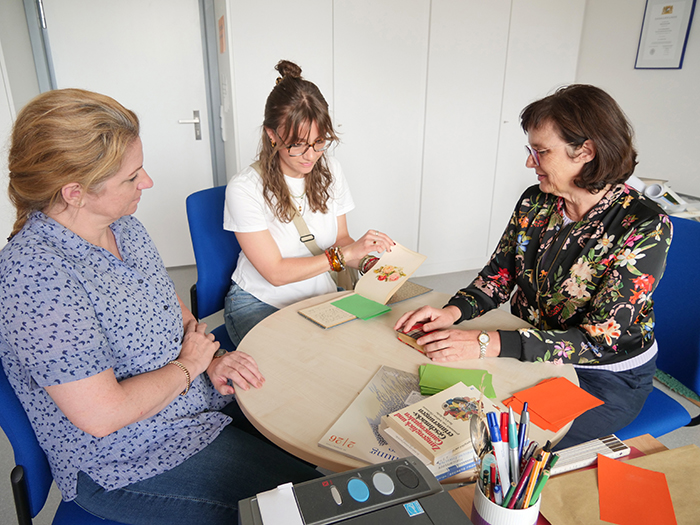
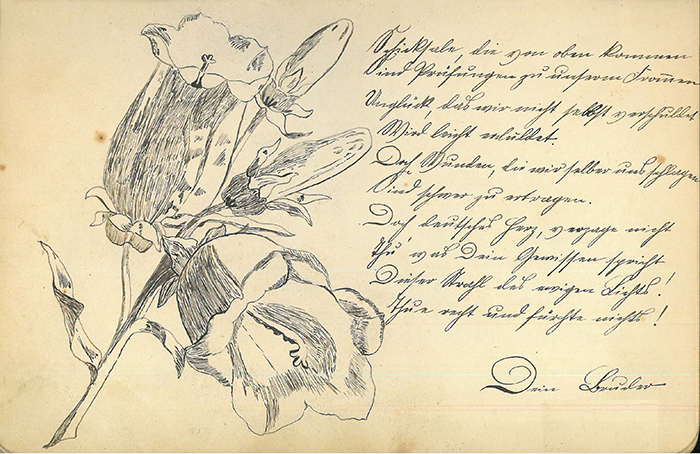
To ensure that course participants from outside the city do not have to make a special trip to Würzburg, the course takes place online via the Zoom video platform. First, the professor gives an introduction to everyone, then participants split into small groups of three to five people to get to work. Under the lecturer’s guidance, they begin by reading simpler texts from poetry albums, cookery books and school exercise books, before moving on to more challenging ones such as letters and diaries.
Dates and registration
Participation in the ‘Erlesenes Franken’ course is free of charge. It starts on 20 October 2026 and will then take place every two weeks on Tuesdays from 6.15 pm to 7.45 pm. The course ends on 26 January 2027. Anyone from outside the university who is interested can register by 1 October 2026 by emailing Michaela Fenske at michaela.fenske@uni-wuerzburg.de. You will receive the Zoom join link after registering. There is no limit on the number of participants. Anyone who wishes to do so will receive a certificate upon successful completion of the course.
Experiences of an external participant
Ulrike Täuber from Würzburg is an external participant. She was so impressed after the first course that she has since attended several follow-up courses. The retired mathematician finds learning alongside students a very positive experience. She also values the insights into everyday life in times gone by that reading the old documents provides.
Old German script was not entirely unfamiliar to Ulrike Täuber: “My grandmother and my aunt used to write like that, and during my school days we studied the old scripts in art lessons,” she explains. This had its consequences: whenever she came across Kurrent or Sütterlin in her daily life, she would try to read the texts – which usually worked out reasonably well.
She therefore got on well in the reading course. “However, prior knowledge is not a prerequisite for taking part,” says Michaela Fenske. Even the students start off with no prior knowledge, and with the lecturers’ support, everyone manages to get to grips with it.
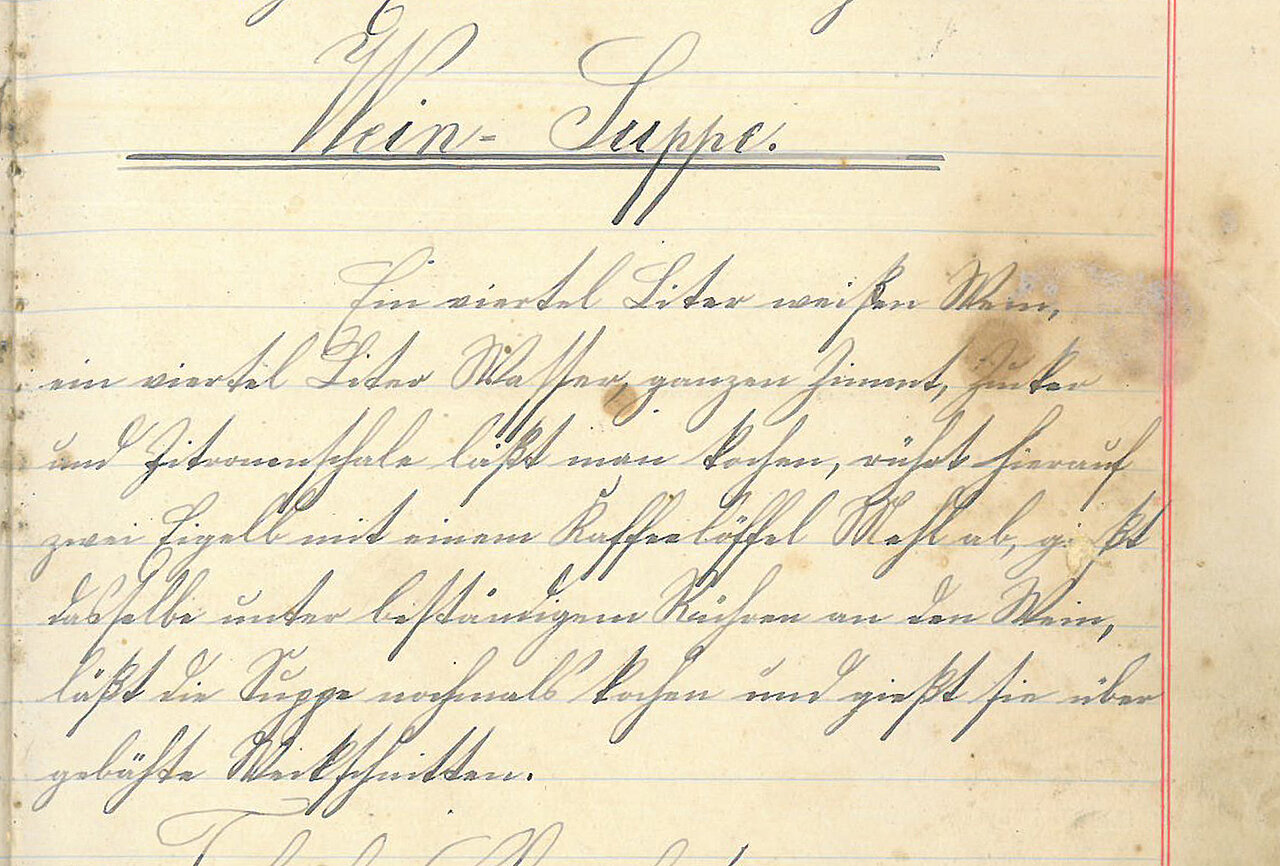
A mystery: the word "gebähte" in a recipe for wine soup
Student Hannah Funke also attended the course. She really enjoyed working with the older participants – for example, “when we puzzled over the meaning of individual words together”. Take, for instance, the ‘gebähte’ pieces of bread roll mentioned in a recipe for wine soup. “Gebäht” is a word that is no longer in common use today. The answer: this refers to toasted pieces of bread roll.
Another plus point: through the course, Hannah Funke gained new perspectives on her home region. The student comes from a village near Hassfurt and enjoyed learning about everyday life in Franconia and Würzburg in the past. Beyond the textual analysis, she found it enriching to hear from the participants what had motivated them to take part in the course, what professions they were in, and how their lives had unfolded.
What academia can learn from cookery books
For a long time, professional cooking was the domain of men. That is why many printed historical cookery books were written by men. In the private sphere, however, it was mainly women who called the shots in the kitchen. Numerous handwritten cookery books from the 19th and 20th centuries have been handed down by these women. Today, these books are a key source for understanding the dietary habits, ingredients used, and cooking practices and techniques of earlier times. Women usually passed on their family recipes through female lines of descent: to their daughters, daughters-in-law and neighbours. In this way, cookery books also document women’s networks, economic opportunities, social belonging, and the thoughts, ideals and interests of the women who wrote them.
Diversity in the course enhances the learning process
“People of different ages and backgrounds working together enhances the learning process,” says Professor Michaela Fenske. It benefits the students and delights local residents.
Some of the external participants, such as Ulrike Täuber, are so enthusiastic after the introductory course that they want to carry on. Anyone wishing to do so can become a researcher themselves at the University of Würzburg and, as part of the ‘Lesegruppe Selbstzeugnisse’, analyse private letters and diaries for academic purposes alongside lecturer Dr Susanne Dinkl.
These follow-up courses take place every 14 days on Mondays from 6.15 pm to 7.45 pm. In this way, everyone can help ensure that more and more of Franconian cultural heritage is made available for research and other purposes, and that regional history is preserved.
Additional images