
The University of Würzburg has to fell diseased trees
10/20/2026For safety reasons, the University of Würzburg must fell a number of poplars on the Hubland Süd campus and service trees on Sanderring. This is essential to protect passers-by.
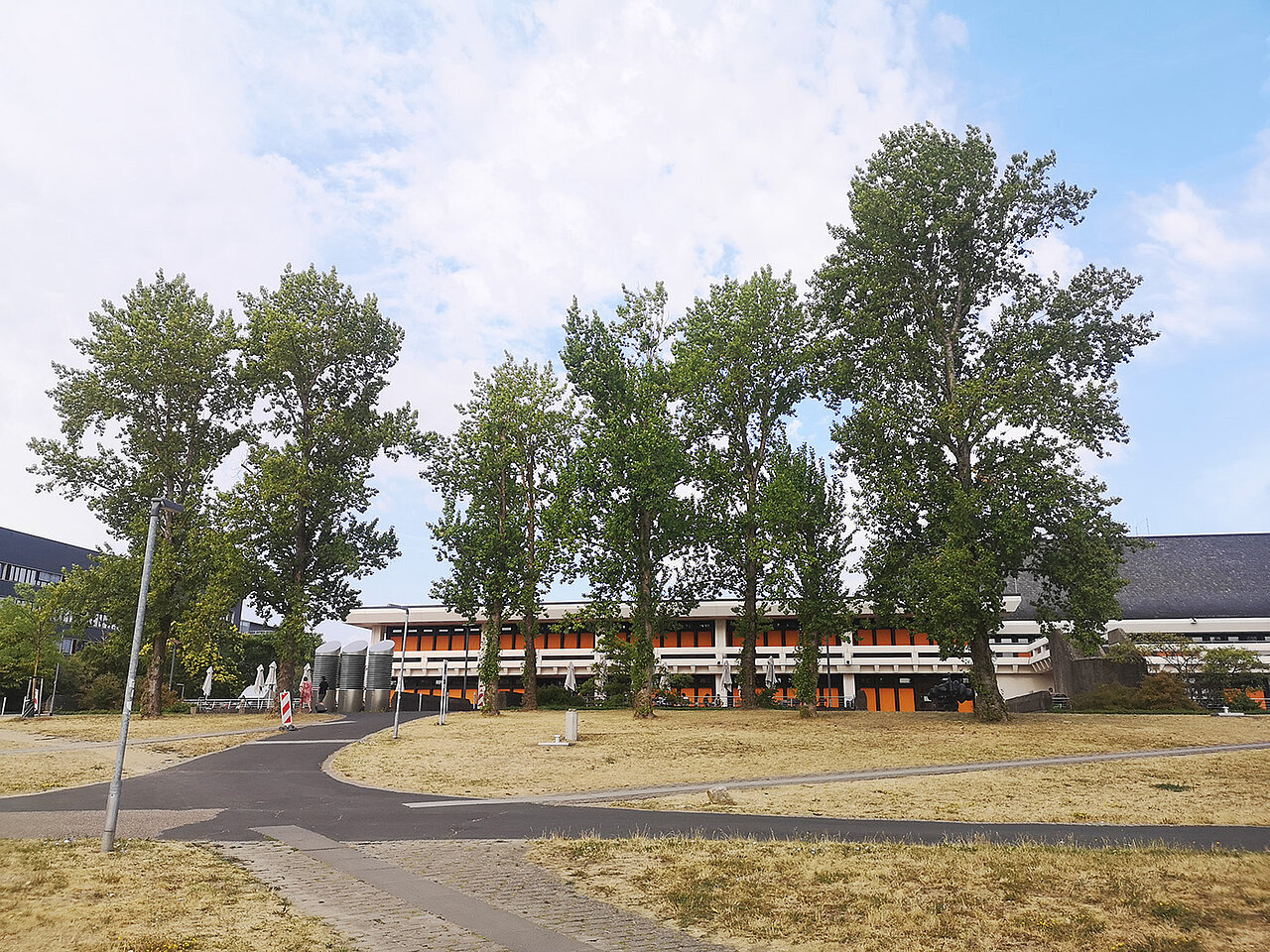
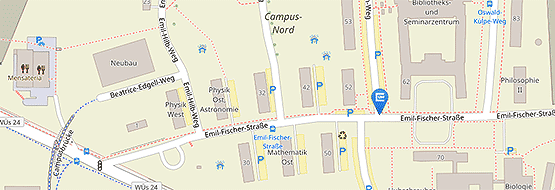
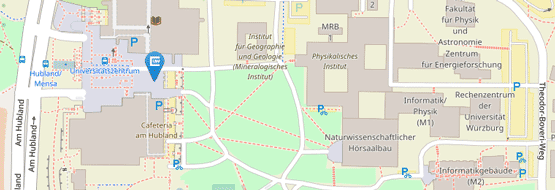
They were probably planted around 1974 as part of the construction of the new canteen at Hubland and are now between 60 and 80 years old: the poplars behind the canteen, on the edge of the campus lawn at Hubland. Now, however, the end of these trees’ lives is drawing near: in the coming weeks, staff from the Technical Operations Service Centre will fell the trees.
Even those without specialist knowledge can see the reasons for this if they look closely: in windy conditions, there is a risk that passers-by could be injured by falling branches. Furthermore, the shallow root system damages the heavily used footpaths and creates dangerous trip hazards. As there is an extremely high volume of foot traffic on the laid-out footpaths and adjacent well-trodden tracks – particularly in the area around the canteen and the university library during term time – protective measures are essential.
Plane trees could replace the poplars
Furthermore, the trees are not in good condition, as a detailed dendrological analysis shows. Their exposed location in a wind corridor on the Hubland, increased water scarcity as a result of climate change, and damage caused by construction work in recent years are responsible for the trees showing significant loss of vitality, bark damage, fungal infestation in the root zone and injuries to the trunk. According to the experts’ assessment, there is no prospect of a sustainable recovery, which is why felling is unavoidable.
The University of Würzburg will make a precise distinction between the individual stands of trees on campus. Only the severely damaged poplars on the east side of the canteen are affected by the felling. Other stands, such as the poplar avenue east of the library and the younger poplars south of the Geography Department, remain healthy and will be preserved through professional maintenance measures.
Tree felling also at the New University
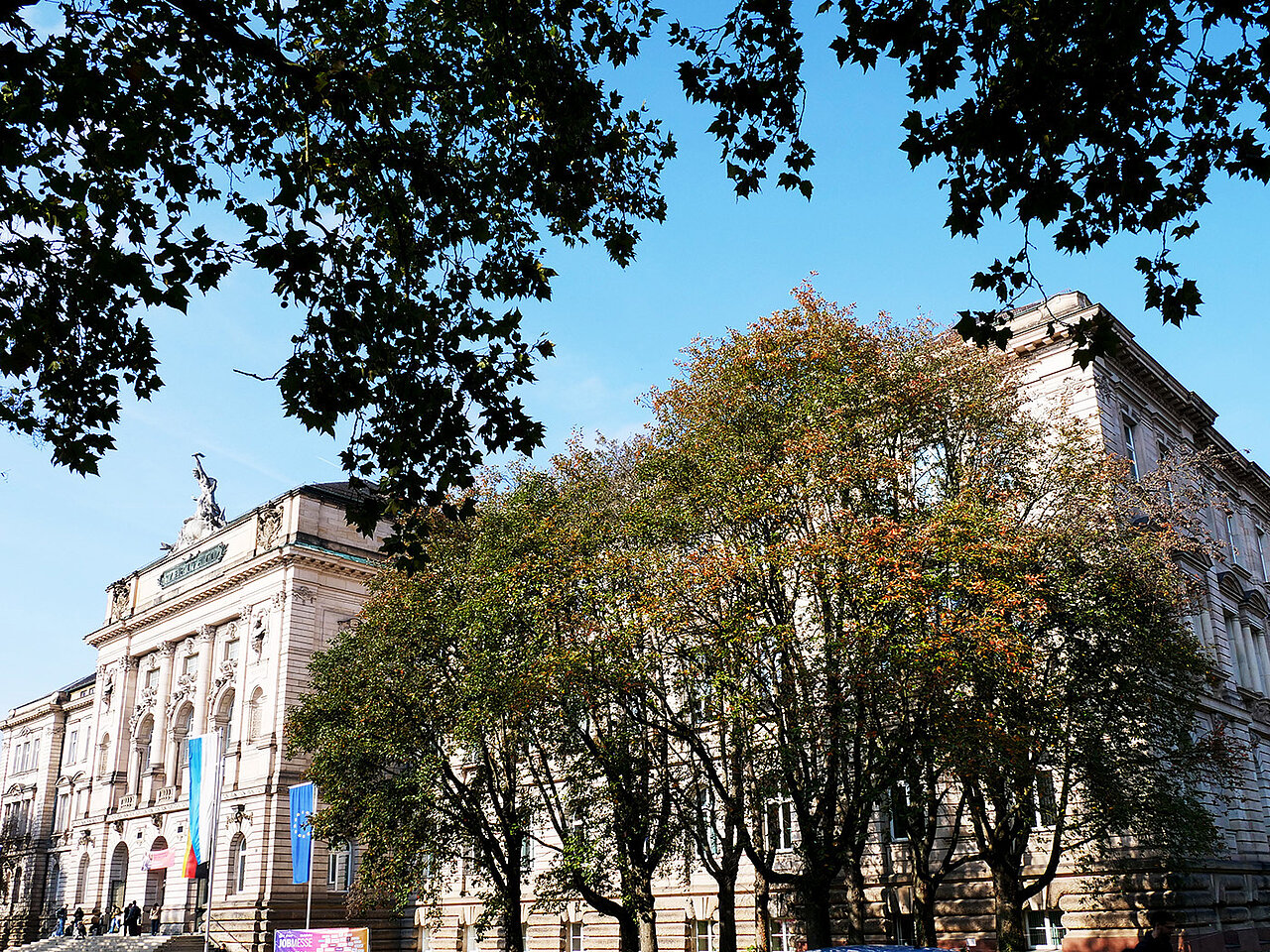
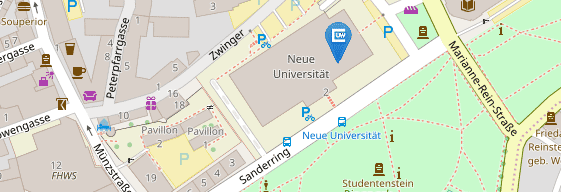
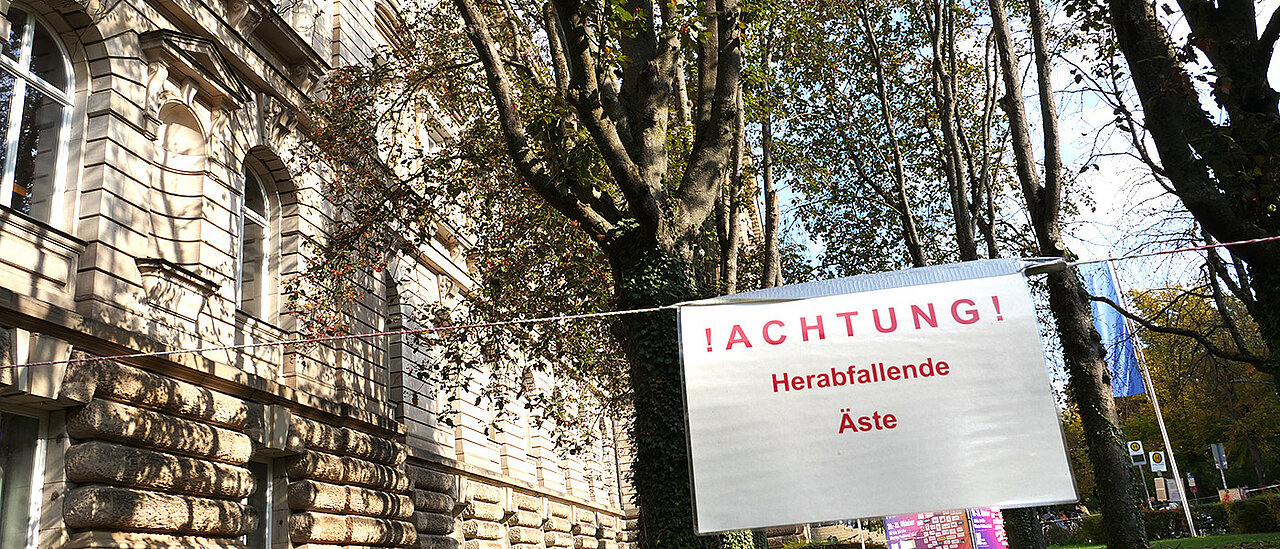
By contrast, a number of service trees in front of and to the side of the New University at Sanderring have already died; an application has already been submitted for permission to fell a total of twelve trees. However, the high temperatures this summer and the lack of rainfall are not to blame for this. Rather, the cause is a fungal infestation which has irreversibly damaged the trees. This is confirmed by a specialist tree survey commissioned by the university. A species assessment confirms that no other species, particularly animal species, will be affected by the felling operation. As passers-by are also at risk from falling branches in this instance, the university has had the area around the affected trees cordoned off for some time now.
Replacement planting is already planned for the Hubland Campus. The City of Würzburg’s Environmental Agency recommends planting plane trees for this purpose. This replanting is intended to create a robust stand of trees that is safe for traffic and optimally adapted to the local soil and water conditions, as well as the microclimate at Hubland.
It remains to be seen what will happen around the New University. As a major refurbishment is due to take place there in the foreseeable future, those responsible intend to wait with replanting at least until it has been clarified where the access roads to the building site will run.
To find an appropriate solution, it is also being considered to analyse the situation and options as part of a transformation experiment at the university’s WueLAB sustainability laboratory before a final decision can be made.
Additional images