
The sustainability of translation
02/24/2026A new junior research group at the University of Würzburg is tracing the translations of ancient epics. Dr. Julia Jennifer Beine heads the project.
Whether the "Iliad", the "Odyssey", the "Argonautica" or the "Metamorphoses" - many ancient epics have survived the millennia and have long since found their way into pop culture. This was only made possible by translations of the Greek and Latin texts into vernacular languages - such as German, English or French - which were made from the late 15th century onwards. It is easy to forget that such translations always have an influence on the content of the texts - and can sometimes differ significantly depending on the version.
In the new junior research group "Sustainability in Translation", Dr. Julia Jennifer Beine wants to take a closer look at such translations. The research group is focussing on the relationship between translation and sustainability. An interdisciplinary research approach is being developed for this purpose.
Julia Jennifer Beine conducts research in classical philology, general and comparative literature and the digital humanities. A particular focus is the reception of antiquity. The group is also supported by four chairs at Julius-Maximilians-Universität Würzburg (JMU): Classical Philology II, History of Philosophy, Old Testament and German Philology, Older Department. The group is based at the Centre for Philology and Digitality (ZPD). Here, the humanities are brought into the digital age by combining them with computer science and digital humanities. The group is funded by the JMU funding line "Excellent Ideas II".
Focus on epics
The research group focusses on the Greco-Roman epics of antiquity. Julia Jennifer Beine explains: "The first thing we will do is collect information on the more than 500-year history of the translation of the epics. For example, we are interested in: How many translations of the epics have there been to date? Who translated them and when? Which publisher published the translation and in which edition? This will provide us with the data we need to analyse the translations themselves."
Once this data has been collected, the work on the texts can begin. Using digital methods, differences between the translations can be recorded and systematically analysed.
The epics will be used to develop a methodological framework that could also be applied to other text types in the future.
Sustainability is multi-layered
When most people hear the term "sustainability", they probably think of renewable energy, organic farming or the preservation of our planet for future generations in general. At first glance, the transition to translations seems less obvious - but sustainability does not only take place on an ecological level.
This aspect will also be examined in the project, for example in relation to the considered use of AI models or the relationship between print and online formats. However, the focus is on social and cultural sustainability. "Some translations inscribe themselves into cultural memory; they endure and thus shape the discourse on a work. The translator's perspective, which is characterised by their respective time and culture, always flows into the translation. If an older translation is published again and again over decades, it may obscure the view of certain aspects of the translated text that are important for younger generations," explains the junior research group leader.
In short: translations from different times and by different translators convey their own interpretations and can fundamentally change our understanding of a text.
The Odyssey, for example, has been translated dozens of times over the centuries. In 2026, what is probably the most famous Greek epic is coming to the big screen as a blockbuster - the translation used as a basis plays a decisive role in such modern adaptations.
Not such subtle differences
A vivid example of how strongly translations can influence the messages of ancient texts is the depiction of sexuality and sexual violence.
In 2022, Stephanie McCarter, Professor of Classics, published a new translation of Ovid's "Metamorphoses" into English. The focus is on clearly naming sexualised violence.
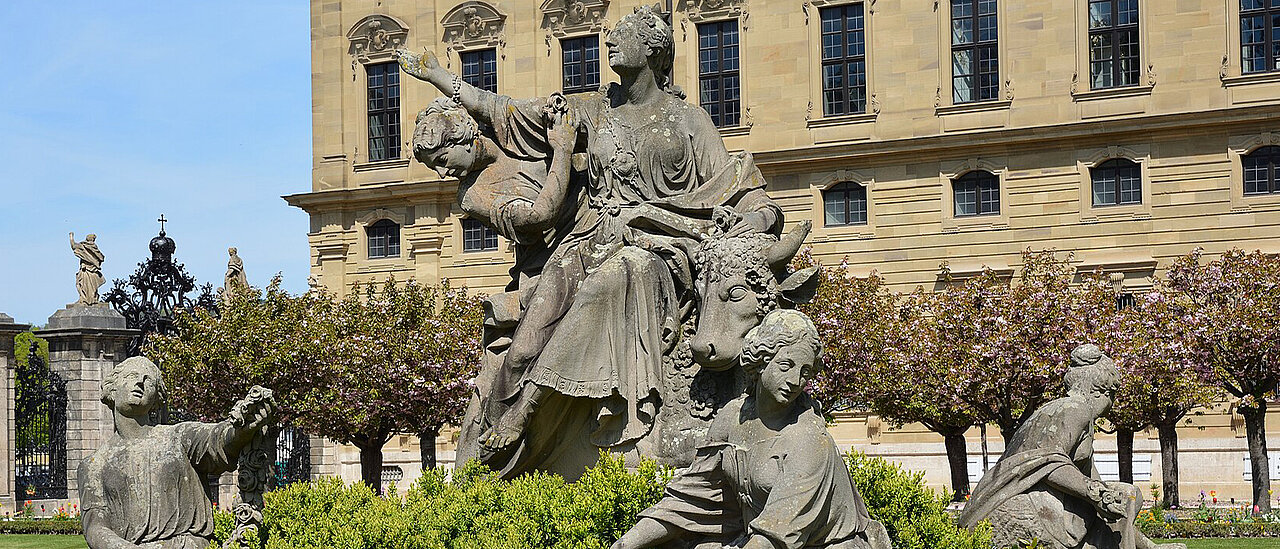
Where earlier translations often trivialised sexual assault, McCarter is more explicit. "Older translations, for example, choose phrases such as 'The Rape of Europa' or 'Der Raub der Europa' in the headings alone, instead of naming the perpetrators. Stephanie McCarter uses 'Jove rapes Europa' instead, which translates as 'Jupiter abducts Europa' or 'Jupiter rapes Europa'," explains Julia Jennifer Beine. "It's interesting to see that the originals were often very clear and therefore also critical in their depiction. It was only in the translations that they were embellished and romanticised," continues Beine.
Jobs for doctoral students
There is therefore more to different translations than one might initially assume. Accordingly, the field offers room for different ideas.
Thanks to its interdisciplinary approach, the research group is of interest to young academics from various disciplines. Two doctoral positions are to be filled in the course of the year. Once this is done, the work with the translations can really begin.
Further information
Dr. Julia Jennifer Beine is also co-editor of DraCor (Drama Corpora), a digital infrastructure for researching drama from antiquity to the 20th century.
On 20 October 2025, the project was the topic of an episode of the digital humanities podcast RaDiHum20.
Contact
Dr. Julia Jennifer Beine, Junior Research Group "Sustainability in Translation", Tel: +49 931 31-83578, e-mail: julia.beine@uni-wuerzburg.de