
COVID-19: Asthma therapy does not weaken immune response
03/31/2026COVID-19 vaccination protection remains intact despite targeted interventions in the immune system, as with asthma therapy. This is shown by a study conducted by the University Hospitals of Würzburg and Heidelberg.
Asthma is one of the most common chronic diseases worldwide. Around 300 million people are affected worldwide, with around eight million in Germany. Patients with severe asthma in particular benefit from modern therapies with monoclonal antibodies. Similar to natural antibodies of the immune system, the laboratory-produced proteins, also known as biologics, can specifically recognise and bind to certain structures in the body.
For example, they block certain messenger substances of the immune system that play a central role in allergic or inflammatory reactions. By blocking these messengers, severe asthma attacks are reduced, lung function is stabilised and quality of life is improved.
However, it has been suggested that these therapies could weaken the defence against viral infections - such as SARS-CoV-2 - precisely because they influence important immune reactions. So does biologics treatment impair the immune response to mRNA vaccines against SARS-CoV-2 or to previous infections with this virus? This question was investigated by Professor Martina Prelog 's working group at the University Hospital of Würzburg (UKW) in cooperation with Professor Frederik Trinkmann, Thorax Clinic at the University Hospital of Heidelberg.
The researchers compared the immune response following COVID-19 vaccination in asthma patients receiving antibody therapy with the immune response in asthma patients receiving conventional treatment. They analysed the quantity and quality of antibodies in the blood and nasal mucosa as well as the activity of T cells and B cells. The results of their case series were published in the Journal of Asthma and Allergy.
Comparable amount of "double antibodies"
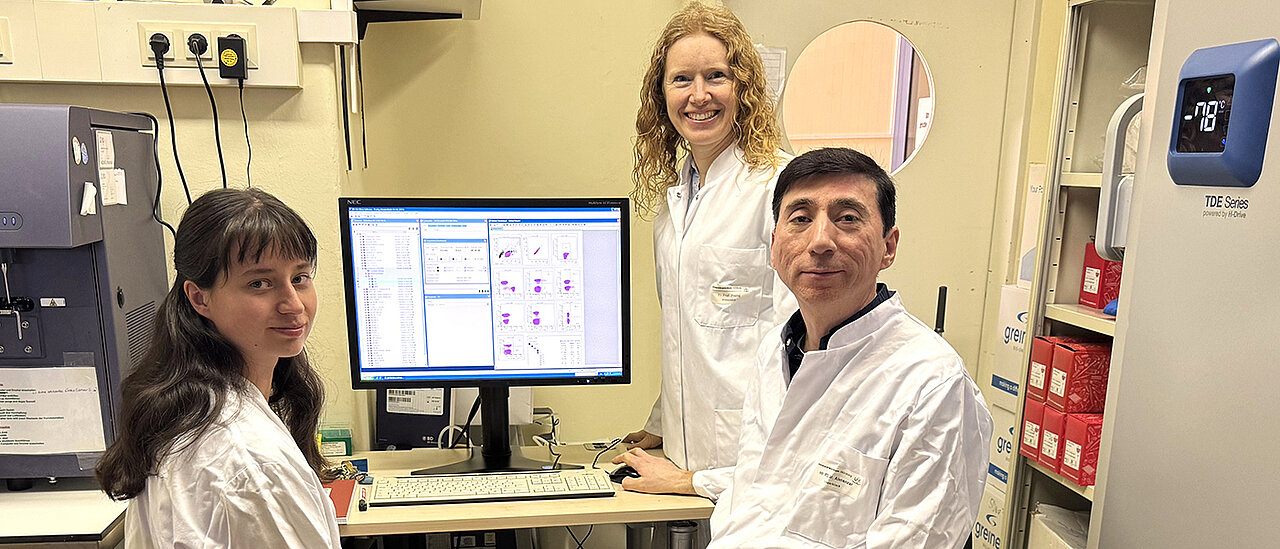
"All patient groups - with or without monoclonal antibodies - were able to develop a strong immune response." According to Dr. Giovanni Almanzar, first author and laboratory project manager at the UKW, this is the most important finding. "All patients had a comparable amount of immunoglobulin (IgA) antibodies in their blood."
These antibodies are so-called "double antibodies", which consist of two linked units. This enables them to bind and protect more efficiently. They are also particularly important for mucosal defence. The vaccination therefore triggered a corresponding immune response in all of them, in which IgA antibodies were formed against the spike protein of SARS-CoV-2. "The overall strength of the defence was also comparably good," says Almanzar.
A strong mucosal and cellular response
On the nasal mucosa - the entry point for pathogens and therefore particularly important for the initial defence - patients who received anti-IL-5 therapy even showed more IgA antibodies.
The immune cells also react to the virus. "The T helper cell response was comparably good in all patients," reports Anna Broderdörp, PhD student in the Prelog research group and another first author of the study. Here, too, the anti-IL-5 therapy does not appear to have any disadvantages, on the contrary: "We even observed a strong activation of certain T cells under this therapy, which are particularly important for the elimination of the virus," says Broderdörp.
Vaccination against the coronavirus can be recommended from an immunological perspective
"We were therefore able to show that mucosal immune responses of the IgA antibody type against spike as well as IgG immune responses in serum and cellular reactivity against the spike protein are also developed when interleukin-5 is inhibited," summarises Martina Prelog. The Würzburg immunologist and specialist in paediatrics and adolescent medicine concludes: "Based on these data, vaccination against SARS-CoV-2 can be recommended from the perspective of immunogenicity development."
According to Prelog, the results also suggest by analogy that other mRNA vaccines, for example against respiratory syncytial virus (RSV), could also elicit an effective immune response in patients with antibody therapy against IL-5. However, this requires RSV-specific immunological tests.
What happens next? "Studies that show how long-lasting the immune response is in asthma patients under antibody therapy and how well regular boosters work would be desirable," says Martina Prelog. "Studies on the breadth of the cellular immune response and the protective effect of the antibodies against new virus variants would be particularly interesting."
She considers controlled placebo studies to be unethical, as these patients in particular need an annual booster with an adapted COVID-19 vaccine and should therefore not be deprived of the vaccine. Vaccinations against respiratory pathogens in particular help to prevent severe disease progression in asthma patients or exacerbations of asthma, i.e. acute worsening episodes, and reduce additional stress on the airways.
Publication
Almanzar G, Broderdörp A, Mees J, Frey M, Herth FJF, Schneider MA, Trinkmann F, Prelog M. Significant Production of Serum and Mucosal Anti-Spike IgA Antibodies After Vaccine-Encoded or SARS-CoV-2-Infection-Induced Spike Exposures in Patients with Asthma Treated with Monoclonal Antibodies Compared to Conventional Therapy. J Asthma Allergy. 2026;19:1-15 https://doi.org/10.2147/JAA.S547038