

The contraceptive pill does not affect the immune response to vaccination
07/28/2026In a comprehensive study, researchers at Würzburg University Hospital have investigated whether a particular method of contraception disrupts the immune response. The answer is now available.
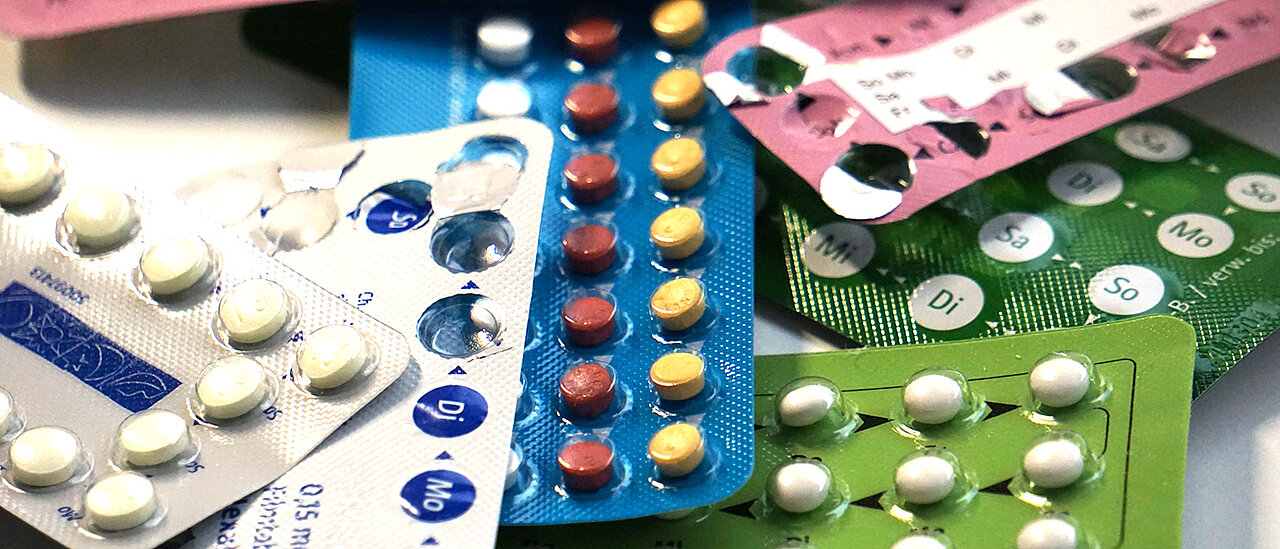
Does the contraceptive pill affect the efficacy of vaccines? This question has been the subject of scientific debate for several years. Several older, smaller studies have produced differing results. The latest analysis of a large cohort study by Würzburg University Hospital (UKW), published in the specialist journal npj Vaccines , now provides new evidence: In a group of more than 1,000 women, the researchers found no evidence – even after taking key confounding factors into account – that taking oral contraceptives significantly alters the immune response following booster vaccinations against SARS-CoV-2.
The analysis was based on the UKW’s so-called CoVacSer study, in which over 1,800 healthcare workers were monitored immunologically over several years throughout the pandemic. For the current analysis, 1,061 women aged between 18 and 50 were examined. Around 20 per cent of them reported taking oral contraceptives. The researchers analysed both the antibody response and T-cell immunity before and after the third and fourth COVID-19 vaccinations, respectively. For neither of these parameters was there a statistically significant effect of taking oral contraceptives.
Implications for vaccination strategies
“Millions of women worldwide take oral contraceptives. At the same time, vaccinations play a central role in the prevention of infectious diseases. It is therefore important to determine whether they can influence the effectiveness of vaccinations,” says Dr Isabell Wagenhäuser, lead author of the study. “Our findings show no significant influence of oral contraceptives on the immune response following COVID-19 booster vaccinations. The data can help to scientifically contextualise existing uncertainties and, at the same time, lay the groundwork for further investigations into possible interactions between commonly used medicines and vaccine responses, including for future vaccines.”
Why is this study particularly significant? “The research question is scientifically challenging,” says biostatistician Dr Alexander Gabel from the Centre for Integrative Infectious Disease Research (CIID) at Heidelberg University. “Randomised controlled trials on the use of oral contraceptives are virtually impossible for ethical reasons. Large, well-characterised cohorts and robust statistical methods are therefore crucial for reliably investigating possible associations.”
Methodological progress in a difficult-to-study field of research
Previous studies have, in some cases, described associations between hormonal contraception and individual immunological parameters. However, potential confounding factors could often only be taken into account to a limited extent. The current study therefore utilised statistical models that incorporated age, body mass index, vaccination status, previous SARS-CoV-2 infections, occupation and other potential confounding factors into the analysis.
“Particularly for questions that cannot be investigated via ethically acceptable randomised trials, large prospective cohort studies combined with appropriate statistical methods can provide important evidence. Our results demonstrate just how informative such datasets can be,” summarises Dr Manuel Krone, last author and lead investigator of the CoVacSer study.
However, the authors emphasise that the study also has its limitations. For example, no information was available on the exact composition of the contraceptives used or the timing within the menstrual cycle. Differences between individual preparations or cycle-dependent effects cannot therefore be conclusively assessed. These aspects are to be investigated in more detail in future studies.
The CoVacSer study
The CoVacSer study was conducted as a prospective long-term study at Würzburg University Hospital to investigate the immune response following COVID-19 vaccinations and SARS-CoV-2 infections. From September 2021 to December 2023, over 1,800 healthcare workers were monitored. The aim was to identify factors influencing humoral and cellular COVID-19 immunity following vaccination and infection, as well as to gain insights into vaccine efficacy, booster doses and the impact of SARS-CoV-2 vaccination and infection on quality of life and ability to work.
Publication
Isabell Wagenhäuser, Julia Reusch, Juliane Mees, Lukas B. Krone, Isabella Eiter, Thiên-Trí Lâm, Alexandra Schubert-Unkmeir, Carolin Curtaz, Anna Frey, Oliver Kurzai, Stefan Frantz, Sabine Wicker, Achim Wöckel, Nils Petri, Alexander Gabel & Manuel Krone. Oral contraceptive usage among healthcare workers and its impact on COVID-19 booster vaccination immunogenicity. npj Vaccines 11, 134 (2026). https://doi.org/10.1038/s41541-026-01510-z