
New treatment option for a slow heartbeat
07/14/2026Until now, people experiencing pauses in their heartbeat, fainting spells or a pulse that is too slow have often had to be fitted with a pacemaker. An alternative is now available at Würzburg University Hospital.
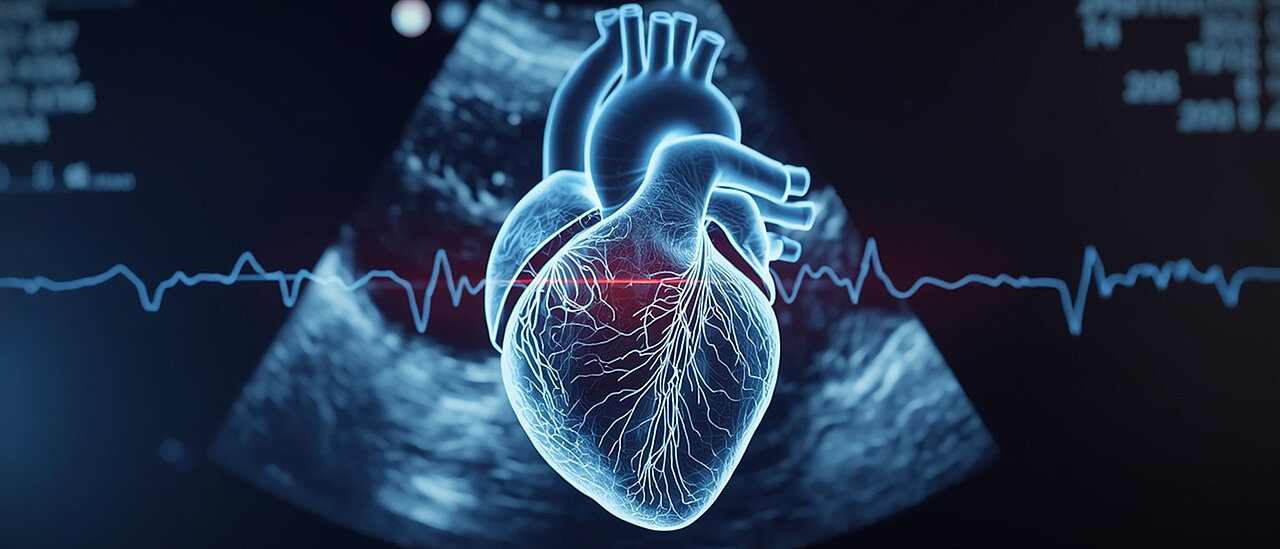
The heart’s electrical activity is controlled by the autonomic nervous system. In particular, the so-called parasympathetic nervous system – often referred to as the ‘resting nervous system’ – can slow down the heart rate. In some people, this effect is so pronounced in certain situations that it leads to marked slowdowns in the pulse, pauses in the heartbeat or even fainting spells. This is referred to as bradyarrhythmia.
For these patients, Würzburg University Hospital (UKW) has been offering cardioneuroablation since this spring – a modern electrophysiological procedure that specifically intervenes in the nervous control of the heart. The procedure involves ablating specific nerve nodes – known as ganglia – which mediate the inhibitory influence of the parasympathetic nervous system on the heart. The aim is to stabilise the heart rate permanently and alleviate symptoms.
“Cardioneuroablation opens up a new treatment option for selected patients for whom, until now, the implantation of a pacemaker was often the only option,” explains Professor Thomas Fischer. The Head of Interventional Electrophysiology at Medical Clinic I at the UKW continues: “Younger patients in particular can benefit from this procedure if their symptoms are caused by excessive activity of the parasympathetic nervous system.”
When the nervous system slows the heart down
Unlike conventional ablation procedures, which primarily treat rapid cardiac arrhythmias, cardioneuroablation specifically targets the causes of certain slow cardiac arrhythmias. Possible indications include recurrent fainting spells (syncope), sudden pauses in the heartbeat, and a persistently slow heart rate that causes symptoms such as dizziness, reduced performance or exhaustion.
This requires careful diagnosis to determine whether the symptoms are in fact triggered by excessive parasympathetic control of the heart.
High-resolution imaging enables precise treatment
The UKW uses state-of-the-art imaging technologies to plan the procedure. A high-resolution photon computed tomography scanner is used to visualise the areas where the relevant nerve plexuses are located. This imaging data is then fused with a map of the heart created during the procedure. This enables doctors to precisely locate and treat the target regions.
The procedure is carried out using catheters that are advanced to the heart via the femoral vein. The access route is similar to that used for ablation in atrial fibrillation. The nerve plexuses to be treated are mainly located in the left atrium and in the area where the right and left atria meet. Following ablation, the inhibitory influence of the parasympathetic nervous system decreases, which can lead to a permanent increase in heart rate. The risk associated with the procedure is considered low.
“Cardioneuroablation does not, as a rule, replace a pacemaker,” emphasises Fischer. “However, it enables us to offer certain patients a more personalised treatment.” With the introduction of this procedure, the UKW is further expanding its range of services in modern cardiac rhythm medicine and is one of the few centres in Germany to offer this still relatively new form of treatment.