

Remembering the Nazi era: New approaches in German lessons
04/07/2026A new book shows how National Socialism and the Holocaust can be taught in a contemporary way in German lessons. Co-editor is Professor Dieter Wrobel from the University of Würzburg.
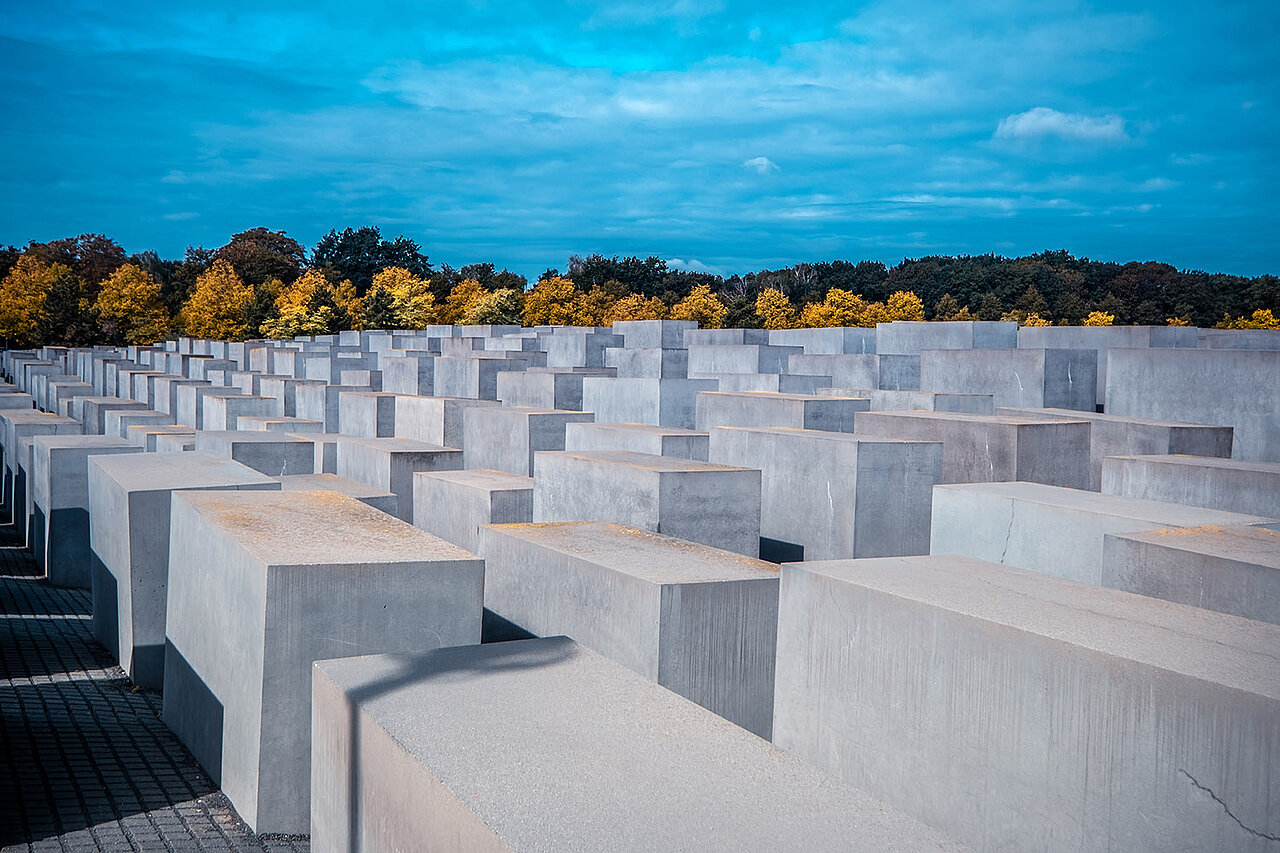
Those who belong to an older generation in Germany usually had parents or grandparents who had experienced the National Socialist era themselves and could talk about it. This is no longer the case for today's schoolchildren - the era of contemporary witnesses is coming to an end.
Even the traditional formats of remembrance culture - such as commemorative events or wreath-laying ceremonies - hardly reach young people, if at all. Although stumbling blocks and street or square names are clearly visible, they often provide no context for the viewer.
Knowledge needs to be rebuilt
"For young people, knowledge about the Nazi regime and the Holocaust must therefore be rebuilt didactically, including in German lessons," says Professor Dieter Wrobel, Chair of the Didactics of the German Language and Literature at the University of Würzburg. He and his team are training student teachers who will later teach German in schools.
But what can a contemporary approach to National Socialism look like? This question is answered in the new anthology "Praktiken der Erinnerung. Holocaust und Nationalsozialismus im Deutschunterricht der Zukunft" (in German). Dieter Wrobel has edited it together with professors Anja Ballis (LMU Munich) and Anette Sosna (University of Greifswald).
The anthology shows, among other things, the possibilities that comics, graphic novels, films and multimedia learning formats offer for school lessons. The authors scrutinise these formats from a didactic, interdisciplinary and literary perspective and provide practice-oriented impulses for the design of lessons. In doing so, they have the next generation of teachers in particular in mind - "because their convictions and approaches to the culture of remembrance are also different to those of previous generations," says Dieter Wrobel.
Three examples for the classroom
In an article in the book, the Würzburg-based German didactics expert, together with Dr Michael Veeh from LMU Munich, shows examples of how comics and other image-text combinations can be used to teach history. Here are three examples:
In the graphic novel "Der Duft der Kiefern" (The Scent of Pines) (2021), Bianca Schaalburg reports on a search for clues in her family's history. The focus is not on the victim's perspective, but on the question of her long-dead grandfather's possible role as a perpetrator. The work is partly designed as a collage, incorporating photos of stumbling blocks and other images.
The comic project "Wie geht es dir?" (How are you?) (2025) was created by a larger group of artists. It aims to address the current political situation in the Near East after 7 October 2023, but repeatedly makes connections to the Holocaust.
Finally, Alexandra Klobouk's "Das geheime Erni-Buch" (The Secret Erni Book) (2025) is a hybrid medium between graphic novel and picture book. It recounts the experiences of Holocaust survivor Ernst Otto Krakenberger for a younger target audience.
Linked to the "Paderborn Declaration"
The publishing team's volume follows on from the "Paderborn Declaration" of 2022: In it, the German section of the German Association of Germanists calls for Holocaust literature to be firmly anchored in the curricula of all types of schools, especially in view of the end of contemporary witnesses and new media forms of remembrance. The association also advocates the inclusion of fictional comics, films or digitally stored eyewitness interviews in lessons.
Publication
The anthology was published by Wissenschaftlicher Verlag Trier in 2026. It is available as an open access publication on the publisher's website .
"Praktiken der Erinnerung. Holocaust und Nationalsozialismus im Deutschunterricht der Zukunft", edited by Anja Ballis, Anette Sosna and Dieter Wrobel as volume 15 of the series "DDG - Beiträge zur Didaktik der deutschsprachigen Gegenwartsliteratur". 274 pages, 37.50 euros (print), ISBN Print: 978-3-98940-109-9 / ISBN Open Access: 978-3-98940-110-5
Contact
Prof. Dr Dieter Wrobel, Chair of the Didactics of the German Language and Literature, University of Würzburg, dieter.wrobel@uni-wuerzburg.de