

Five million euros for forest research
03/31/2026Promoting diversity in commercial forests on the basis of ecological theories: This is the aim of a research group that has now been approved for further funding by the DFG. The group is headed by JMU forest ecologist Jörg Müller.
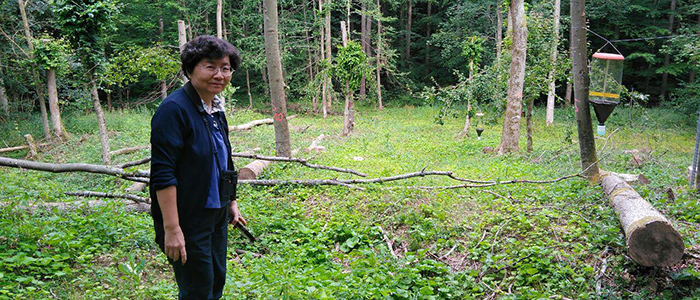
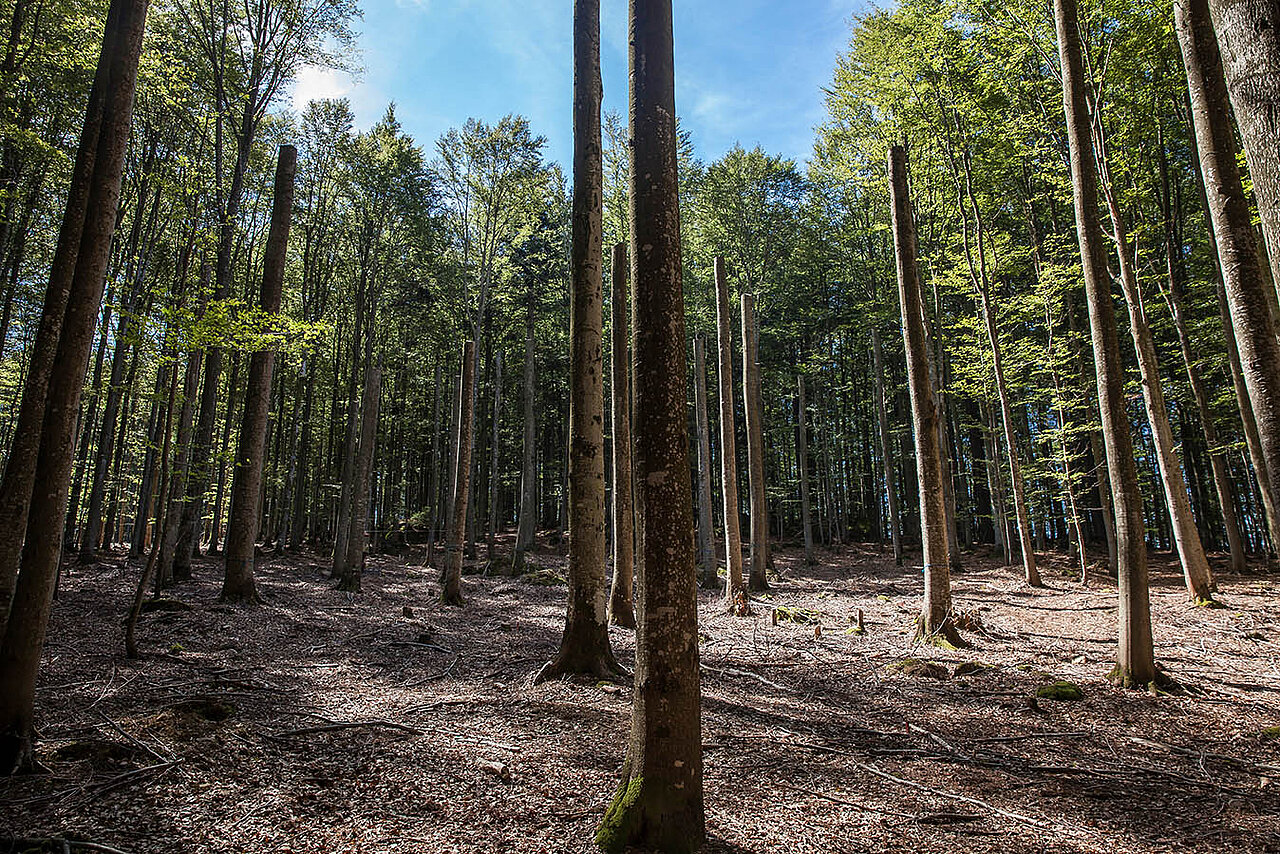
Researchers have been observing for years that today's commercial forests in Central Europe look too uniform: Most are medium-aged, with a dense canopy and no deadwood. Recently, however, nature conservation-orientated forestry concepts and an increasing number of disturbances, such as wind breakage or bark beetle infestation, have led to more diversity.
A better understanding of the consequences of the homogenisation of forests and how it can be reversed: This is what the BETA-FOR research group is working on. At eleven locations in Germany, experts from the fields of ecology, forestry, remote sensing, chemical ecology and statistics are experimentally investigating for the first time whether and how greater structural diversity also leads to more biodiversity and multifunctionality.
Five million euros for another four years
The German Research Foundation (DFG) has been funding the work of this group since 2022. Its results to date have been so good that the DFG has now approved further funding of over five million euros for four years.
The spokesperson for the research group is Professor Jörg Müller, Chair of Conservation Biology and Forest Ecology at the University of Würzburg's Biocentre.
"In the second phase, we will focus, among other things, on the synthesis of biodiversity and multifunctionality, the consideration of temporal development, the modelling of forest dynamics under various climate scenarios and an economic evaluation," says Jörg Müller. To this end, 30 species groups and ecosystem functions will be analysed at each of the eleven locations.
Website of the BETA-FOR research group
Additional images