
Award for a study on sexual harassment during medical studies
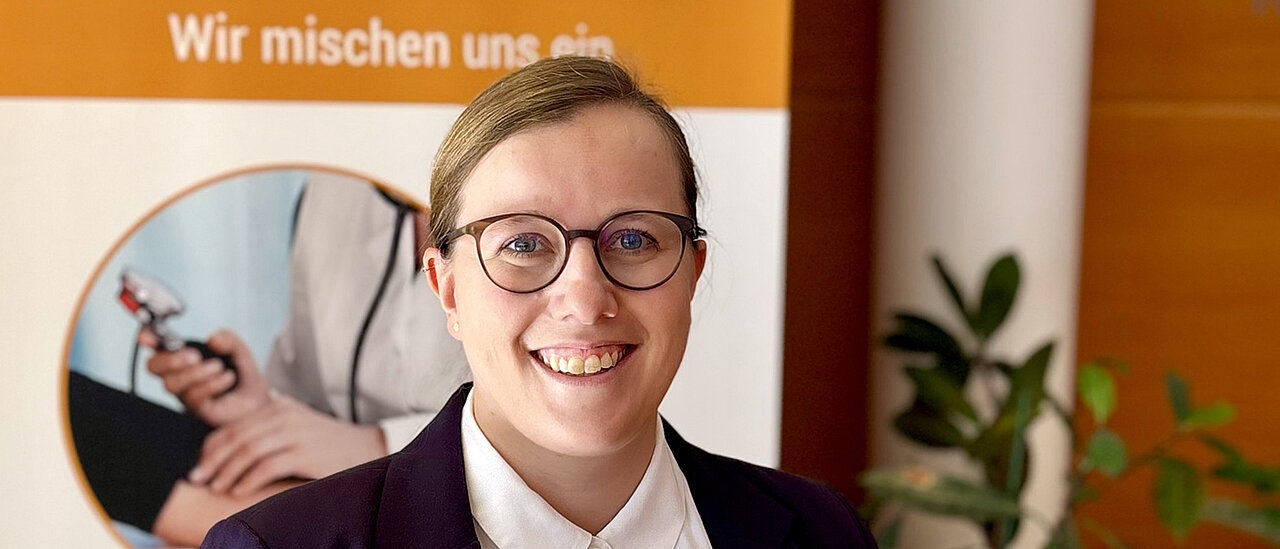
11/17/2026Paediatric surgeon Dr Sabine Drossard has been awarded the Science Prize by the German Association of Women Doctors. The prize recognises her research into sexual harassment and gender-related inequalities in medical training.
Sexual harassment and gender-based discrimination are significant challenges in medical education. They can have a lasting impact on equal opportunities, career development and the health of medical students and female doctors.
However, despite international evidence, there has so far been a lack of comprehensive studies in Germany that examine individual experiences, gender-specific differences, structural conditions and prevention strategies together.
This is precisely where Dr Sabine Drossard’s #MEDToo research project came in. The senior consultant (Oberärztin) in paediatric surgery at Würzburg University Hospital (UKW) examined sexual harassment during medical studies from various perspectives, investigated gender-specific differences and structural factors, and derived approaches for effective prevention from her findings.
Multi-method research programme
First, she conducted a qualitative interview study with twelve medical students in their clinical year, focusing on their experiences and coping strategies. The interviews revealed that hierarchies, normalisation and uncertainty regarding their professional role facilitate boundary violations and often lead to silence or situational tolerance.
This was followed by a nationwide cross-sectional survey on prevalence and gender-specific differences, which she carried out in collaboration with Michelle Förstel and Maximilian Vogt, with the support of the Federal Association of Medical Students in Germany (Bundesvertretung der Medizinstudenten in Deutschland e. V.).
Of the 5,681 medical students surveyed from 44 Faculties of Medicine, 44.2 per cent reported having experienced sexual harassment themselves. Almost half (49.4 per cent) had witnessed such incidents. Female students were significantly more frequently affected than male students. The number of those affected increased over the course of their studies. During their clinical year, more than two-thirds of students had had such experiences.
The findings had significant consequences. Among other things, they were associated with psychological distress and avoidance behaviour, and in some cases influenced career choices and the selection of a future specialism.
Medical training must change
Drossard’s analysis of institutional support and reporting structures revealed that these are often not utilised. Only 12.7 per cent of those affected had officially reported an incident.
In addition to investigating existing problems, the research team also developed concrete solutions. For instance, an evidence-based teaching intervention improved the participants’ knowledge, confidence in taking action and self-efficacy when dealing with sexual harassment. These positive effects were still evident three months later. However, participants continued to find it more difficult to act confidently in situations involving people higher up the hierarchy.
In Würzburg, for example, a teaching intervention for students has been offered on a voluntary basis in collaboration with the Würzburg Teaching Clinic since the summer semester of 2025.
Sabine Drossard’s research makes it clear that sexual harassment and gender-based discrimination in medical studies cannot be viewed as individual problems. Effective prevention requires changes to institutional structures and the culture of education, as well as the targeted development of skills. Safe and equitable learning environments are a key prerequisite for greater gender equality, the advancement of female doctors and ensuring a sustainable supply of young talent in the healthcare sector.
Science Prize from the German Association of Women Doctors
The significant contributions that Sabine Drossard’s research makes to medical education have now also been recognised by the German Association of Women Doctors (Deutscher Ärztinnenbund DÄB). At its symposium in Hanover on 17 October 2026, the DÄB awarded its 13th Science Prize to the paediatric surgeon. The award, worth 4,000 euros, is presented only every two years and honours outstanding scientific work by female doctors and dentists. At the same time, it is intended to support the laureates in their future scientific careers.
Sabine Drossard: “Through our research, we aim not only to draw attention to existing shortcomings, but also to help bring about lasting change to the structures and culture of medical education. For me, this award is also an incentive to continue campaigning for a culture of respect in medicine.”
For the DÄB, the findings of the #MEDToo study underline the urgent need for action. “Anyone who learns to tolerate inappropriate behaviour whilst still studying medicine comes to see the abuse of power as an inescapable part of everyday professional life. We must not accept this,” emphasises Barbara Puhahn-Schmeiser, Co-President of the DÄB. “We need a culture in which those affected are protected and those in leadership positions fulfil their responsibilities.”
The fact that this issue is a high priority for the DÄB is illustrated not least by a statement on the abuse of power in medicine, which the association has just adopted. In it, the DÄB addresses the need for action in tackling abuse of power and underlines its commitment to a fundamental cultural shift in medicine.
“Abuse of power must neither be covered up by hierarchies nor enabled by silence,” adds Jana Pannenbäcker, Co-President of the DÄB. “It is not enough to encourage those affected to defend themselves. We must change the structures that have hitherto prevented them from doing so. This includes independent, low-threshold support services, transparent procedures and effective protection against professional repercussions.”