
Scavenger Hunt Through Würzburg: 500 Years of the Peasants' War
04/03/2025Visualising places and people in the Peasants' War that are hardly or not at all remembered in Würzburg: This is the aim of a history didactics team at the University of Würzburg with a freely accessible app.
Today's farmers are independent entrepreneurs. Things were different 500 years ago. Back then, farmers were dependent on their landlord, such as a nobleman, a bishop or a monastery. The lord of the manor provided "protection and protection" and the farmers had to pay taxes and labour.
Increasing economic burdens and legal disadvantages, as well as Martin Luther's Reformation, led the people of this time to desire a religious and social reorganisation. In parts of south-west Germany, in Salzburg, Tyrol, Franconia, Saxony and Thuringia, there were rebellions against the territorial princes and landlords. In addition to peasants, the rebels also included craftsmen and day labourers, occasionally even nobles and entire towns, such as Würzburg.
Siege of the Marienberg Fortress
On 9 May 1525, peasants and their leader, the Franconian knight Florian Geyer von Giebelstadt, forced the city of Würzburg to join the uprising during a city council meeting. However, fearing the reaction of Prince-Bishop Konrad II von Thüngen, the city did not take part in the subsequent siege of Marienberg Fortress, the bishop's seat. He was in Heidelberg at the time to request support from the Swabian League against the rebels.
The insurgents fired on the fortress and the bishop's troops fired back. In the end, the siege failed. Shortly afterwards, the rebels were defeated by the advancing troops of the Swabian League - on 4 June 1525 in the Battle of Ingolstadt, a small village just outside the city gates.
Digital Scavenger Hunt and Learning at Stations
Anyone wanting to find out more about these turbulent days in the city of Würzburg will find what they are looking for in the free Actionbound app. Under the title "Aufruhr in Würzburg - Personen und Orte des Bauernkriegs", you will find a Bound that was created at Julius-Maximilians-Universität (JMU) Würzburg. Bounds are a mixture of station-based learning and digital scavenger hunt. They can be played free of charge - during a walk to the original locations in the city, but also at home at the kitchen table.
Weblink to the Actionbound (in German only)
18 students developed the Bound on the "Peasants' War" in a seminar on didactics of history with lecturer Dr Miriam Montag-Erlwein. The primary target group is pupils in year seven at secondary schools and grammar schools - the Peasants' War is covered in their lessons; the Bound is tailored to the curriculum. However, it is of course worthwhile for anyone with an interest in history to play the app.
Historical Locations and Personal Perspectives
The Peasants' War Bound consists of nine stations. "We don't just want to convey historical facts, but also show historical sources and personal views of the people involved at the time," says Miriam Montag-Erlwein.
One of the agitators on the farmers' side was the travelling singer Hans Bermeter. He knew how to inspire people for a cause, but was also not afraid to spread fake news about the prince-bishop, for example. "The sources from this period are thin on the ground, but we can show in the Bound what some of his contemporaries thought about Bermeter," says the JMU lecturer.
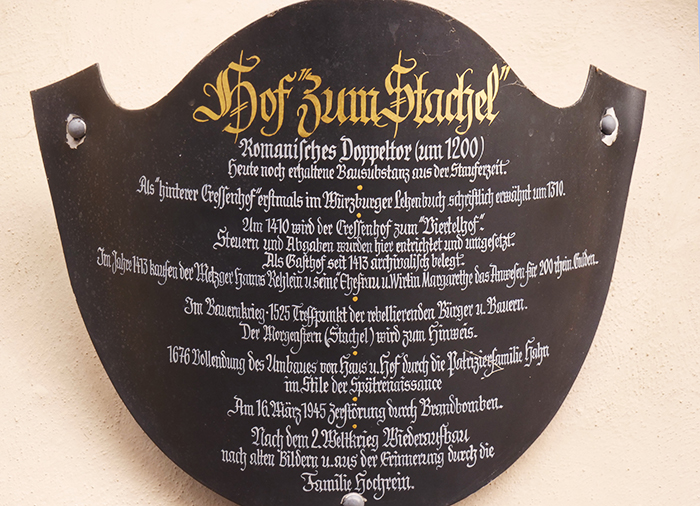
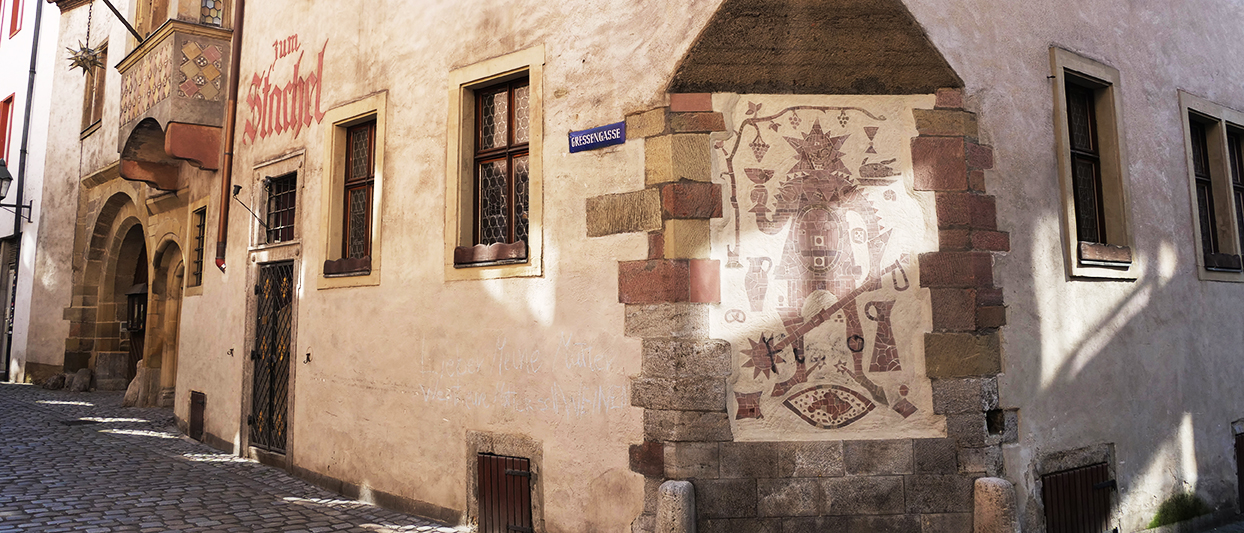
The Bound also leads to some important places in the city. For example, to the Stachel wine house, which was a conspiratorial meeting place for the peasant leaders at the time. Or to the church of St Burkhard at the foot of the fortress, where the peasants' armoury was located. Another stop is the former fish market, today's Sternplatz. This is where the prince-bishop had several insurgents executed after the war.
Contact
Dr Miriam Montag-Erlwein, Didactics of History, University of Würzburg, T +49 931 31-87227, miriam.montag-erlwein@uni-wuerzburg.de
Additional images