
When inflammation reprograms the immune system
11/24/2026Researchers at the University of Würzburg reveal how persistent inflammation changes dendritic cells and triggers T-cell exhaustion. Their study provides new insights into how immune responses are regulated during chronic infections.
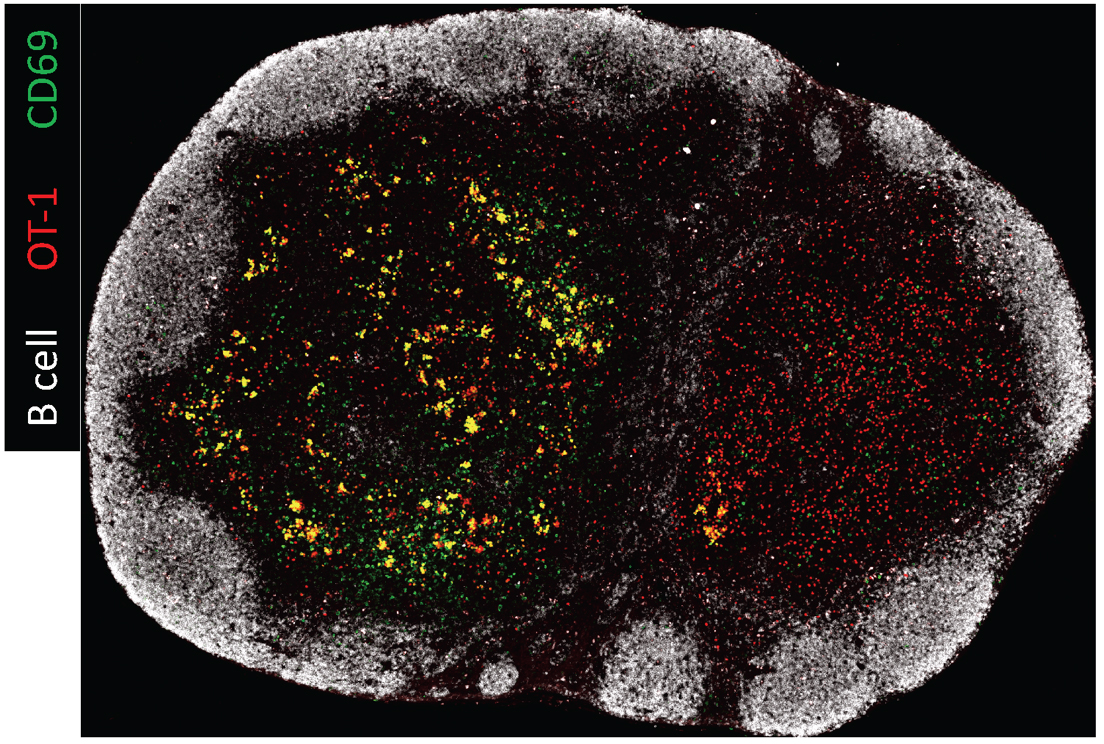
When the body encounters an infection, its immune system must respond rapidly and effectively. Dendritic cells play a central role in this process. They detect pathogens, capture their components, and activate specialized immune cells known as CD8 T cells, which can recognize and eliminate infected cells.
But what happens when an infection cannot be fully controlled and inflammation persists?
Under these conditions, CD8 T cells often gradually lose their ability to mount effective immune responses. This phenomenon, known as T-cell exhaustion, is a hallmark of chronic viral infections and is also frequently observed in cancer.
Researchers at the Institute for Systems Immunology at Julius-Maximilians-Universität Würzburg have now identified a mechanism that contributes to the development of T-cell exhaustion. Their findings have been published now in the scientific journal Immunity.
Persistent inflammation changes the instructions given to T cells
Until now, T-cell exhaustion has largely been understood as a consequence of prolonged antigen stimulation. The Würzburg researchers demonstrate that the functional state of dendritic cells also plays a decisive role.
Systemic inflammation progressively reprograms dendritic cells, driving them into a state the researchers describe as refractory. In this state, dendritic cells become less responsive to further inflammatory stimulation and change the signals they provide to T cells.
These changes have profound consequences. Rather than initiating an effective immune response, the altered dendritic cells can actively promote the development of exhausted CD8 T cells.
“Our findings demonstrate that T-cell exhaustion is not determined solely by the T cells themselves or by how long they encounter an antigen. The functional state of the dendritic cells that activate them is equally important,” explains Professor Wolfgang Kastenmüller from the Institute for Systems Immunology at the University of Würzburg.
An unexpected finding: T-cell exhaustion can also protect the body
One of the most surprising discoveries emerged when the researchers experimentally removed the dendritic cells responsible for initiating exhaustion.
Although this prevented the development of exhausted T cells, it came at a substantial cost: CD8 T cells mounted an uncontrolled immune response that caused severe, life-threatening tissue damage.
This finding reveals that T-cell exhaustion is not simply a failure of the immune system. Under certain conditions, it also serves an important protective function by limiting excessive immune responses.
The immune system therefore faces a fundamental challenge: it must eliminate pathogens while preventing its own defensive mechanisms from damaging the body.
Identifying a molecular regulator
The researchers also identified the protein DUSP1 as an important regulator of the refractory dendritic-cell state.
This discovery provides a molecular entry point for understanding how persistent inflammation changes the communication between dendritic cells and T cells.
The findings open new avenues for investigating immune dysfunction during chronic infections and may also have implications for cancer immunotherapy.
At the same time, the study highlights an important consideration for therapeutic strategies aimed at reversing T-cell exhaustion: stronger immune responses are not necessarily better immune responses. Restoring T-cell activity without understanding the mechanisms that normally restrain it could potentially result in harmful inflammation.
Publication
Systemic inflammation reprograms dendritic cells at a critical decision point for CD8 T cell exhaustion. Wolfgang Kastenmüller & colleagues. Immunity, DOI: 10.1016/j.immuni.2026.10.018.
Contact
Prof. Dr. Wolfgang Kastenmüller, Institute for Systems Immunology, Julius-Maximilians-Universität Würzburg, T +49 931 31-81816, wolfgang.kastenmueller@uni-wuerzburg.de