

Functional coupling of RNA polymerase and ribosomes in our ancestors
NUCLEATE Seminar
| Date: | 06/15/2026, 3:00 PM - 4:00 PM |
| Category: | seminar, talk |
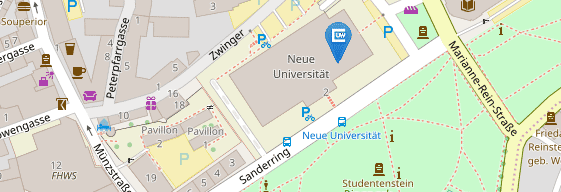
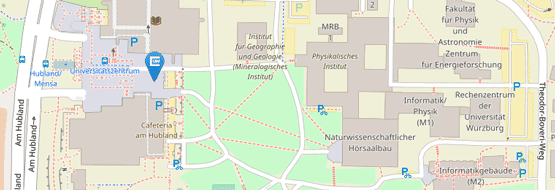
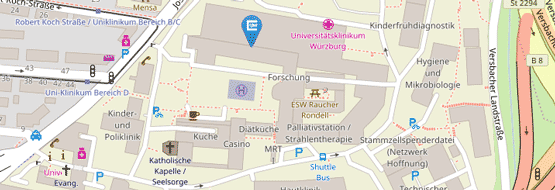
| Location: | A102 Biocenter, Am Hubland, Würzburg and online |
| Organizer: | NUCLEATE Cluster of Excellence |
| Speaker: | Finn Werner (Professor of Molecular Biophysics, University College London) |
We are excited to invite you to our first NUCLEATE Seminar on the 15th of June at 3:00 pm for a talk by Finn Werner on the topic of "Functional coupling of RNA polymerase and ribosomes in our ancestors". The talk will take place at the Biocenter on the Hubland campus but is also streamed online.

Promoter-proximal pausing and gene control is often thought to be a eukaryotic trait, but key components including RNA polymerase subunits Rpo4/7, the elongation factor Spt4/5 and termination factor aCPSF1 arose much earlier in evolution – in the Archaea. We have shown that promoter-proximal transcription termination anticorrelates with mRNA levels at genome-scale; this is a bona fide regulatory mechanism as it responds to changes in the environment including stress and nutrient availability. This regulation is brought about by balancing aCPSF1-facilitated premature termination and antitermination proximal to the promoter. I will present plausible mechanisms that enable gene control including the role of elongation factors and chromatin, but in particular make the case for transcription-translation coupling, TTC. Globally, during amino acid starvation, the cell down-adjusts the yield of transcription to meet the reduced needs for translation, thereby achieving a tight resource economy fit for a microbe. Simultaneously, a small subset of genes that mitigate the starvation, like cimA, is upregulated – and our results suggest that this induction involves alternative translation initiation and ribosome frame shifting. Thus, in response of amino acid starvation, the dual regulatory response of repression and induction of gene expression involve both transcription and translation machineries.
Further information