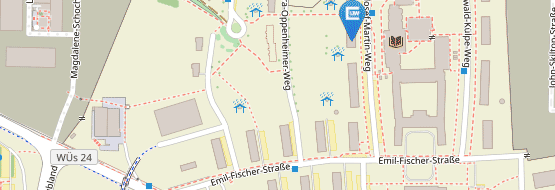

Didakt-O-Mat
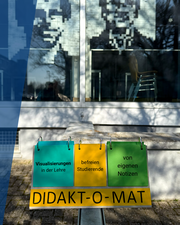
Visualisierungen in der Lehre befreien Studierende von eigenen Notizen
[1] Yilmazel-Sahin, Y., & Oxford, R. L. (2010). Teacher Education Students' Perceptions of the Value of Handouts Accompanying Teacher Educators' Computer-Generated Slide Presentations. Journal of Technology and Teacher Education, 18(3), 509–535.
[2] Dukhan, S., Brenner, E., & Cameron, A. (2019). The influence of lecturers’ expectations of students’ role in meaning making on the nature of their Powerpoint slides and the quality of students’ note-making: A first-year biology class context. African Journal of Research in Mathematics, Science and Technology Education, 23(1), 100–110. https://doi.org/10.1080/18117295.2019.1598625
[3] van der Meer, A. L. H., & van der Weel, F. R. R. (2017). Only Three Fingers Write, but the Whole Brain Works‡: A High-Density EEG Study Showing Advantages of Drawing Over Typing for Learning. Frontiers in Psychology, 8, 706. https://doi.org/10.3389/fpsyg.2017.00706
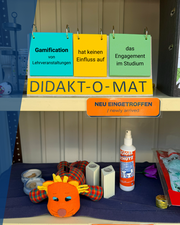
Gamification von Lehrveranstaltungen hat keinen Einfluss auf das Engagement im Studium
[1] Smiderle, R., Rigo, S. J., Marques, L. B., Peçanha de Miranda Coelho, J. A., & Jaques, P. A. (2020). The impact of gamification on students' learning, engagement and behavior based on their personality traits. Smart Learning Environments, 7(1), 3. https://doi.org/10.1186/s40561-019-0098-x
[2] Uanhoro, J., & Young, S. S.-C. (2022). Investigation of the effect of badges in the online homework system for undergraduate general physics course. Education Sciences, 12(3), 217. https://doi.org/10.3390/educsci12030217
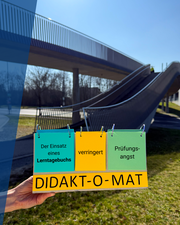
Der Einsatz eines Lerntagebuchs verringert die Prüfungsangst
[1] Shen, L., Yang, L., Zhang, J., & Zhang, M. (2018). Benefits of expressive writing in reducing test anxiety: A randomized controlled trial in Chinese samples. PLoS ONE, 13(2), e0191779. https://doi.org/10.1371/journal.pone.0191779
[2] Wang, Z. (2025). Reflective journal writing and interpreting anxiety: insights from a longitudinal study. Frontiers in Psychology, 16, 1671239. https://doi.org/10.3389/fpsyg.2025.1671239
[3] Myers, S. J., Davis, S. D. & Chan, J. C. K. (2021). Does expressive writing or an instructional intervention reduce the impacts of test anxiety in a college classroom? Cognitive Research: Principles and Implications, 6(1), 44. https://doi.org/10.1186/s41235-021-00309-x
VR-Simulationen senken die Studienabbruchquote
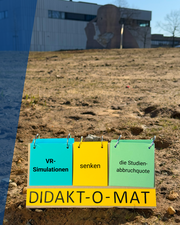
[1] Makransky, G., & Petersen, G. B. (2021). The Cognitive Affective Model of Immersive Learning (CAMIL): A theoretical research-based model of learning in immersive virtual reality. Educational Psychology Review, 33(3), 937–958. https://doi.org/10.1007/s10648-020-09586-2
[2] You, J., Wen, X., Liu, L., Yin, J., & Ji, J. S. (2023). Biophilic classroom environments on stress and cognitive performance: A randomized crossover study in virtual reality (VR). PLoS ONE, 18(11), e0291355. https://doi.org/10.1371/journal.pone.0291355
[3] Madden, J., Pandita, S., Schuldt, J. P., Kim, B., Won, A. S., & Holmes, N. G. (2020). Ready student one: Exploring the predictors of student learning in virtual reality. PLoS ONE, 15(3), e0229788. https://doi.org/10.1371/journal.pone.0229788
[4] Breves, P., & Stein, J.-P. (2023). Cognitive load in immersive media settings: The role of spatial presence and cybersickness. Virtual Reality, 27, 1077–1089. https://doi.org/10.1007/s10055-022-00697-5
Studierende im Umgang mit textgenerierender KI zu trainieren, stärkt langfristig die Leistung in schriftlichen Prüfungen
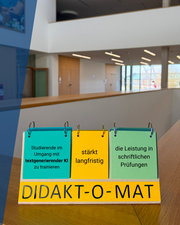
[1] Deng, R., Jiang, M., Yu, X., Lu, Y., & Liu, S. (2025). Does ChatGPT enhance student learning? A systematic review and meta-analysis of experimental studies. Computers & Education, 227, 105224. https://doi.org/10.1016/j.compedu.2024.105224
[2] Alnemrat, A., Aldamen, H., Almashour, M., Al-Deaibes, M., & AlSharefeen, R. (2025). AI vs. teacher feedback on EFL argumentative writing: a quantitative study. Frontiers in Education, 10, 1614673. https://doi.org/10.3389/feduc.2025.1614673
Der Einsatz hybrider Lehr- und Lernräume führt in Zukunft zu einem leeren Campus
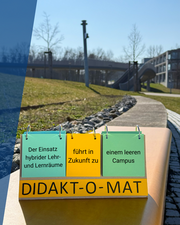
[1] Breitschwerdt, L., Hümmer, C., & Egetenmeyer, R. (2025). Online and on-site participation in synchronous hybrid settings: reasons from the perspective of higher education students. Higher Education, 1-22. https://doi.org/10.1007/s10734-025-01487-z
[2] Kortemeyer, G., Dittmann-Domenichini, N., & Merki, C. (2025). Attending lectures in person, hybrid or online at a technical university: how do students choose after the pandemic, and what about the outcome? Discover Education, 4, 94. https://doi.org/10.1007/s44217-025-00500-y
[3] Price Banks, S., & Vergez, J. (2022). Online and In-Person Learning Preferences during the COVID-19 Pandemic among Students Attending the City University of New York.Journal of Microbiology & Biology Education, 23(1), e00012-22. https://doi.org/10.1128/jmbe.00012-22
Englisch als Seminarsprache steigert die Motivation für Auslandssemester
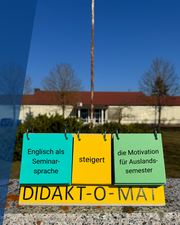
[1] Bukve, T. (2018). Students’ perspectives on English medium instruction: A survey-based study at a Norwegian university. Nordic Journal of English Studies, 17(2), 215-242.
[2] Yue, Y., & Lu, J. (2022). International students’ motivation to study abroad: an empirical study based on expectancy-value theory and self-determination theory. Frontiers in psychology, 13, 841122. https://doi.org/10.3389/fpsyg.2022.841122
[3] Shimauchi, S. (2018). English-medium instruction in the internationalization of higher education in Japan: Rationales and issues. Educational Studies in Japan, 12, 77-90. https://doi.org/10.7571/esjkyoiku.12.77
[4] Lueg, K., & Lueg, R. (2015). Why do students choose English as a medium of instruction? A Bourdieusian perspective on the study strategies of non-native English speakers. Academy of Management Learning & Education, 14(1), 5-30. https://doi.org/10.5465/amle.2013.0009
Die Anwesenheitspflicht fördert Chancengleichheit
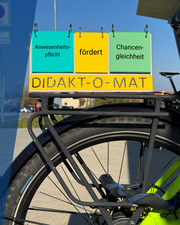
[1] Kassarnig, V., Bjerre-Nielsen, A., Mones, E., Lehmann, S., & Lassen, D. D. (2017). PLOS ONE, 12(11), e0187078. https://doi.org/10.1371/journal.pone.0187078
[2] Subramaniam, B. S., Hande, S., & Komattil, R. (2013). Annals of Medical and Health Sciences Research, 3(2), 202–205. https://pubmed.ncbi.nlm.nih.gov/23919190/
[3] Cullen, S., & Oppenheimer, D. (2024). Science Advances, 10(29), eado6759. https://doi.org/10.1126/sciadv.ado6759
Selbstreguliertes Lernen funktioniert nicht ohne Problemlösekompetenz
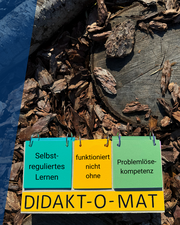
[1] Říčan, J., Chytrý, V., & Medová, J. (2022). Aspects of self-regulated learning and their influence on the mathematics achievement of fifth graders. Frontiers in Psychology, 13, 963151. https://doi.org/10.3389/fpsyg.2022.963151
[2] Yamaguchi, M. (2023). Knowing the learning strategy is not enough to use it: Example in reading strategies for Japanese undergraduates. PLOS ONE, 18(12), e0293875. https://doi.org/10.1371/journal.pone.0293875
[3] Chen, T., Zhao, Y.-J., Huang, F.-Q., Liu, Q., Li, Y., Alolga, R. N., Zhang, L., & Ma, G. (2024). The effect of problem-based learning on improving problem-solving, self-directed learning, and critical thinking ability for the pharmacy students: A randomized controlled trial and meta-analysis. PLOS ONE, 19(12), e0314017. https://doi.org/10.1371/journal.pone.0314017
Feedback steigert die Selbstwirksamkeit von Studierenden?
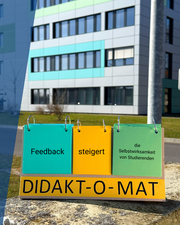
[1] Peifer, C., Schönfeld, P., Wolters, G., Aust, F., & Margraf, J. (2020). Well done! Effects of positive feedback on perceived self-efficacy, flow and performance in a mental arithmetic task. Frontiers in Psychology, 11, 1008. https://doi.org/10.3389/fpsyg.2020.01008
[2] Cui, Y., Schunn, C. D., Gai, X., Jiang, Y., & Wang, Z. (2021). Effects of trained peer vs. teacher feedback on EFL students’ writing performance, self-efficacy, and internalization of motivation. Frontiers in Psychology, 12, 788474. https://doi.org/10.3389/fpsyg.2021.788474
[3] Wisniewski, B., Zierer, K., & Hattie, J. (2020). The power of feedback revisited: A meta-analysis of educational feedback research. Frontiers in Psychology, 10, 3087. https://doi.org/10.3389/fpsyg.2019.03087