
When Hands Cross Borders: Abu Dhabi, Indian Artisans, and the Meaning of Living Heritage
02.03.2026Our alumna Anuradha Singh has recently published her dissertation and reports in the article below on her volunteer activities.
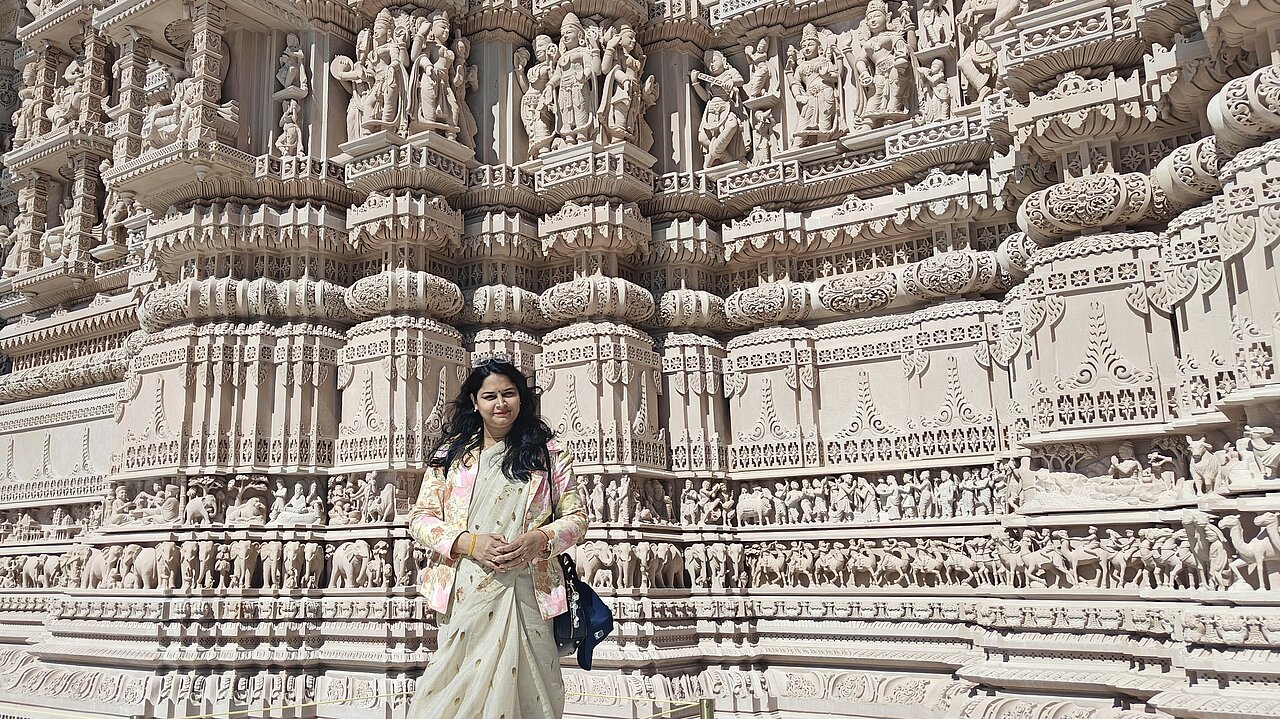
Anuradha Singh is a social worker and development practitioner with over sixteen years of experience in community-led development, gender empowerment, and cultural sustainability in India.
She is the Founder and Director of Craftivism India, a social initiative working at the intersection of livelihoods, traditional crafts, and social justice. Trained in social work and adult education, her work focuses on strengthening informal and artisan-based economies, particularly among women artisans, elderly craft practitioners, and marginalized communities. She has designed and implemented programs across multiple Indian states that address livelihood security, heritage preservation, menstrual health awareness, and informal-sector rights. She also writes articles, columns, and blogs on crafts, gender, and inclusive development.
India has long been celebrated as “Sone Ki Chidiya”—a land rich not only in material wealth, but in culture, creativity, and living traditions. Among the most precious expressions of this heritage are India’s traditional handicrafts, nurtured and preserved across generations by our artisans, particularly women.
I write with deep respect and admiration for your continued support for Indian culture, traditional knowledge systems, and women’s empowerment. Through Craftivism India, we are currently working with more than 5,000 women artisans and women street vendors across the country, striving to amplify their voices and strengthen their livelihoods with dignity.
We are in the process of organizing state-level, national, and International handicraft carnivals in India, to provide artisans a credible platform to showcase their talent, access fair markets, and receive the recognition they truly deserve. Craftivism India envisions a journey for artisans—from the very first rung to the final stage—ensuring that no art form or artisan remains unseen, undervalued, or forgotten.
India’s handicraft tradition is an inherited legacy, passed down not through formal institutions but through observation, practice, and lived experience from childhood. As part of this living heritage, we preserve and work with rare traditional tools, including a nearly 100-year-old spinning wheel (spin wheel). This spinning wheel stands as a powerful symbol of India’s self-reliance, craftsmanship, and continuity of ancestral knowledge. It is not merely an object, but a carrier of history, memory, and cultural identity.
However, due to a lack of recognition, limited awareness, changing market dynamics, resource constraints, and prolonged neglect, artisans today—especially elderly women artisans—are facing marginalization and the threat of extinction.
Despite scattered development efforts, the sector continues to suffer from an approach driven more by charity than by capacity-building. Artisans are often compelled to sell their work under distress, facing exploitation by middlemen, poor access to social services, low incomes, and declining social status. The growing dominance of machine-made and imported products has further reduced the space for handmade crafts in the market.
Craftivism India is committed to a comprehensive and dignity-centred approach to safeguarding both the cultural identity and sustainable livelihoods of artisans. We work closely with elderly artisans—especially women—to rebuild confidence, enhance skills, promote fair valuation, and protect our ancient heritage.
Indian handicrafts remain a hidden global treasure—the very foundation upon which India was once known as the Golden Bird. Today, this heritage urgently calls for a renaissance. With meaningful support and focused attention, the declining craft culture of our country can be revived, empowering millions who continue to preserve ancestral knowledge despite immense hardships.
Alongside our work in crafts and livelihoods, Craftivism India actively engages with women in both organized and unorganized sectors on gender-sensitive issues, including menstrual hygiene awareness, which remains a largely neglected health concern. Through regular training programmes and awareness campaigns, we strive to promote dignity, health, and wellbeing among women artisans and workers.
We firmly believe that with the right support, Indian handicrafts—and the women who sustain them—can reclaim their rightful place on national and global platforms.
When Hands Cross Borders: Abu Dhabi, Indian Artisans, and the Meaning of Living Heritage
By Anuradha Singh
Some places speak without words. They speak through stone, silence, and devotion.
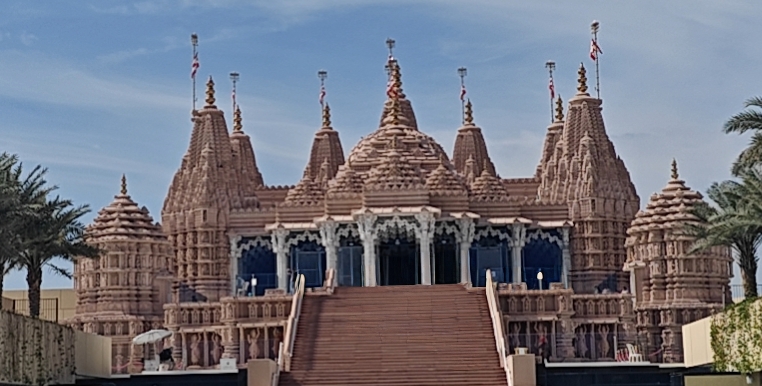
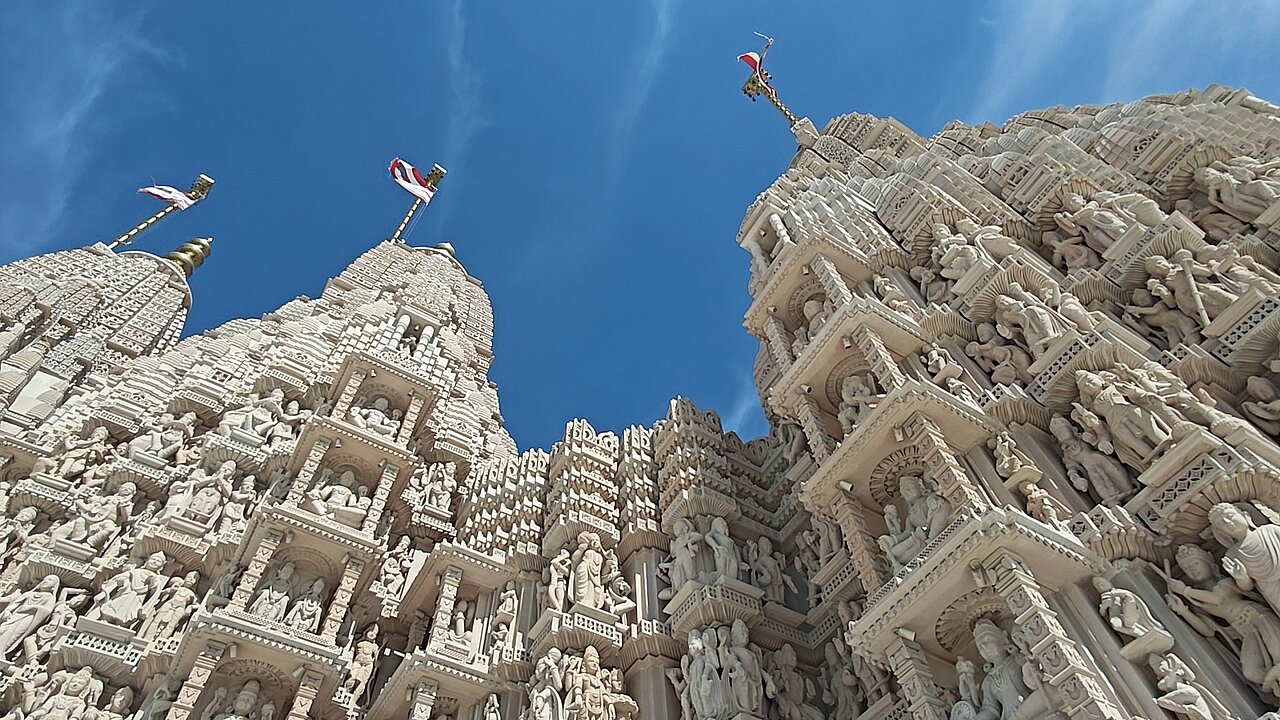
During my recent visit to Abu Dhabi, standing before the BAPS Hindu Mandir, I encountered Indian craftsmanship in its most profound form. Every carved stone, floral motif, and geometric pattern bore the imprint of Indian artisans whose skills have travelled across continents without losing their essence. This was not merely construction; it was karigari—sacred craftsmanship shaped by patience, discipline, and inherited knowledge.
The mandir stands today not only as a spiritual landmark, but as living proof that traditional Indian skills can find global expression while remaining rooted in authenticity. Stone carvers and master artisans, trained in age-old traditions, transformed raw material into a language of devotion and dialogue. In that moment, an unavoidable question arose: if artisans can create structures that unite cultures, why do they so often remain invisible beyond their work?
Craftsmanship That Travels, Artisans Who Do Not
The stone carving traditions visible at the BAPS Mandir reflect India’s civilisational depth. These are not isolated skills; they are philosophies passed down through generations. Tools, techniques, and values move together—shaping not just objects, but identities.
Yet beyond such monumental recognition, countless artisans across India continue to work in anonymity. Weavers, embroiderers, metalworkers, potters, painters, and woodcarvers see their creations circulate in global markets, while their own stories remain unheard. The product travels; the person does not.
Abu Dhabi offers an alternative vision. As a city built on coexistence and cultural respect, it demonstrates what becomes possible when craftsmanship is viewed with dignity rather than reduced to a commodity.
A City Where Cultures Belong
Abu Dhabi is a mosaic of people from across the world. Languages overlap, traditions coexist, and identities share common ground. Diversity here is not merely accommodated; it is actively celebrated.
Indian culture is deeply woven into this landscape—visible in cuisine, festivals, faith practices, and quietly, in crafts. In this environment, Indian traditional crafts do not appear foreign. They belong. This sense of belonging makes Abu Dhabi a natural site for deeper cultural engagement.
Beyond Stone: India’s Living Traditions
If stone carving can create a structure that speaks to humanity, India’s living craft traditions carry an equally powerful voice. Handloom textiles preserve regional identities; embroidery records women’s histories; terracotta rises from earth and fire; metal crafts echo ritual and rhythm; folk art reflects belief rather than trend.
An Indian Craft Carnival in Abu Dhabi can provide a platform where these traditions are not merely displayed, but experienced—through live demonstrations, conversations, and storytelling led by artisans themselves.
Women Artisans and the Question of Visibility
Women artisans form the backbone of many Indian craft traditions. They balance creative labour with caregiving responsibilities, sustain household economies, and safeguard inherited knowledge—often without recognition. Many have never travelled beyond their villages, even as their work reaches international audiences.
A global platform such as Abu Dhabi has the potential to correct this imbalance by transforming invisible labour into visible leadership and economic dignity.
From Recognition to Responsibility
The BAPS Hindu Mandir shows what becomes possible when craftsmanship is honoured at its highest level. The idea of an Indian Craft Carnival builds on this example—moving from monument to movement, from symbolic recognition to sustained opportunity.
Traditional crafts across the world are disappearing at an alarming pace as speed and scale replace skill and patience. Without timely intervention, societies risk inheriting museums of memory rather than living traditions.
My visit to the UAE reaffirmed a simple truth: crafts must travel with their creators to retain meaning. When artisans cross borders, they carry not just objects, but stories, values, and humanity itself.
The vision of an Indian Craft Carnival in Abu Dhabi is therefore not a cultural luxury, but a responsibility to artisans whose labour has long gone unnamed, to women whose work sustains traditions, and to heritage that deserves to remain alive in a global world.
Weitere Bilder