

Die NMUN-Delegation der Universität Würzburg - Eine Tradition lebt weiter
13.11.2025Die NMUN-Delegation der Julius-Maximilians-Universität Würzburg besteht in diesem Jahr aus 19 engagierten Studierenden unterschiedlicher Fachrichtungen. Unterstützt werden sie von drei Coaches (Francesca Heilmann, Sonja Neuburger, Dania Schulze) sowie ihrer Faculty Advisor (Garance Klaaßen).
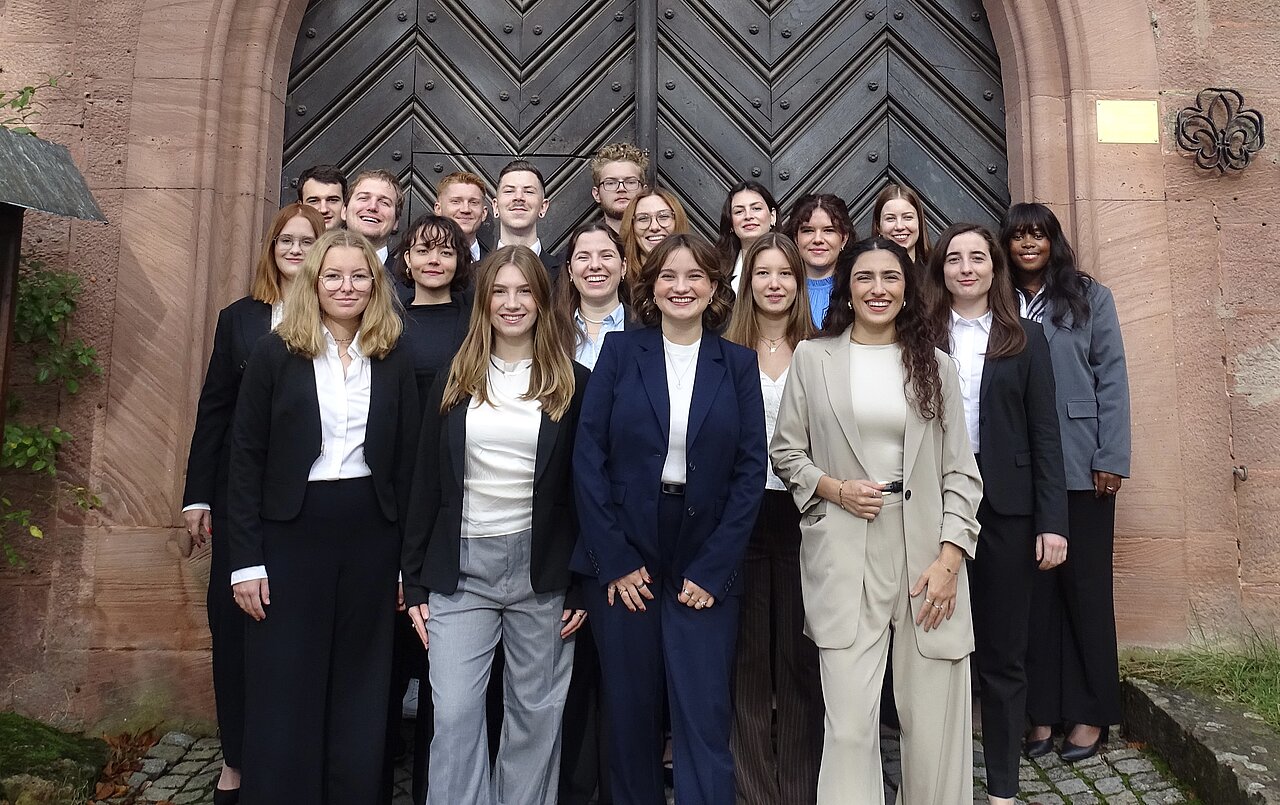
Die Delegation nimmt am National Model United Nations (NMUN) teil, der weltweit größten UN-Simulation. In dieser Rolle vertreten sie Uruguay in zehn verschiedenen Komitees und setzen sich mit dessen politischen Interessen auseinander.
Die Konferenz fand im April 2025 in New York City statt.
Die Themen, mit denen sich die Studierenden beschäftigen, reichen von nuklearer Abrüstung bis hin zum Umweltschutz. Sie sind in verschiedenen Komitees vertreten (siehe unten), in denen sie diese und weitere relevante globale Fragestellungen bearbeiten.
Da die Teilnahme mit hohen Kosten verbunden ist, sind wir besonders dankbar für die großzügige Unterstützung des Alumni Büros und der Alumni Wü Community, die uns mit einer Spende von 1.000 € fördern. Vielen Dank.
Delegation Universität Würzburg: Uruguay
Commission on Crime Prevention and Criminal Justice (CCPCJ)
1. International Cooperation in Combating Transnational Organized Crime and Corruption
2. Improving the Coordination of Efforts against Trafficking in Persons
Commission on Population and Development (CPD)
1. 30 Year Review on Implementation of the Programme of Action of the International Conference on Population and Development
2. Addressing Population Growth in Urban and Peri-Urban Areas
Economic and Social Council (ECOSOC)
1. Empowering Women and Girls in the Achievement of the SDGs
2. Strengthening Humanitarian Assistance in the Face of Climate Crises
General Assembly First Committee (GA1)
1. Confidence-Building Measures in the Regional and Sub-Regional Context
2. Promoting Nuclear Disarmament and International Security
General Assembly Second Committee (GA2)
1. Promoting Sustainable Production and Consumption Patterns
2. Closing the Financing Gap to Achieve the Sustainable Development Goals
General Assembly Third Committee (GA3)
1. Protection of and Assistance for Refugees, Returnees and Displaced Persons
2. The Human Rights to Safe Drinking Water and Sanitation
Organisation for the Prohibition of Chemical Weapons (OPCW)
1. Achieving Universality of the Chemical Weapons Convention
2. Preventing the Use of Chemical Weapons by Non-State Actors
Peacebuilding Commission (PBC)
1. Prevention and Peacebuilding in Fragile States
2. Integrating Refugees in Peacebuilding Frameworks
United Nations Environment Assembly (UNEA)
1. Transforming Food Systems to Prevent Biodiversity Loss
2. Environmental Recovery in Areas Affected by Armed Conflict
United Nations High Commissioner for Refugees, Office of the (UNHCR)
1. Enhancing Efforts to End Statelessness
2. Preventing and Responding to Gender-Based Violence against Refugee