Deutsch Intern
Rudolf Virchow Center for Integrative and Translational Bioimaging

Job Offers


The Leippe Lab at the Rudolf Virchow Center for Integrative and Translational

Bioimaging, University of Würzburg,

Germany invites applications for


1 Postdoctoral position (f/m/d) – membrane transporter biochemistry


Drive a discovery cycle end to end: run functional-genomics screens, then prove through rigorous biochemistry which hits are real.


The Leippe Lab develops genetically encoded fluorescent biosensors and combines them with functional genomics to make metabolism visible in real time. We engineer high-performance sensors for intracellular metabolites by screening pooled biosensor variant libraries at large scale directly in human cells, and pair this with machine learning to understand how protein sequence drives biosensor performance. We then deploy these sensors in CRISPR screens to tackle fundamental questions in metabolic compartmentalization and transporter biology. The advertised position sits at the discovery end of that pipeline: turning what our sensors reveal into hard mechanistic insight.


Why join us

We are a young, ambitious lab, and that is a feature, not a footnote You will pick up a proven, de-risked screening pipeline and use it to drive your own discovery cycle - from running the screen, to nominating candidates, to the biochemistry that proves which one is real. That means a project you genuinely own, frequent and direct interaction with the PI, and room to shape both the science and the lab as it grows. You will also be the person who brings depth in protein and membrane-transport biochemistry to a group built around biosensor engineering and functional genomics - a complementary, intellectually independent role, and an ideal platform from which to build toward your own future group. We are committed to making sure our people leave here better scientists than they arrived, well positioned for whatever comes next, in academia, industry, or beyond.

We are a place that takes the work, and each other, seriously: we love the technology we build and the biology we chase, we dig until we understand things mechanistically, and we never lose sight of why any of it matters. We work collaboratively and openly - shared data, electronic lab notebooks, reagents, and ideas.


Who we're looking for

Essential:

  • A PhD in biochemistry, cell/molecular biology, or a related field
  • Strong hands-on experience in protein biochemistry: expression, purification, and the careful sample preparation that downstream in vitro assays depend on
  • Care, rigor, and patience - validating a membrane transporter is demanding work that rewards meticulous experimental design
  • Proficiency in English (the working language of the lab)

Desirable:

  • Experience with membrane or transport proteins, reconstitution (e.g. proteoliposomes), or functional transport assays
  • A track record of taking a project from candidate to mechanism

A plus:

  • Experience with metabolic flux / isotope-tracing approaches, mass spectrometry-based readouts
  • Experience with functional genomics or pooled CRISPR screens (or eagerness to learn - we can train this)
  • Comfort with quantitative data analysis (Python, R, or command-line tools)

We care more about how you think and how you work at the bench than about a perfect match to this list - if the project excites you and you bring real biochemical depth, get in touch.


What we offer

The Rudolf Virchow Center is a highly competitive international research institute with outstanding infrastructure, including in-house access to state-of-the-art instrumentation and an extensive range of modern biophysical and cell biological equipment. We are embedded in a stimulating cross-disciplinary environment together with our partners at the Biocenter, the physics department, the Max Planck Research Group in Systems Immunology, the Institute for Molecular Infection Biology (IMIB), the Helmholtz Institute for RNA-based Infection Research (HIRI), and the University Hospital Würzburg.

Würzburg sits in the beautiful, wine-growing region of Franconia, close to Frankfurt (1 hour by train) and Munich (2 hours).

The fully-funded position will start 1st November 2026 and is initially offered for one year with extension upon positive evaluation.

The salary follows the Collective Agreement for the Public Service of the German Federal States, TV-L. You will have access to public-service pension provision (VBL), health care, and 30 days of annual leave in addition to 13 public holidays in Bavaria. Our Welcome Center supports international researchers with accommodation and administrative matters, and the University of Würzburg offers support for researchers with children, including flexible working hours and childcare.

The University of Würzburg is an equal opportunity employer. As such, we explicitly encourage applications from qualified women. Severely handicapped applicants will be given preferential consideration when equally qualified.


INTERESTED?

Applications including a cover letter, a detailed CV (2 pages), a short summary of past research projects (1 page, excluding references), copies of certificates, and the contact information of two referees, should be sent preferably via email as a single pdf file (not exceeding 10 MB) to sabine.sattler@uni-wuerzburg.de by 31st of August.

Alternatively, application documents may be sent as hard copies to:

Rudolf-Virchow-Zentrum

Universität Würzburg

z.H. Sabine Sattler                                                        

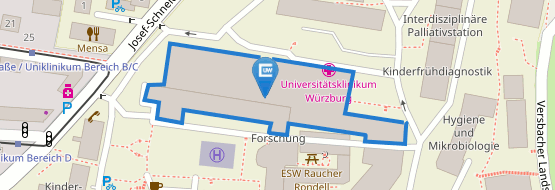
Josef-Schneider-Str. 2/ Haus D15

97080 Würzburg

Germany           


Note: Please send only copies. For financial reasons, application documents cannot be returned. They will be destroyed shortly after completion of the selection process. If you enclose a postage-paid envelope, the application documents will be returned to you three months after completion of the selection process.


The Leippe Lab at the Rudolf Virchow Center for Integrative and Translational

Bioimaging, University of Würzburg,

Germany invites applications for


1 PhD position (f/m/d) in protein and biosensor engineering

We screen biosensor libraries by the tens of thousands in living cells, using cell sorting to let the cells themselves reveal the best designs.


The Leippe Laboratory develops genetically encoded fluorescent biosensors and combines them with functional genomics to make metabolism visible in real time. We engineer high-performance sensors for intracellular metabolites by screening pooled biosensor variant libraries at large scale directly in human cells, and pair this with machine learning to understand how protein sequence drives biosensor performance. We then deploy these sensors in CRISPR screens to tackle fundamental questions in metabolic compartmentalization and transporter biology.


Why join us

We are a young, ambitious lab, and that is a feature, not a footnote. You will be among the founding members, with real ownership of your project, frequent and direct mentorship from the PI, and the chance to shape how this lab grows. You will be trained across the full arc of a modern biosensor project - protein engineering, large-scale library cloning, FACS-based screening, NGS, microscopy and the computational skills that turn data into discovery - a combination of skills that is rare and highly transferable. We are committed to making sure our people leave here as better scientists than they arrived, and are well positioned for whatever comes next, in industry, academia or beyond.

We are also a place that takes the work, and each other, seriously: we are excited about the technology we build and the biology we chase, we dig until we understand things mechanistically, and we never lose sight of why any of it matters. We work collaboratively and openly - shared data, electronic lab notebooks, reagents, and ideas.

PhD Project - Protein/Biosensor Engineering

This project sits at the heart of the lab's engineering platform. You will design, clone, and screen largepooled libraries of biosensor variants in human cells using FACS-based selection, with the goal of building high-performance sensors for intracellular amino acids. Building on the lab's expertise in biosensor engineering and screening, you will generate the deepest sequence-function dataset produced to date for any single biosensor and characterize performance across multiple human cell models. This dataset directly powers the lab's machine-learning efforts and its downstream biological discovery.


Who we're looking for

Essential:

  • A university degree (Diploma, MSc, or equivalent) in life sciences or a related field
  • curiosity about both the technology and the biology — we care more about how you think than about a perfect CV
  • Care and rigor in the lab; large-scale screening rewards people who are precise and patient
  • Proficiency in English (the working language of the lab)

Desirable:

  • Experience with flow cytometry/FACS, microscopy, large-library cloning, or next-generation sequencing
  • Comfort with quantitative data analysis (Python, R, command-line, or AI-assisted coding tools)

What we offer

The Rudolf Virchow Center is a highly competitive international research institute with an outstanding infrastructure. We have in-house access to state-of-the-art instrumentation and to an extensive range of modern biophysical and cell biological equipment. We are integrated into a stimulating cross-disciplinary environment that includes our partners at the Biocenter, the physics department, the Max Planck Research Group in Systems Immunology, the Institute for Molecular Infection Biology (IMIB), Helmholtz Institute for RNA-based Infection Research (HIRI) and the University Hospital in Würzburg.

Würzburg is located in the beautiful, wine-growing area of Franconia, in proximity of Frankfurt (1 hour by train) and Munich (2 hours).

The fully-funded position will start 1st November 2026 and is initially offered for one year with extension upon positive evaluation. The salary is commensurate with training and experience according to Collective Agreement for the Public Service of German Federal States TV-L.

The successful doctoral applicants will enroll in the Graduate School for Life Sciences (GSLS) in Würzburg and benefit from its extensive transferable skills program, travel funds and administrative support.

You will have access to both national and public-service pension schemes (VBL), health care, and are entitled to 30 days of holiday in addition to 13 annual public holidays in Bavaria. Our Welcome Center supports international candidates in finding accommodation as well as in administrative matters - and the University of Würzburg offers support for researchers with children, including flexible working hours and childcare.

The University of Würzburg is an equal opportunity employer. As such, we explicitly encourage applications from qualified women. Severely handicapped applicants will be given preferential consideration when equally qualified.


INTERESTED?

Applications including a cover letter, a detailed CV (2 pages), a short summary of past research projects (1 page, excluding references), copies of certificates, and the contact information of two referees, should be sent preferably via email as a single pdf file (not exceeding 10 MB) to sabine.sattler@uni-wuerzburg.de by 31st of August.

Alternatively, application documents may be sent as hard copies to:

Rudolf-Virchow-Zentrum

Universität Würzburg

z.H. Sabine Sattler                                                        

Josef-Schneider-Str. 2/ Haus D15

97080 Würzburg

Germany        


Note: Please send only copies. For financial reasons, application documents cannot be returned. They will be destroyed shortly after completion of the selection process. If you enclose a postage-paid envelope, the application documents will be returned to you three months after completion of the selection process.


The Rudolf-Virchow-Zentrum-Center for Integrative and Translational Bioimaging is a central scientific institution of the Julius-Maximilians-Universität Würzburg and is dedicated to the research of target proteins using a wide range of imaging methods.


The Rudolf Virchow Center is looking for a


PhD student (f/m/d)(Bioimaging / Biophysics)

in the field of whole organ fluorescence imaging

Antibodies are causally linked to the progression of ischemic heart failure. In this interdisciplinary approach, the Molecular Microsocpy Lab led by Katrin Heinze combines high-end imaging and state-of-the-art molecular biology techniques to track the antibody-producing B-cells activated after myocardial infarction and characterize their roles in heart failure. Therefore, we will adjust and develop high-resolution concepts of fluorescence microscopy to analyze heart-specific antibodies as modulators of myocardial infarction. The project largely involves the development of sample preparation workflows, light-sheet fluorescence microscopy, image analysis pipelines and modelling. The project particularly requires enthusiasm for translational sciences, fluorescence microscopy, and computational analysis.

Your role:

  • Sample preparation for high content fluorescence microscopy
  • Combining different microscopy techniques
  • Developing quantitative image analysis pipelines
  • Collaborating with cardioimmunology experts on different imaging projects

Your qualification profile

  • Background in biophysics and fluorescence approaches
  • Passion for interdisciplinary projects and translational science
  • Ideally: experience in sample preparation for microscopy, operating fluorescence microscopes and computational analysis
  • Desired: experience with light-sheet fluorescence microscopy
  • Mandatory: good command of English

What we offer:

  • Working in a highly motivated research institute with an outstanding infrastructure with access to state-of-the-art instrumentation for nanofabrication and microscopy and to an extensive range of modern biophysical and cell biological equipment
  • Integration into a cross-disciplinary environment (Comprehensive heart failure center of the University Hospital, Max Planck research group for Systems Immunology, and the Biocenter and Physics department from the University of Würzburg
  • Three-year position (competitive TV-L salary, initial funding for one year with extension upon positive evaluation) funded by the Collaborative Research Centre CRC1525 Cardio-Immune Interfaces (https://www.ukw.de/en/crc-1525/home/)
  • Earliest start date: September/October 2026
  • Enrollment in the Graduate School for Life Sciences (GSLS) in Würzburg with benefitting from its extensive transferable skills program, travel funds and administrative support
  • Würzburg as city in the center of Germenay in the wine-growing area of Franconia, in proximity of Frankfurt (1 hour by train) and Munich (2 hours).
  • Access to both national and public-service pension schemes (VBL), health care, and 30 days of holiday entitlement.

Female scientists are particularly encouraged to apply. Disabled applicants will be preferentially considered in case of equivalent qualification.

Applications including cover letter, detailed CV, copies of certificates, and contact information of two referees, should be sent as a single pdf file (no more than 10 MB) via email to katrin.heinze@uni-wuerzburg.de until 19th of July 2026.

More information:         https://www.uni-wuerzburg.de/en/rvz/news/jobs-and-career/

                                    https://www.uni-wuerzburg.de/rvz/forschungsgruppen/heinze-lab/


The Nanoscale Bacteriology Lab in the Rudolf Virchow Center for Center for Integrative and Translational Bioimaging at the University of Würzburg, Germany, invites applications for

PostDoc position in infection biology and advanced imaging (f/m/d)

The Nanoscale Bacteriology Lab, led by Dr. Christoph Spahn, is looking for a PostDoc to study the intracellular organization of intracellular pathogens during infection.

Our research focusses on understanding the subcellular organization of bacteria and their response to antimicrobial compounds. We combine super-resolution microscopy (Spahn et al., 2018), drug treatments (Spahn et al., 2025) artificial intelligence (Spahn et al., 2022) and biochemical approaches to understand both fundamental concepts of bacterial cell biology and antibiotic action. Recently, we started to investigate how secretion alters the intracellular organization of pathogens (Ermoli et al., 2025).

In the advertised position, the successful candidate will investigate bacterial secretion during host-pathogen interaction. We will employ a combinatorial approach using live-cell imaging, multicolor super-resolution microscopy and genetics to gain fundamental knowledge about the dynamics of effector protein secretion and the effect on both host cells and pathogens.


Qualification profile:

As a PostDoc applicant, you have completed a PhD in life sciences or related fields.

Essential qualifications

  • Enthusiasm for science/basic research
  • A strong background in the field of life sciences
  • Experience in infection biology and/or molecular biology of bacterial pathogens
  • Experience in bacterial and mammalian cell culture
  • Experience in advanced microscopy and image analysis
  • Curiosity to learn new techniques and explore novel ground
  • Excellent team spirit and willingness to teach students
  • Fluent English

Optional qualifications

  • Experience in programming or with AI
  • Experience in biochemistry


What we offer:

At Julius-Maximilians-Universität Würzburg, more than 30,000 people from over 100 countries come together to study, research, teach and work. As a central institution of the University, the Rudolf Virchow Center is a modern research center with more than 100 international scientists investigating the molecular causes of health and disease. It has been established as a unique institution for translational bioimaging combining all existing imaging core structures and microscopy facilities.

The Rudolf Virchow Center is a highly competitive international research institute with an outstanding infrastructure. We have in-house access to state-of-the-art instrumentation and to an extensive range of modern biophysical and cell biological equipment. We are integrated into a stimulating cross-disciplinary environment that includes our partners at the Biocenter, the physics department, the Max Planck Research Group in Systems Immunology, the Institute for Molecular Infection Biology (IMIB), Helmholtz Institute for RNA-based Infection Research (HIRI) and the University Hospital in Würzburg.

Würzburg is located in the beautiful, wine-growing area of Franconia, in proximity of Frankfurt (1 hour by train) and Munich (2 hours). We have a lot of sun and many festivals in the summer, as well as impressive historical buildings and recreative nature.

The salary is commensurate with training and experience according to Collective Agreement for the Public Service of German Federal States TV-L (100%).

You will have access to both national and public-service pension schemes (VBL), health care, and are entitled to 30 days of holiday in addition to 13 annual public holidays in Bavaria. Our Welcome Center supports international candidates in finding accommodation as well as in administrative matters - and the University of Würzburg offers support for researchers with children, including flexible working hours and childcare.


The position is secured until end of 2028.

Interested?

Applications including a cover letter, a detailed CV (2 pages max), a short summary of past research projects with publications (3 pages max), copies of certificates, and the contact information of two referees, should be sent via email as a single pdf file (not exceeding 10 MB). Applications will be screened continuously until the position is filled.

The University of Würzburg is an equal opportunity employer. As such, we explicitly encourage applications from qualified women.

Please send your application to:   

Christoph.spahn@uni-wuerzburg.de with Cc to Inka.robinson@uni-wuerzburg.de

If you want to know more about the individual project and/or have further questions about the position, please contact me via the mail above.