TESSMER Gruppe
Molecular Mechanisms of DNA repair
DNA repair is fundamentally important for the maintenance of cellular genetic stability. DNA damages arise continuously through endogenous factors (such as errors in DNA replication or metabolic products within our cells) as well as exogenous sources (such as high energy radiation). The resulting defects in DNA can lead to mutations and ultimately cancer or to cell death and hence must be removed by highly efficient DNA repair mechanims. To maintain genomic stability cells exploit several DNA repair systems: base excision repair (BER), nucleotide excision repair (NER), DNA double strand break repair by homologous recombination or non-homologous end joining, mismatch repair (MMR) and direct damage reversal. These DNA repair systems are each specialised on the recognition and removal of specific types of DNA lesions and are mostly evolutionary conserved.
In our research group we use single molecule fluorescence and atomic force microscopy (AFM) complemented by biochemical and biophysical assays to investigate the molecular mechanisms of diverse DNA repair systems. In particular, we are interested in understanding the strategies of protein-DNA interactions to achieve selective recognition and repair of different types of DNA lesions and in the interplay between different DNA processing systems.
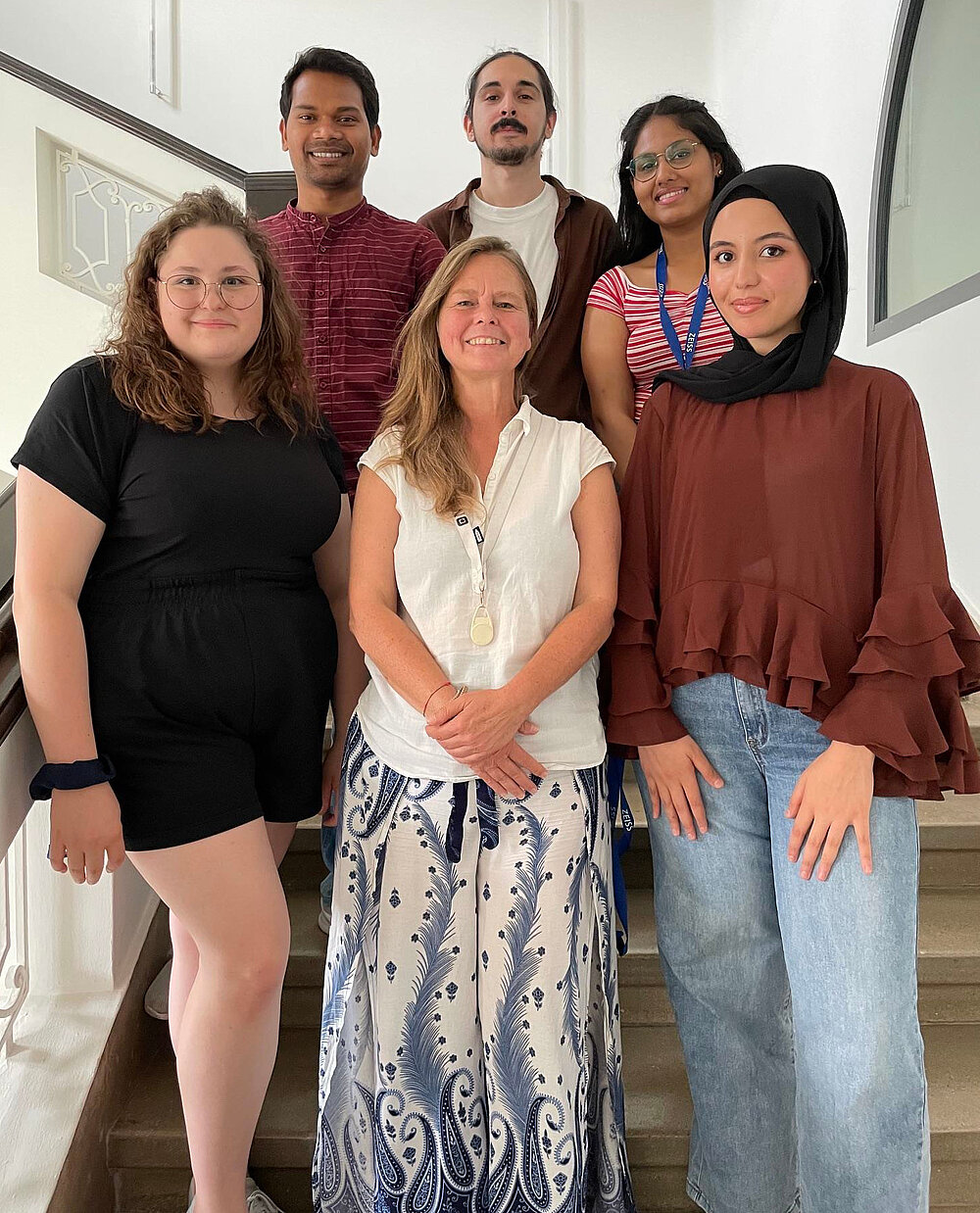
Prof. Ingrid Tessmer
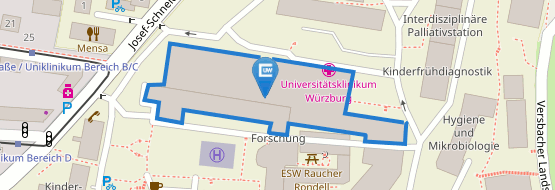
Josef-Schneider-Str.2
Anil Singh Kumar
Josef-Schneider-Straße 2
Pathoja Maity
Josef-Schneider-Str. 2
In addition, the following people are currently supporting our team:
Kürsat Atmaca - Erasmus student
Johanna Brandl - Bachelor student
Maisaa Alsaleh - Bachelor student (external, University of Applied Sciences Köln)
All publications can be found here.
Current position
Group leader, University of Würzburg, Germany (since 2014)
Research Experience
| 2008-2013 | Early Independence Program, University of Würzburg, Germany |
| 2007-2008 | Postdoctoral Researcher, University of Würzburg, Germany |
| 2003-2007 | Postdoctoral Fellow, University of North Carolina (UNC), USA |
Education
| 2014-2017 | Habilitation in Biophysics (German eligibility for professorship) Department of Biology, University of Würzburg, Germany |
| 1999-2003 | PhD in Biophysics, University of Nottingham, UK |
Mitglied
- Graduate School of Life Sciences
- Biologische Fakultaet
- Supervisor und Mitglied in Promotionskomittee
Lehrveranstaltungen
- Literaturseminar DNA Reparatur (für Masterstudenten und Doktoranden, Vorlesungsverzeichnis # 0732348)
- Export Lehre der biologischen Fakultät für Mediziner (06070100 und 06070110 für die begleitenden Übungen)
- Studienbegleitende Mitarbeiten im Forschungslabor (für Bachelor- und Masterstudenten, Vorlesungsverzeichnis # 03980410 und 03980460)
- Seminar für Doktoranden, Master- und Bachelorstudenten (Vorlesungsverzeichnis # 03988110)
- Anleitung zum selbstständigen wissenschaftlichen Arbeiten (Vorlesungsverzeichnis # 03988120)
- Biophysik und molekulare Biotechnologie (für Masterstudenten, Vorlesungsverzeichnis # 129350, Beitäge) bis SS 2019
- Biophysik und Biochemie (für Masterstudenten, Vorlesungsverzeichnis # 129351, Beiträge) bis WS 2019/20