VI Wolff Herbarium
Focal points: taxonomic: Spermatophytina
The Wolff herbarium contains the oldest specimens in the university's herbarium. It represents a remarkable testimony from the first half of the 19th century.
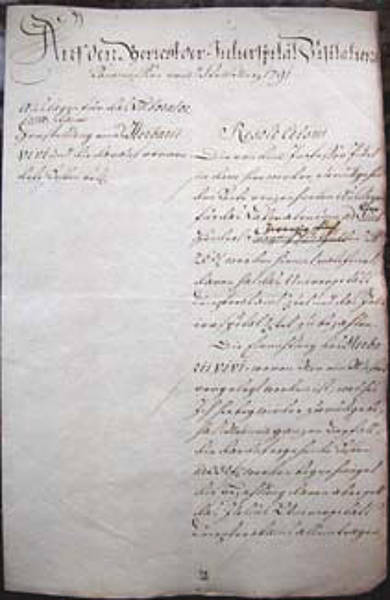
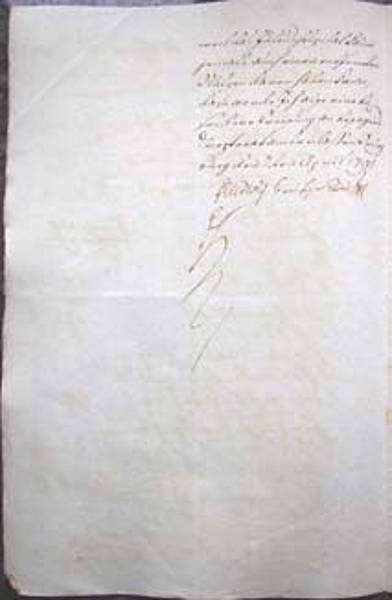
On 2 April 1791, Würzburg's Prince-Bishop Franz Ludwig von Erthal (1730-1795) laid the foundation stone for the first herbarium at the University of Würzburg by signing a resolution "for the production of a herbarii vivi". According to a list, 350 guilders were budgeted for the production, for example for paper and tape and suitable caskets. 50 guilders were used "to dry the current stock of plants, to write the tables and numbers and to affix them", i.e. for personnel costs.
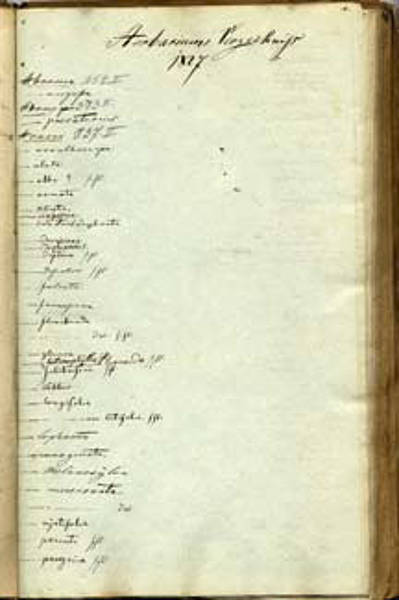
It was the botanical gardener Andreas Roman Wolff (in office from 1798-1834) and his son Andreas Wolff (botanical gardener at the University and Julius Hospital from 1835-1854) who founded this collection, known as the "Wolff Herbarium". Through their eagerness to collect, coupled with a high level of horticultural expertise, they created a herbarium with a total of 9448 "species and varieties", which are listed in a two-volume handwritten catalogue from 1827 to 1832.
The collection primarily contains specimens from the Würzburg Botanical Garden of the time and other botanical gardens (Leiden, Vienna, Prague, etc.). They show the high standard of horticultural art that was already being cultivated at that time.
In addition, father and son Wolff collected specimens from Würzburg and the surrounding area, some of which have long since been lost.
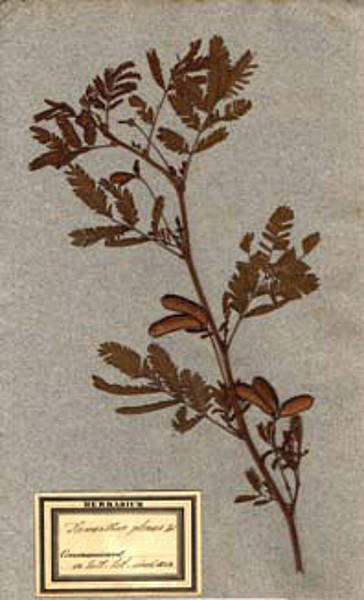
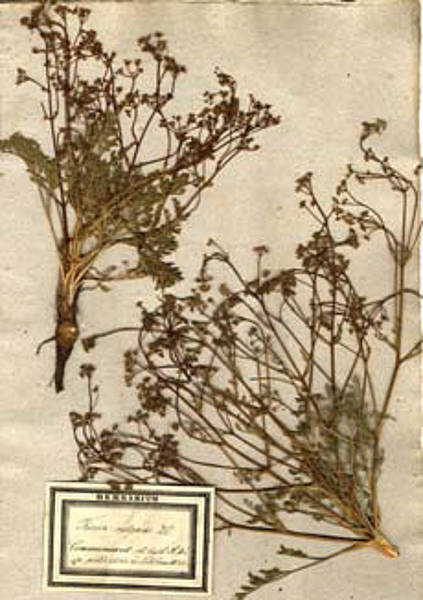
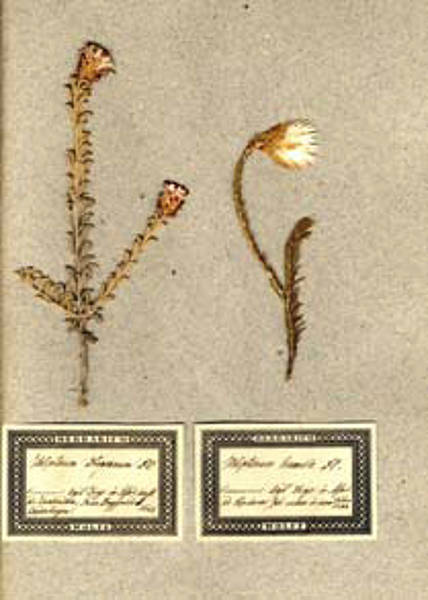
The Wolff herbarium is rounded off by numerous collector's items from some important explorers. These include: Spruner, von Heldreich (Greece, Crete), Boissier (Spain, Asia Minor), Turczaminov (Russia), Vahl (Greenland), Regel, Schmittsoahn, Mertens, Richter (N-America), Kotschy (Nubia), Schimper (Arabia), Drège (S-Africa), Sieber (S-Africa and Australia, and many more).