

Graduate interview: Anja - Project Coordinator
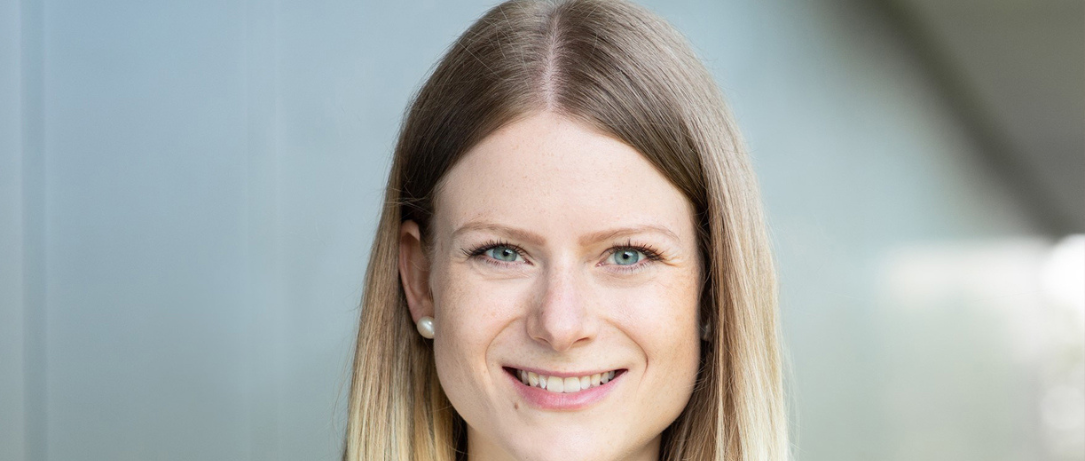
12/15/2020After graduating, Anja lives by her motto as a scientific project coordinator: "Small changes, big differences!" She recommends thinking outside the box right from the start and trying out different things. Anja did exactly the same and was able to find her calling after completing her Master's degree in Business Management. Today, she works at the Fraunhofer Institute for Manufacturing Engineering and Automation (IPA), where her responsibilities include branding and communication strategies.
What did you study at the University of Würzburg?
I did a Master of Science in Business Management.
What is your current job?
I am a scientific project coordinator for major strategic projects.
Which company/employer do you work for?
I work at the Fraunhofer Institute for Manufacturing Engineering and Automation (IPA).
What are your tasks?
My tasks are Coordination of project bids and project applications, branding and communication strategy for S-TEC, the Stuttgart Technology and Innovation Campus, interface function: within and across institutes as well as between scientific institutions, business and politics.
How did you orientate yourself professionally during and after your studies?
When I started my Bachelor's degree, I took the opportunity to gain an insight into various departments in different sectors: Starting in controlling, through logistics to marketing and sales. This crystallised my interest in coordinative and conceptual activities with cross-departmental collaboration.
Did you take advantage of any career guidance programmes offered by the university?
Yes, I attended several Career Centre seminars during my studies: Looking back, I find the seminars "Authenticity instead of perfection", "Conversation and argumentation - finding the right arguments on the job" and "Conflict management and team dynamics" particularly helpful and valuable with regard to my career start and everyday working life.
Which skills from your degree programme are helpful or essential for your current job?
Self-competence: taking responsibility, proactivity, time management.
Methodological skills: strong communication skills, presentation skills, diplomatic skills, ability to deal with conflict.
How did you acquire additional skills (e.g. workshops and seminars, internships, part-time job, associations, voluntary work, trainee, further training, etc.)?
During my Master's degree, I worked as a student assistant at the Career Centre. As a contact person at networking events, such as career and first-time fairs, there were always new contacts and unforeseen problems to which I had to react appropriately to the situation. #lifelonglearning
Do you have any general tips for professional orientation and career planning?
I ask myself why crises have to escalate before a rethink takes place. Hence my motto: Small changes, big difference. Take advantage of the opportunities available to you, attend webinars, educate yourself and think outside the box. After all, the purpose of career orientation is to find a direction, not a path.
What do you recommend to students who want to work in your industry or profession?
Try out different things and don't agonise unnecessarily if it's just not the right thing (yet)! At the start of your career, you don't necessarily have to recognise the common thread - but the motivation to find it does.