Monitoring biodiversity
The systematic and scientifically sound recording of the animal and plant species present (depending on the species, either across the entire campus, in selected areas, or along transects).
Contact: Johannes Späthe
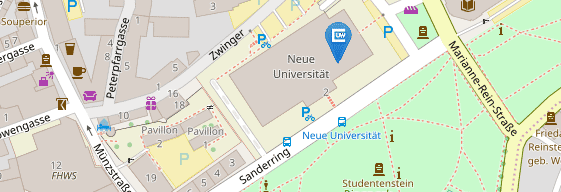
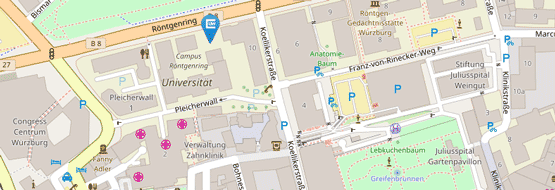
Animals and plants at Hubland
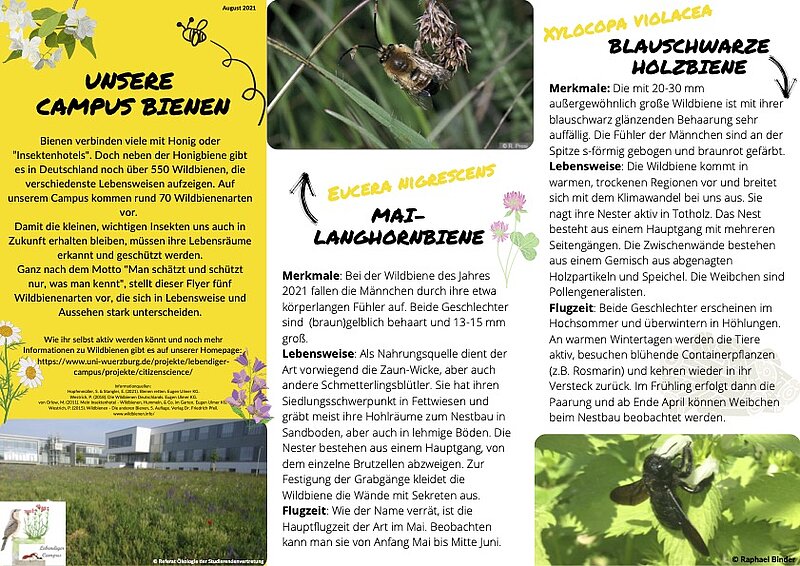
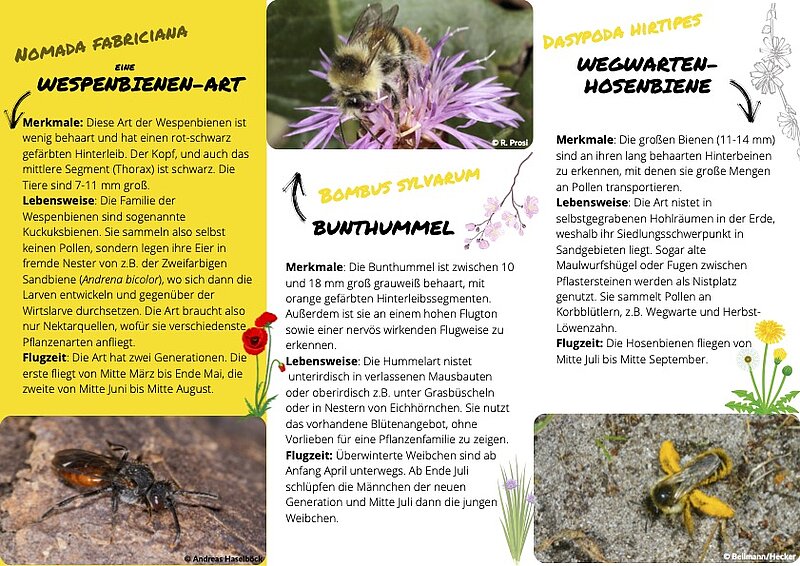
Despite the adjacent settlements and university buildings, Campus Hubland is home to an astonishing variety of wildlife. The Living Campus project records plants, birds, mammals, insects, amphibians, and reptiles in order to derive insights into the best protection and conservation measures. They are recorded through observation (birds, plants, reptiles, and amphibians), capture and release after identification (insects), or camera traps (mammals).
Here are a few highlights of the species mapped so far.
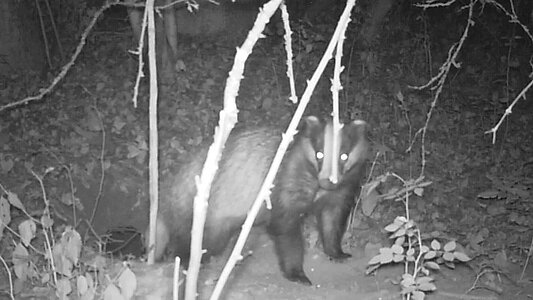
(c) Matthias Bär | The European Badger is a nocturnal predator. It is found throughout Europe and as far east as Afghanistan and the Volga River. It lives mainly in hilly, wooded regions. However, orchards and large hedges also provide habitat. Keep an eye out at dusk on the Hubland South campus. |
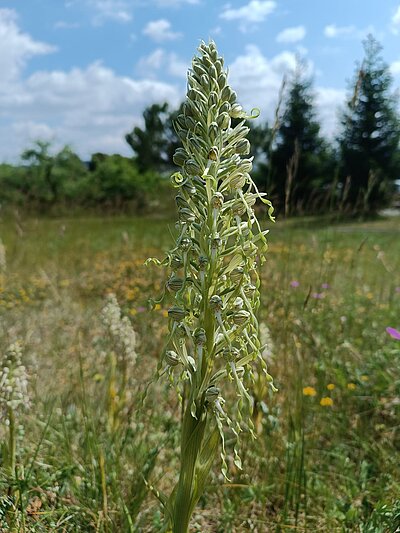
| The Lizard Orchid (Himantoglossum hircinum) is a striking native orchid. It grows in warm, chalky, dry locations such as nutrient-poor grasslands and embankments. It is characterized by its long, spiraled lips and an intense goat-like smell that attracts insects. The plant flowers from May to July and is protected in many regions. It also grows on the Hubland. |
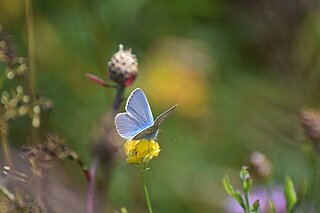 (c) Clemens Hoff | The Common Blue Butterfly (Polyommatus icarus) is a widespread butterfly in Europe. Males have bright blue-violet wings, while females are brown with orange spots. It inhabits meadows, roadsides, and nutrient-poor grasslands. The caterpillars live mainly on gorse. You might encounter one near the university. |
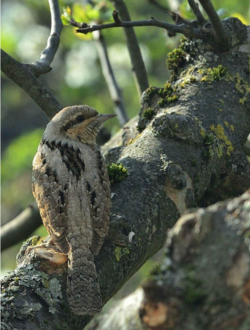 (c) Dieter Mahsberg | The Eurasian Wryneck (Jynx torquilla) is a small woodpecker that inhabits open landscapes with old fruit trees and sparse forests. Unlike other woodpeckers, it does not drum, but calls out a hoarse “gji-gji-gji.” To defend itself, it twists its head and neck like a snake. Its diet consists mainly of ants. This migratory bird breeds in cavities and returns from Africa in the spring. It is usually difficult to find, but you might get lucky on campus. |
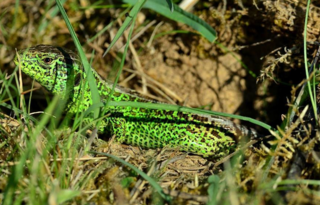 (c) Dieter Mahsberg | The Sand Lizard (Lacerta agilis) is a reptile that is widespread in Europe. It lives in sunny, structurally rich habitats such as heaths, embankments, and gardens. During the mating season, males display a striking green coloration, while females are brown with patterns. As a ground dweller, it uses hiding places in vegetation and holes in the ground. It feeds on insects and is regionally endangered due to habitat loss. Therefore, we ask that you observe it with consideration should you encounter one. |