Tertiary Forest
The Tertiary Forest
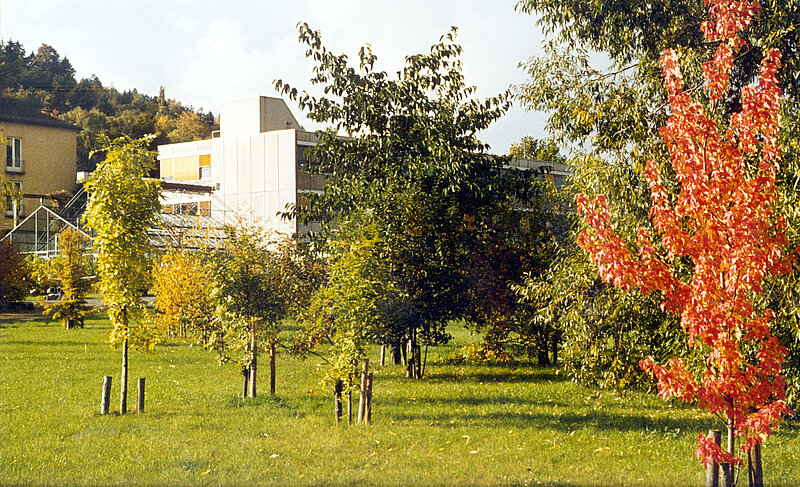
The "tertiary forest" section is a special kind of tree collection(arboretum): On the area of approx. 1.7 hectares available for this purpose, only trees and shrubs that were already present in the forests of Central Europe 10-12 million years ago - i.e. in the Tertiary period (Upper Miocene/Lower Pliocene) - have been planted, some of them since 1978. Fossils, such as those of the red maple (Acer rubrum), serve as proof of this.
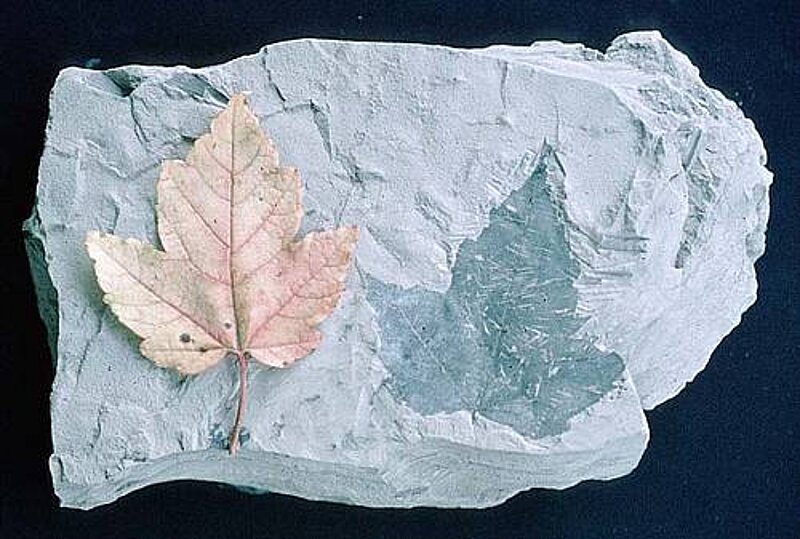
The red maple already grew here in Central Europe in the Tertiary lignite period - i.e. 10-12 million years ago - as fossilised remains from the Frechen lignite mine near Cologne, for example, prove: The illustration shows a fossilised leaf ("fossilised" leaf impression) on the right, and a present-day, recent leaf on the left.
With the epochal climate changes at the end of the Tertiary period (and in the Quaternary period), the red maple - like many other species - has long been extinct in Central Europe and now only occurs naturally in eastern North America. However, this medium-sized tree species has been cultivated since 1656 and is popularly planted in various cultivars.
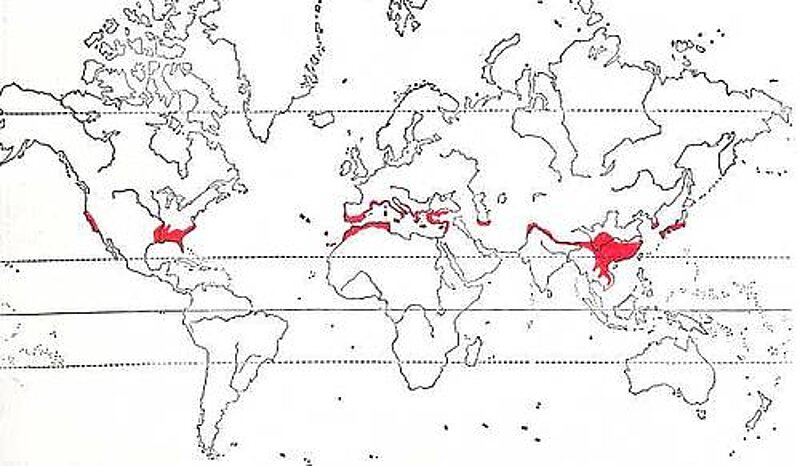
Relict areas (retreat areas) of the tertiary flora that was once widespread throughout the northern hemisphere.
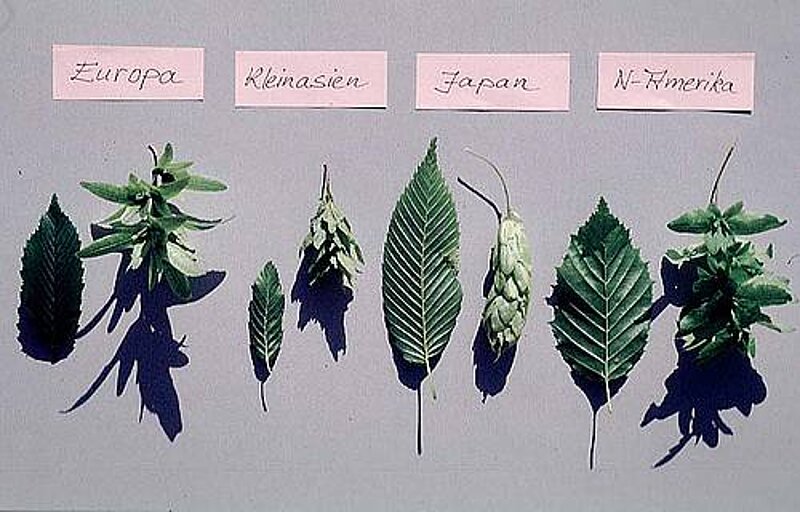
Example of different Carpinus species (hornbeam) from the various relict areas of the tertiary flora:
from left:
- Carpinus betulus L. - Central Europe
- Carpinus orientalis Mill. - Asia Minor
- Carpinus japonica Bl. - Japan
- Carpinus caroliniana Walt. - southern North America
This example is intended to illustrate the diversity of forms that existed in Central Europe during the Tertiary period within a genus of which only one species, the hornbeam(Carpinus betulus L.), is still represented in our forests today.