Siebold Plants

Philipp Franz von Siebold
Philipp Franz von Siebold was born on 17. 2. 1796 in Würzburg and died on 18. 10. 1866 in Munich.
In honour of this world-famous member of a Würzburg family of scholars, over 150 of "his" plants are cultivated in various parts of the Botanical Garden of the University of Würzburg.
As a young doctor, he joined the "Royal Dutch Service" in 1822 and was initially allowed to stay in the Dutch trading post on the island of Deshima in the Bay of Nagasaki (southern Japan) for six years (1823-1829) before returning to Japan 30 years later for four years (1859-1863). At that time, Japan was still a largely unknown country due to its carefully guarded isolation. It was only through Ph. F. v. Siebold that more detailed knowledge of this Far Eastern island kingdom reached Europe.
His success as a doctor gave him access to the country and its people. With skill and tireless diligence, he achieved outstanding research results in the fields of botany, zoology, geography and ethnology. He also proved to be a successful linguist and was an advisor to leading figures in Europe and Japan. His admirably versatile research activities had a lasting influence on the scientific development of Japan.
Ph. F. v. Siebold was an important mediator between foreign cultures and made - and still makes - an exemplary contribution to international understanding.
The numerous plants in the local botanical garden, which can be associated with Ph. F. v. Siebold and are labelled here as "Siebold plants" with a red dot on the respective sign, are intended to commemorate his achievements and merits.
What are Siebold plants?
Siebold' plants are East Asian plants that ...
... were collected by Ph. F. v. Siebold in Japan and first brought to Europe by him around 1830 and 1860,
... were given an internationally recognisable name for the first time by Ph. F. v. Siebold or by him in collaboration with the Munich botanist J. G. Zuccarini (1797-1848), their characteristic features described and made known worldwide through publication,
... were initially named and published by Ph. F. v. Siebold or by him and Zuccarini, but due to the 'priority rule' (the oldest scientific name is the ultimately valid one, later names are synonyms) or due to more recent scientific findings were given a different systematic classification and had to be renamed,
... have been named in honour of Ph. F. v. Siebold.
Numerous plants have been named after this meritorious doctor and Japanese researcher, making him "immortal".
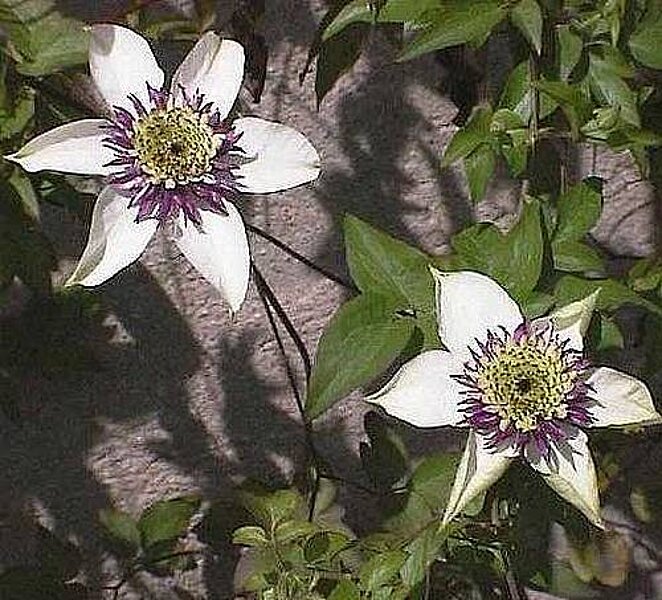
These include the "Siebold hazelnut" and the "Siebold barberry", for example, as well as more attractive flowering plants such as the Siebold clematis (see illustration), a cultivar of the "flowering" (Latin = florida) clematis, and the "Siebold stonecrop". Siebold sent the latter two ornamental plants, which had long been cultivated in Japan, on the long sea voyage to Europe together with many other plants during his first stay in Japan.
As Ph. F. v. Siebold was in the "Royal Dutch Service", they were imported to Holland and initially ended up in the botanical gardens in Leiden and Ghent, which was still Dutch at the time. From there, such "Siebold plants" were very soon distributed throughout the western world.
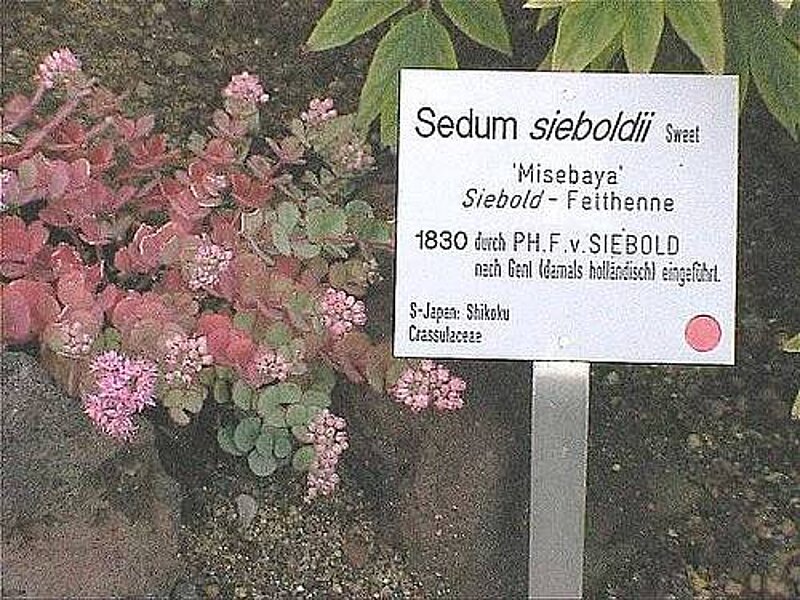
Many of these sensational new arrivals have long since become familiar to us, even if not all plant lovers know them by name, such as the ornamental plant Sedum sieboldii, the Siebold stonecrop, which is often found in the climatically favoured Main-Franconia region (see illustration).
The number of East Asian plants introduced to Europe for the first time by Ph. F. v. Siebold between 1829 and 1864 can no longer be determined exactly. In any case, it is incomparably larger (several hundred) than the number of all species previously introduced from East Asia into our gardens, windowsills and greenhouses. Their economic importance, especially for horticulture, was and still is very considerable.
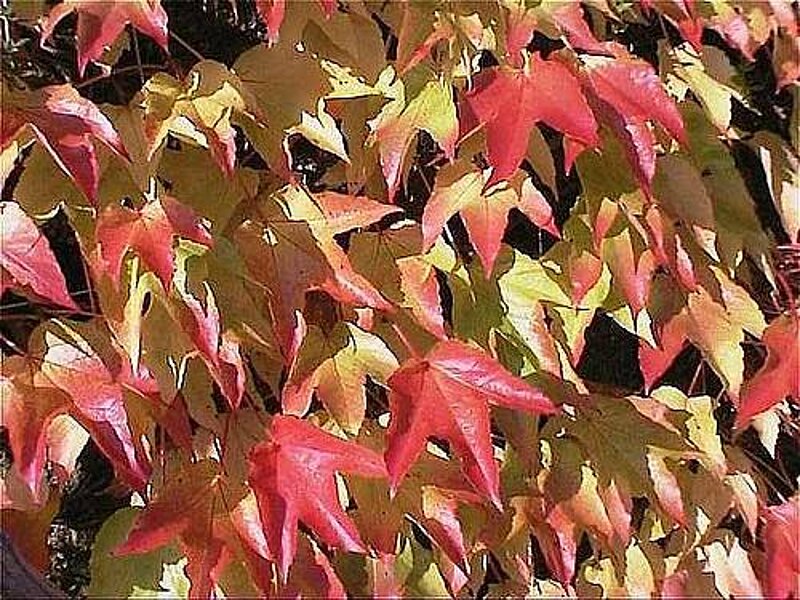
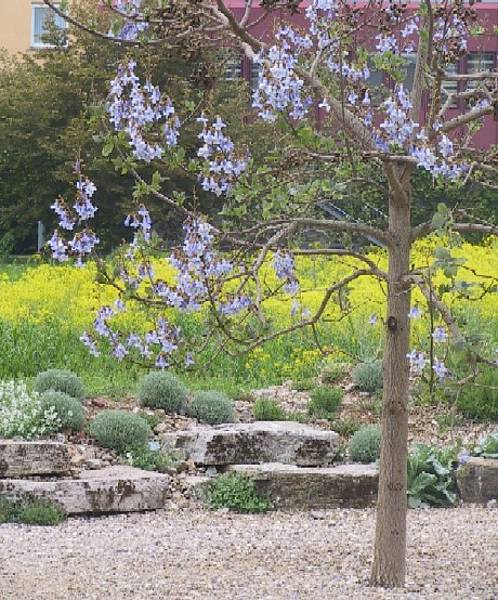
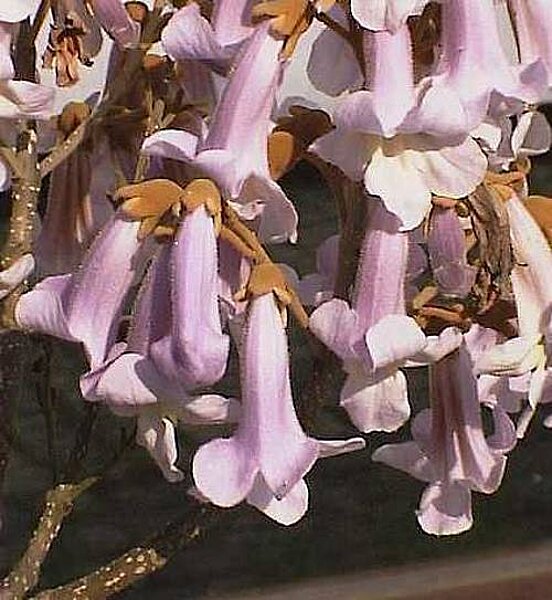
These new introductions include, for example, the golden banded lily and magnificent lily, various hydrangeas, funcias, peonies, weigelias and the Japanese ornamental quince, many cultivated forms of which are now also on the market, the three-pointed maiden vine ("Wild Vine", see illustration), which was included on the list published in Germany and Japan on 17 February 1996. 1996 Siebold special stamps issued in Germany and Japan, the bluebell tree (= "Imperial Paulownia", see illustration), the Japanese wisteria ("blue rain"), a Japanese ornamental apple ("rich-flowered apple") and elfin or sock flowers, as well as several popular conifers, such as the Japanese yew and various types of false cypress. The hardy indoor aralia and the frugal lily plant known as the "cobbler's palm" are widely used decorative plants cultivated in pots or tubs, along with two colourful varieties of the Japanese spindle bush.
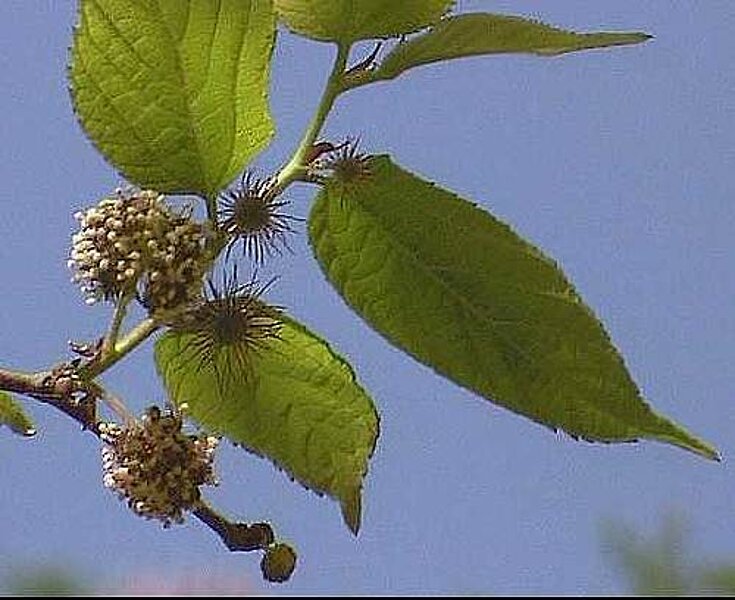
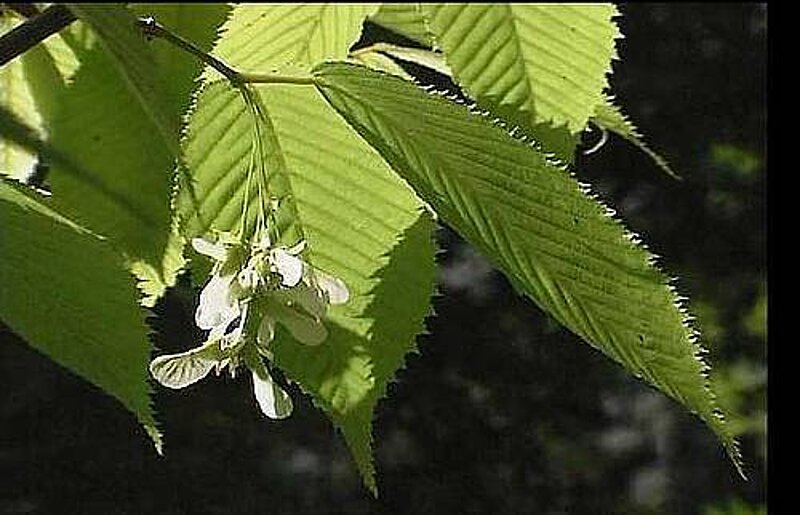
In addition, there are hundreds of other East Asian plants that are associated with Ph. F. v. Siebold and can be considered "Siebold plants". Of course, these primarily include all the plants that he collected and scientifically analysed during his two visits to Japan (1823-1829 and 1859-1863). He gave around 350 plant species an internationally understandable name for the first time and initially described them alone (e.g. Broussonetia kazinoki Sieb, see illustration) and later, in cooperation with the Munich botanist J. G. Zuccarini (1797-1848) (e.g. Acer carpinifolium Sieb. & Zucc., see illustration), described their characteristic features in a scientific manner.
These plants were publicised worldwide for the first time through publications of these scientific works. However, not only floristry and systematic botany, but also other sub-disciplines of plant science were greatly enriched by his work.