VII Moss Herbarium J. Röll
Julius Röll (1846 - 1928), born in Ostheim v. d. Rhön, was one of the most important bryologists (moss researchers) of his time. In addition to his profession as a teacher, he completed his doctorate in Jena "on the Thuringian deciduous mosses". He also worked intensively on the moss flora of the Rhön, the Erzgebirge, Lower Lusatia and the Odenwald. He undertook many collecting trips in Europe (High Tatras, Banat/Transylvania, Scandinavia, Spain, etc.), North Africa and North America.
He reported on all these research trips in scientific journals about the respective moss flora. In addition to his passionate collecting activities, he described several previously unknown moss species. His research focussed on the systematics of peat mosses.
Julius Röll moved to Aue in the Erzgebirge after retiring from teaching, where he died at the age of 83.
Julius Röll's extensive herbarium, which included mosses from other world-famous bryologists in addition to his own collections, was purchased by the Chief Veterinary Officer Alfred Ade from Gemünden for 700 RM shortly before his retirement. Ade, himself a passionate botanist, completed the herbarium through his own collection, swapping and buying up herbaria. For example, he bought the equally extensive estate collection of the Bavarian moss researcher Ludwig Molendo for 300 RM and acquired the duplicate collection of the Rhön bryologist Paul Geheeb After the war, in which his house in Gemünden was partially destroyed, he had to sell the herbarium and offered it to Professor Hans Burgeff, head of the Würzburg herbarium, for 1000 DM as a down payment. In 1949, Alfred Ade acquired the most valuable and most complete private collection, at least for the mosses, from the University of Würzburg.
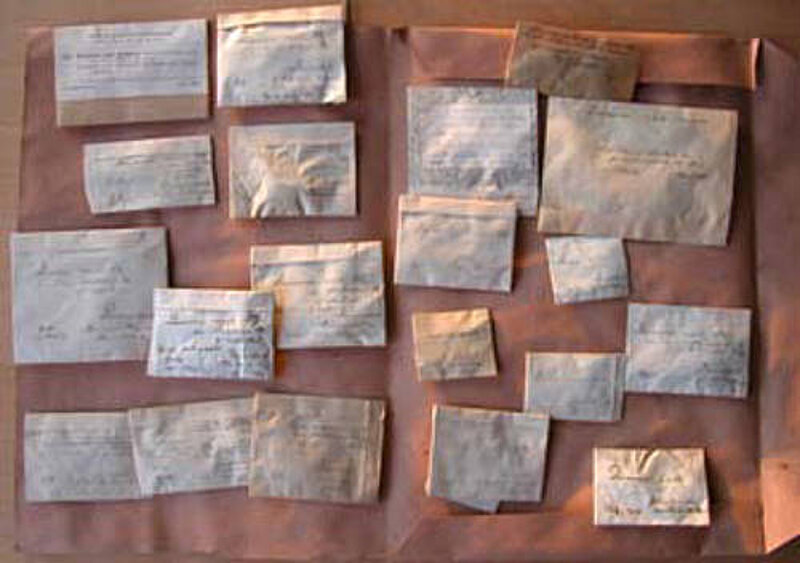
Röll's moss herbarium, with around 41,000 specimens, is one of the most scientifically significant parts of the Würzburg herbarium. As it contains many type specimens of newly described moss species, it is mainly specimens from this area that are requested for scientific processing.
In contrast to a herbarium with higher plants, moss specimens are not glued onto sheets of paper but stored in folded paper envelopes (= capsules).
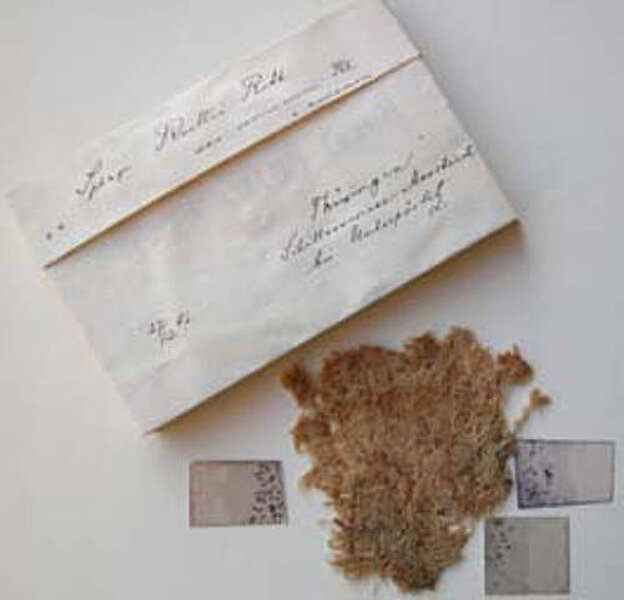
Capsule with document specimen of Sphagnum roellii (Roth), a peat moss named after the bryologist Julius Röll. Röll himself described a variety recurvum aureum of this species. Röll added permanent specimens of moss leaves to mica plates to enable later verification.
Specimen collected by J. Röll on 27.12.1883; Thuringia; Schillerwiese - Moorteich near Unterpörlitz
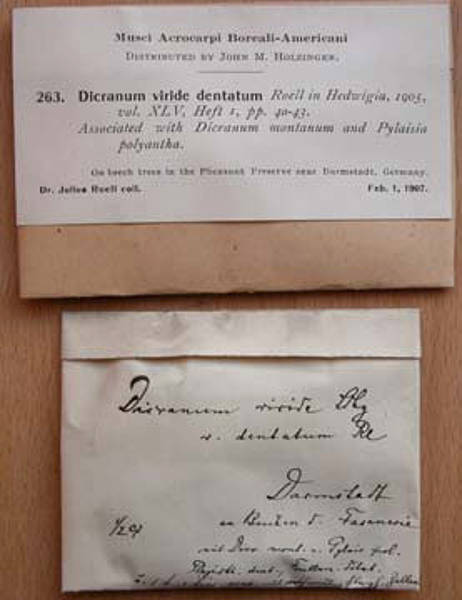
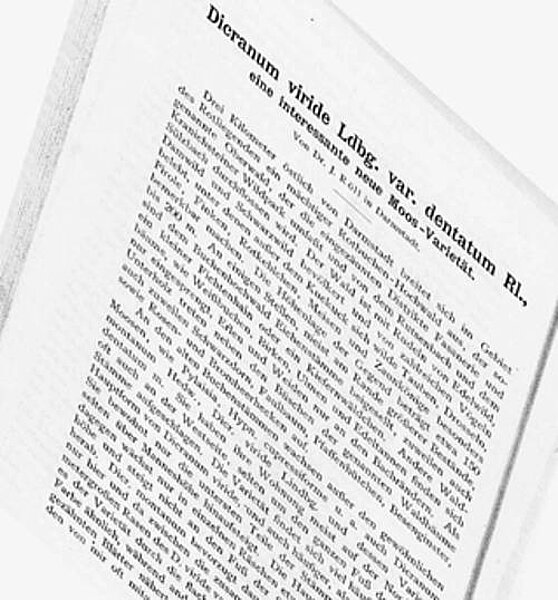
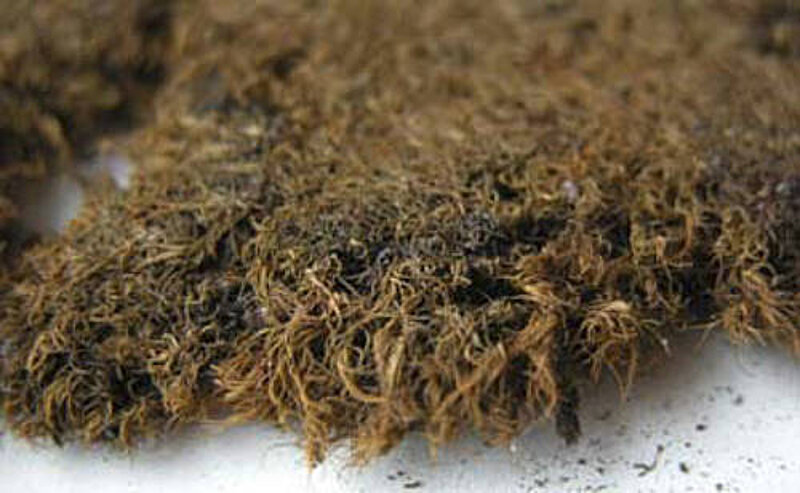
Type specimen of the moss Dicranum viride Leibg. var. dentatum Rl., which was first described by J. Röll in 1905 in the scientific journal Hedwigia. Even after 100 years, the specimen is still so well preserved that it can be morphologically identified and anatomical preparations can be made from it.