V. Herbarium F. X. Heller on the Flora Wirceburgensis
It was the botanical and hospital gardener Ignaz Heller who awakened in his son Franz Xaver Heller (1775-1840) a sense for the beauty and richness of the local flora on many walks together. F. X. Heller initially devoted himself to the study of medicine, which he completed in 1800 with a doctorate in medicine and surgery. His dissertation on the reproductive organs of plants shows how much he had learned about botany during his years of study.
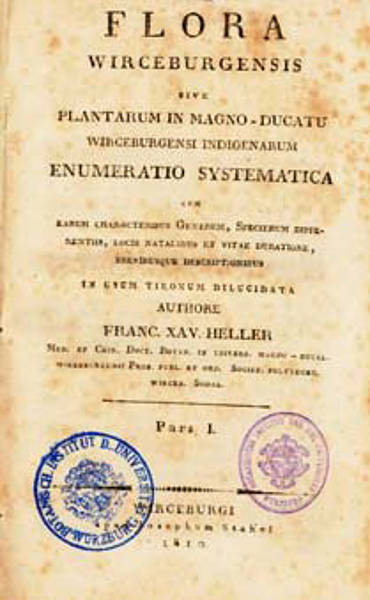
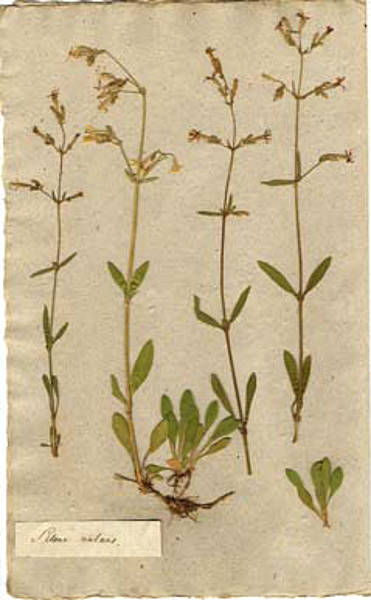
When the Diocese of Würzburg was transferred to Electoral Palatinate Bavaria as a result of the Imperial Deputation (1803), the university was reorganised by the Electoral Bavarian government. On this occasion, Heller first became an associate professor and then, in 1805, barely 30 years old, full professor of botany. The rapid rise and the encouraging recognition of his botanical studies spurred him on to increased activity, the fruit of which was his most important work, the "Flora Wirceburgensis", which he published in two parts in 1810 and 1811 and completed with a supplement in 1815. The plants listed therein are contained in the Heller herbarium, which after Heller's death passed to the botany professor Dr August Schenk (1815-1891), who incorporated his own finds and carried out a thorough revision. From him it came into the possession of the University of Würzburg.
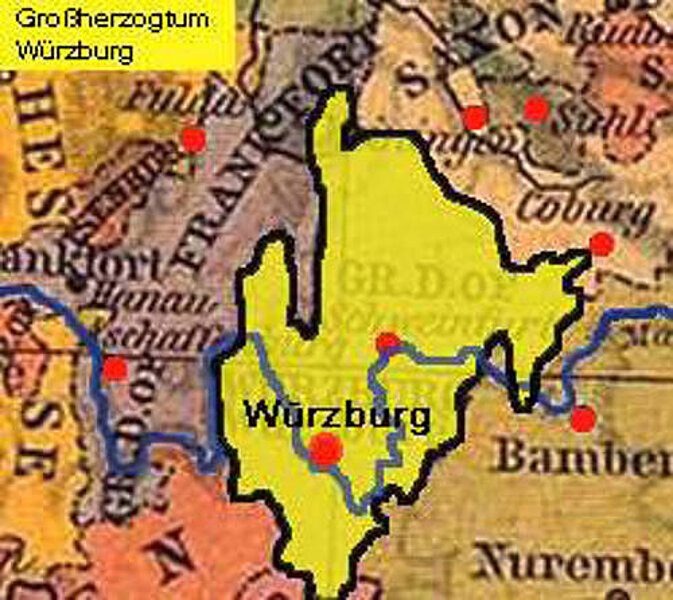
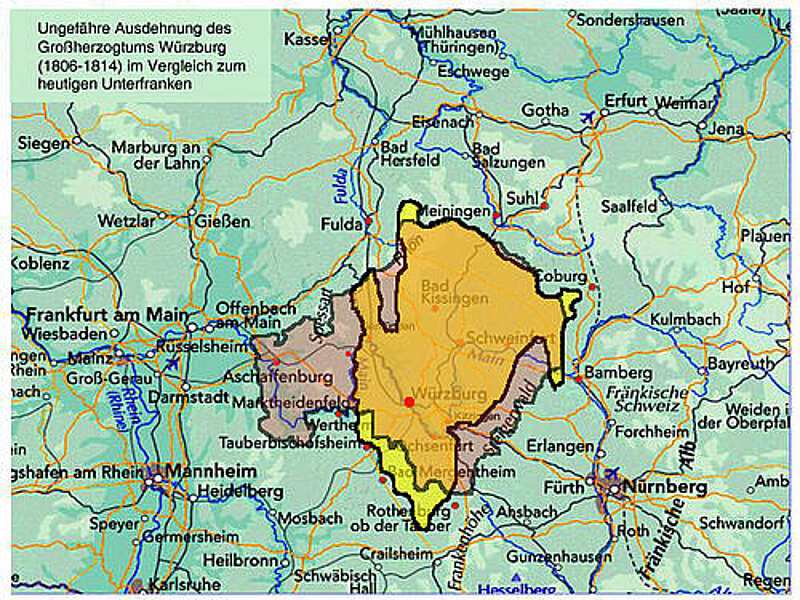
The area covered by Heller's flora is bounded by the borders of the Grand Duchy of Würzburg, which existed from 1805 to 1814. It encompasses the entire "Lange or Hohe Rhön" with the offices of Hilders and Fladungen and has its western boundary to the east of the Main quadrangle. In the east, the western edge of the Steigerwald forms the border with Bavaria, while in the south-west it extended a little way into what is now the Tauber region of Baden.
Heller's work was highly regarded by experts in Germany and abroad and he was honoured many times over. Prince Primate Karl von Dalberg, for example, sent him the Golden Medal of Merit with the request to "continue his study of patriotic plants". In 1817, he received an appointment to the Kingdom of the Netherlands, where he was given the choice of taking up a professorship in medicine or botany at one of the universities. In 1828 he was elected rector of the University of Würzburg and in the same year he became a corresponding member of the Medical-Botanical Society in London.
However, in Würzburg's society, to which he had access to the most prestigious families due to his extensive medical practice, he received only "suspicious" and "ill-intentioned" criticism (quote: A. Steier, 1915). This may have been mainly due to the fact that Heller had used strong language against lovers of exotic plants in the foreword to the first volume. It was a disgrace if someone stood in front of foreign plants in greenhouses with their mouths agape in admiration (hianti ore), but did not know the slightest thing about the most common native plants. With honest indignation, he responded to these one-sided exotic lovers with 'Turpe est in patria habitare et patriam ignorare' (It is a disgrace to live in the homeland and not know the homeland! He also responded to the criticism with "well-constructed periods" (A. Steier), saying that he despised the accusations of these people who thought they had eaten botany with spoons, but did nothing for science, but merely stood 'oculis semisomnolentis' (with half-asleep eyes) in front of their exotic plants and looked at them.
Heller's work thus not only offers a comprehensive overview of the flora of Würzburg at the beginning of the 19th century, but is also a contemporary record of Würzburg's urban and social history.
The specimens are in original sheets (unglued), arranged alphabetically by genus, incomplete, with numerous additional specimens from other collectors. The genera are missing: Alisma, Anemone, Brassica, Callitriche, Ceratophyllum, Inula, Lamium, Ophrys, Orchis. The year of foundation is assumed to be 1805.
Focal points: taxonomic: Pteridophytina, Spermatophytina