Two RNAmed Group Leaders Receive ERC Starting Grants
09/07/2026Karl Petri and Julian Grünewald are developing new ways to reprogram cells in the body in a targeted manner – with potential perspectives for cancer and heart disease
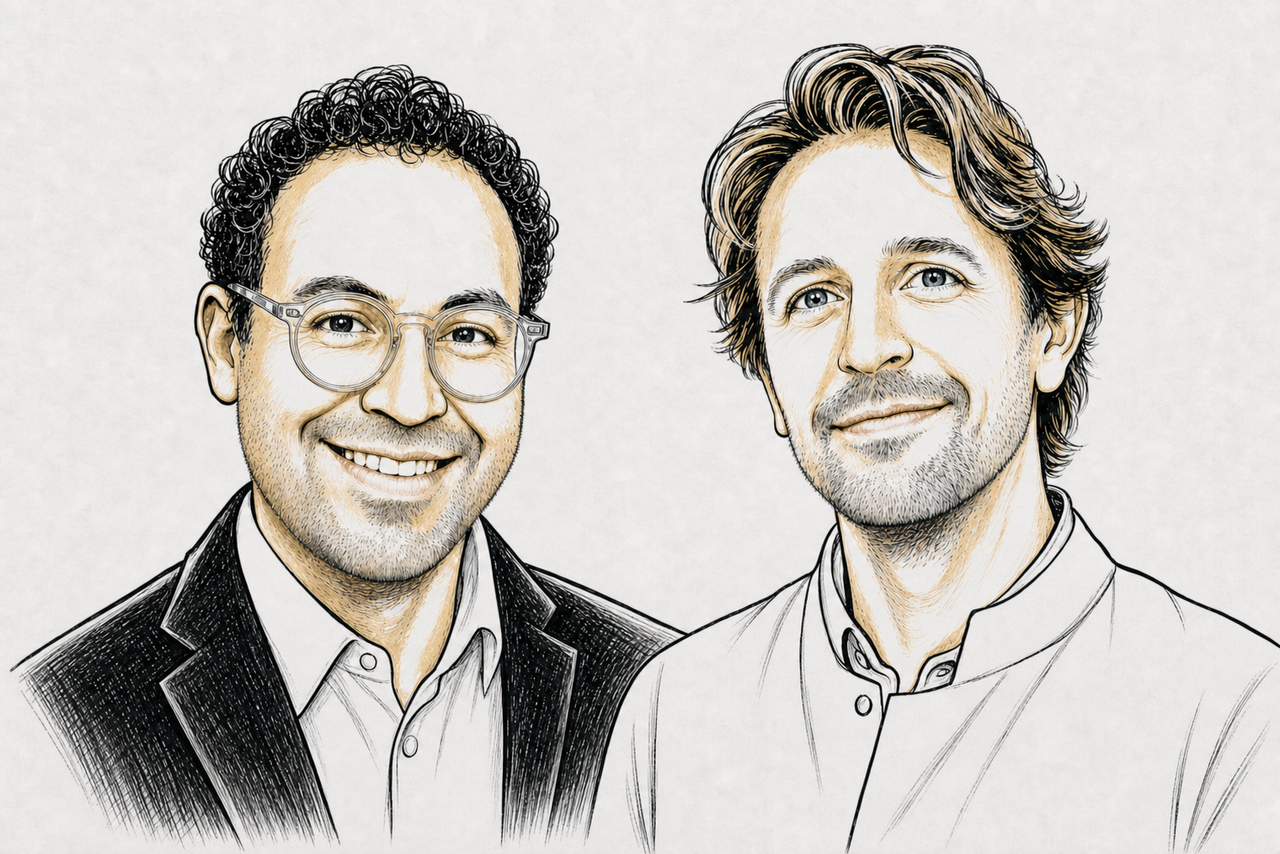
Two associate group leaders of the RNAmed graduate program are being awarded the prestigious ERC Starting Grant from the European Research Council (ERC): Dr. Karl Petri from the University Hospital Würzburg and Prof. Dr. Julian Grünewald from the Technical University of Munich. Both projects combine innovative approaches in gene- and cell therapy with new methods to deliver active tools directly into specific cells of the body.
The ERC awards the highly competitive Starting Grants to researchers at the beginning of their independent scientific careers. The funding supports particularly convincing and ambitious research projects and gives researchers the opportunity to build their own ideas and teams. A Starting Grant is not only important financial support – it is also a significant recognition of the scientific quality and potential of a project. The funding amounts to up to 1.5 million euros over five years.
Karl Petri: Generating CAR-T cells directly in the body
T-cells are important defense cells of the body's own immune system. In CAR-T cell therapy, they receive a genetic blueprint for an artificial receptor – the chimeric antigen receptor (CAR). With this receptor, T-cells can recognize and eliminate specific cancer cells. Currently, T-cells are extracted from patients' blood, genetically modified in the laboratory, and then transferred back into the body as CAR-T cells. The production is labor-intensive, expensive, and not always successful.
Karl Petri wants to simplify this process in the future by having CAR-T cells generated directly in the body. For this, his team is investigating tiny fat particles – so-called lipid nanoparticles – as carriers for genetic tools. This lipid nanoparticle-based in vivo CAR-T cell therapy is intended to target T-cells specifically and spare other body cell types. Once inside the T-cells, the tools should anchor the CAR blueprint efficiently, permanently, and safely at a pre-defined location in the genome. The safety aspect is particularly in focus: the team verifies each step with self-developed analysis methods and carefully examines the distribution of nanoparticles in the body as well as the integration sites in the genome. The project thus combines basic and safety research.
With ERC funding, Petri will expand his research group starting in early 2027 by two doctoral students and a postdoc.
Julian Grünewald: Gene editing for many instead of single mutations
In 2025, a personalized CRISPR therapy was applied worldwide for the first time in a patient to treat a life-threatening genetic defect of the liver. This case demonstrates the potential but also reveals current limitations: gene therapies are currently still highly personalized, as hundreds of different mutations in one gene can lead to the same disease pattern. This means that each patient can have a different mutation. Each mutation theoretically requires a specific editing tool – standardized therapy is therefore not yet possible.
Julian Grünewald studies genetic disorders of the heart muscle. A central challenge of gene editing in the heart is to transport molecular tools specifically into heart muscle cells without affecting other organs. At the same time, the tools should be capable of correcting not only a single mutation but also multiple mutation variants in the heart muscle cell. With his ONE2MANY project, Grünewald addresses both challenges: his team wants to make gene editing more scalable. Artificial intelligence is to help develop new tools that can correct multiple disease-causing variants of a gene with one approach or replace the affected gene entirely. Initially, the team is focusing on the LMNA gene, whose changes cause certain inherited heart muscle diseases. To enable targeted transport of the new tools to the heart, the team is also developing approaches based on lipid nanoparticles. In this way, they aim to overcome central hurdles on the path to broadly applicable gene therapies.
This also strengthens RNAmed
Both projects combine RNA research, genome editing, and translational research – the path from scientific findings to potential medical applications. The ERC funding gives both researchers the necessary scope to systematically pursue these demanding ideas.
For RNAmed''s doctoral students, this creates a special opportunity for exchange: Petri and Grünewald can provide insights into their research, share their experiences in developing and applying for major projects and funding, and show different career paths in science.
Further information: Universitätsklinikum Würzburg: CAR-T-Zellen direkt im Körper herstellen and Ten ERC Starting Grants awarded to TUM researchers - TUM School of Natural Sciences
- Christian Fröschel, RNAmed Program Coordinator