
Lecture series in summer semester '26: Under Pressure. On democracy, trust and the public sphere.
About the lecture series
Democratic societies are currently under a variety of pressures: political polarisation, global shifts in power and digital public spheres are changing the conditions under which democratic processes function. At the same time, trust in institutions, media and political actors is increasingly faltering.
The lecture series looks at these developments and questions the stability and sustainability of democratic systems. In four lectures, renowned experts will shed light on different perspectives - from fundamental questions of political practice to international developments and the dynamics of digital radicalisation.
The series invites you to analyse and discuss the central challenges of our time in a scientifically sound manner: How is the public sphere changing? What does trust in democracy depend on? And how can democratic structures be secured and further developed under changing conditions?
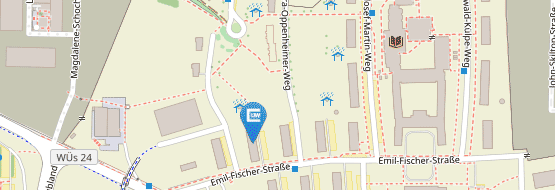
All lectures will take place at 18:30 in the Audimax, Sanderring 2. Barrier-free access via the north entrance on Sanderring, lifts to the 1st floor
Admission is free. Please register by e-mail to gsik@uni-wuerzburg.de.
Dates
29 April
Prof. Dr Frank Decker (University of Bonn)
"The future of democracy as a practical task"
Introduction: Prof. Dr Andreas Dörpinghaus
07 May
Sina Laubenstein (ISD Germany, Berlin)
"Digitale Demokratiegefahren: Radicalisation online using the example of the mannosphere"
Introduction: Prof. Dr. Andrea Kübler
21 May
Annika Brockschmidt (freelance journalist)
"Faith, power and digital spaces: Political trends from the USA and their influence on German democracy"
Introduction: Prof. Dr Ilona Nord
09 June
Prof. Daniel Ziblatt, Ph.D. (Harvard University, WZB Berlin)
"Democracy Under Threat: a Transatlantic Perspective" (lecture in English)
Introduction: Prof. Dr Sonja Grimm

That's what it's all about
Democracy is both a form of state and government and a way of life in society. Today, it is coming under increasing pressure in both areas. The discourse on democracy therefore focuses primarily on how democracy can be protected against its enemies and how it can be made more "resilient". However, it should also be about expanding and improving it. This involves, on the one hand, the opportunities for citizens to participate and, on the other, effective solutions to problems.
Frank Decker has been Professor of Political Science at the Institute of Political Science and Sociology at the Rheinische Friedrich-Wilhelms-Universität Bonn since 2001, where he served as Managing Director of the Institute from 2004 to 2008. Since 2011, he has also been Academic Director of the Bonn Academy for Research and Teaching of Practical Politics (BAPP). He previously worked as a research assistant at the Helmut Schmidt University of the Federal Armed Forces in Hamburg, where he gained his doctorate in 1993 and his habilitation in 1999. Frank Decker's research focusses on right-wing populism, party systems, government institutions and democratic reform. He has published numerous books and articles on these topics in leading political science journals and edited volumes. He is a regular expert in the media and public debates. In 2023, he was honoured with the Otto Kirchheimer Prize for his outstanding achievements in party and democracy research.

That's what it's all about
The lecture deals with online radicalisation, disinformation and digital violence as central challenges for democratic societies. Using the example of the mannosphere, it will show how radical and misogynistic ideologies spread in digital networks, what role platforms and platform structures play in this and how these dynamics influence everyday democratic life - from public debates and political participation to the safety of those affected by digital violence. Finally, key questions on prevention, regulation and civil society counter-strategies will be discussed.
Sina Laubenstein is Programme Director of the Institute for Strategic Dialogue Germany (ISD). She leads various projects on digital violence and hate speech online and is a recognised expert in this field. She was involved in the curriculum development of the Business Council for Democracy (BC4D). Laubenstein studied Political Science at the University of Mannheim (B.A.) and Global Studies and Societal Change at Malmö University (M.A.). As a freelance lecturer, speaker and author, she specialises in the topics of digital civil courage, hate and extremism online and digital violence. She is in close dialogue with actors from politics, civil society and academia and advises them nationally and internationally on their strategies for dealing with hate online.

That's what it's all about
Description follows.
Annika Brockschmidt studied History, German Studies and War and Conflict Studies in Heidelberg, Durham and Potsdam. She is a freelance journalist and author, has worked for the ZDF Hauptstadtstudio in the past, produced the "HistoPod" for the Federal Agency for Civic Education and is currently co-host of the podcasts "Feminist Shelf Control" and "Kreuz und Flagge". In 2022, she received a "Transatlantic Media Fellowship" from the Heinrich Böll Foundation. Her articles are Zeit Online, the Frankfurter Rundschau and the Tagesspiegel have appeared. Brockschmidt also writes as a senior correspondent for the US magazineReligion Dispatches, which is part of the renowned think tank Political Research Associates, which has been dedicated to researching right-wing extremism for over thirty years. Her most recent publication was "The Arsonists. How extremists took over the Republican Party" (Rowohlt 2024).

What it's all about
At this crucial moment for the U.S. and Europe, Daniel Ziblatt shares insights on the current state of democracy in Europe and the United States, democratic backsliding, and possible ways forward and lessons to be learned from across the Atlantic.
Daniel Ziblatt is Eaton Professor of Government at Harvard University and has been Director of the Transformations of Democracy Department since October 2020. His co-authored book with Steven Levitsky, the New York Times bestseller "How Democracies Die" (Crown, 2018; "Wie Demokratien sterben", DVA, 2018), has been translated into over thirty languages. And his book "Conservative Parties and the Birth of Democracy" (Cambridge University Press, 2017), an account of the historical democratisation of Europe, was awarded the American Political Science Association's 2018 Woodrow Wilson Prize for the best book on governments and international relations, as well as three other prizes, including the American Sociological Association's 2018 Barrington Moore Award for the best book in comparative historical sociology. His book "Tyranny of the Minority" was published in autumn 2023. He was awarded the 2019 Berlin Prize of the American Academy in Berlin and was Karl W. Deutsch Visiting Professor at the WZB. In 2023, he was elected a member of the American Academy of Arts and Sciences.