
Summer Semester 26 Theme Weeks: Under Pressure. Democracy, Trust and the Public Sphere."
Group makes you happy. Social identity as a resilience factor
Lecture by Prof Dr Frank Decker
(political scientist at the Rheinische Friedrich-Wilhelms-Universität Bonn)
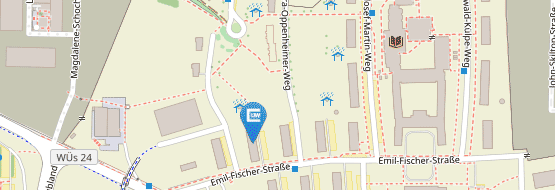
29.04.2026 at 18:15 in the Audimax
Creditable for GSiK for the additional qualification "Intercultural Competence" in areas B and C.

What it's about
Democracy is both a form of state and government and a way of life in society. Today, it is coming under increasing pressure in both areas. The discourse on democracy therefore focuses primarily on how democracy can be protected against its enemies and how it can be made more "resilient". However, it should also be about expanding and improving it. This involves, on the one hand, the opportunities for citizens to participate and, on the other, effective solutions to problems.
Frank Decker has been Professor of Political Science at the Institute of Political Science and Sociology at the Rheinische Friedrich-Wilhelms-Universität Bonn since 2001, where he served as Managing Director of the Institute from 2004 to 2008. Since 2011, he has also been Academic Director of the Bonn Academy for Research and Teaching of Practical Politics (BAPP). He previously worked as a research assistant at the Helmut Schmidt University of the Federal Armed Forces in Hamburg, where he gained his doctorate in 1993 and his habilitation in 1999. Frank Decker's research focusses on right-wing populism, party systems, government institutions and democratic reform. He has published numerous books and articles on these topics in leading political science journals and edited volumes. He is a regular expert in the media and public debates. In 2023, he was honoured with the Otto Kirchheimer Prize for his outstanding achievements in party and democracy research.

What it's about
The lecture deals with online radicalisation, disinformation and digital violence as central challenges for democratic societies. Using the example of the mannosphere, it will show how radical and misogynistic ideologies spread in digital networks, what role platforms and platform structures play in this and how these dynamics influence everyday democratic life - from public debates and political participation to the safety of those affected by digital violence. Finally, key questions on prevention, regulation and civil society counter-strategies will be discussed.
Sina Laubenstein is project manager of the Coalition to Combat Online Antisemitism at the Institute for Strategic Dialogue (ISD) in Berlin. Previously, from 2020, she headed the project "Human Dignity is Hateful - No Hate Speech" at Neue deutsche Medienmacher*innen, where she coordinated the Council of Europe initiative "No Hate Speech Movement" in Germany and focussed on empowering those affected by digital violence. Since November 2021, she has also been part of the Gesellschaft für Freiheitsrechte, where she is involved in the Digital Violence Protection Project. She also helped set up the Business Council for Democracy, where she implements training on digital threats in companies. Laubenstein studied Political Science at the University of Mannheim (B.A.) and Global Studies and Societal Change at Malmö University (M.A.). As a freelance lecturer, speaker and author, she specialises in the topics of digital civil courage, hate and extremism online and digital violence. She is in close dialogue with actors from politics, civil society and academia and advises them nationally and internationally on their strategies for dealing with hate online.