
Additional qualification in intercultural competence
Intercultural competence is indispensable in everyday life and at work. As a willingness to constantly engage with new things and the individuality of each person, it creates openness and tolerance and makes us capable of communicating and acting. Topics such as racism and discrimination, flight and migration, cultures and their encounters and gender are part of the debate.
With the GSiK programme, we offer you the opportunity to further your education in these topics at university level and thus develop your intercultural skills. We issue a certificate for this extracurricular commitment in the form of an additional qualification. As we want to recognise different levels of commitment, there are two versions of this certificate: the "Intercultural Competence" certificate and the "Intercultural Competence (extended)" certificate. How exactly these are structured is explained below.
You can find an overview of all events that can be recognised for the certificates in the GSiK calendar of events.
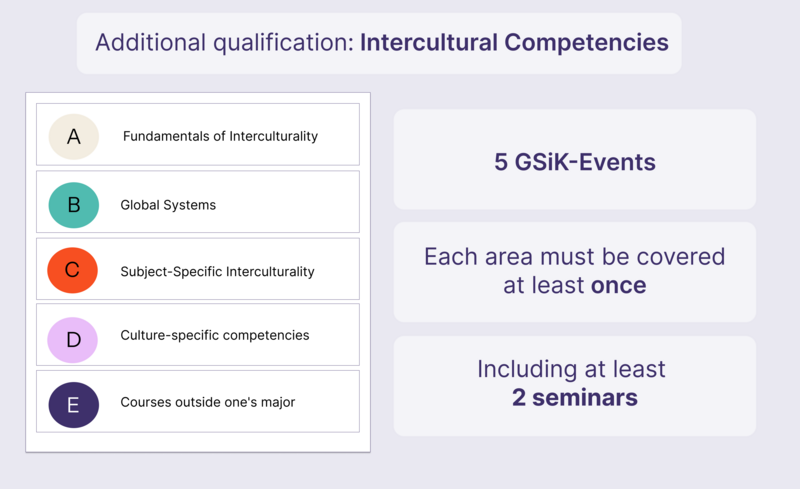
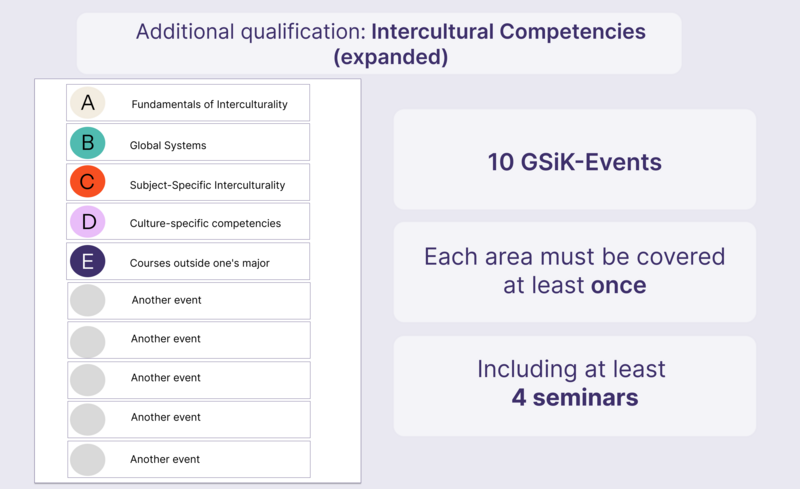
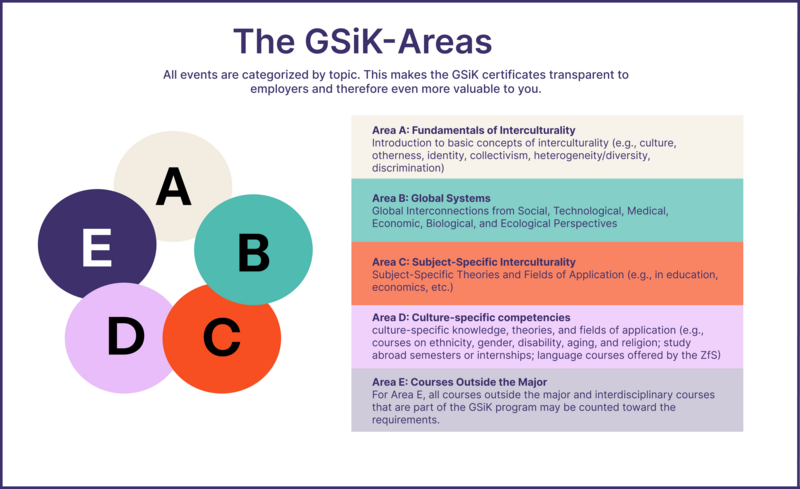
It is best to make a note on your personal overview of the GSiK areas for which you would like to have the individual courses credited.
The following applies to courses prior to winter semester 17/18: You can have all courses up to and including summer semester 2017 credited for areas A, B, C or D (own choice). For area E, you must still have attended an unrelated course.
What is special about area E?
Area E is individual. With Area E, we want you to attend at least one course that is not from your subject area. Your individual area E therefore includes all courses that do not correspond to the subject(s) you are studying. In addition, all courses in area E that cannot be assigned to a subject can be credited. You can recognise these by the term "interdisciplinary" in the calendar entry for the event (category: organiser). This is the case, for example, with the additional GSiK semester programme and events organised by cooperation partners outside the faculty structure.